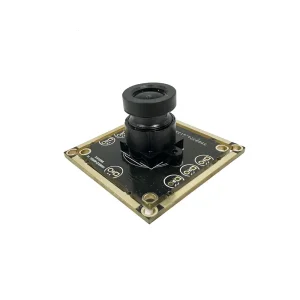
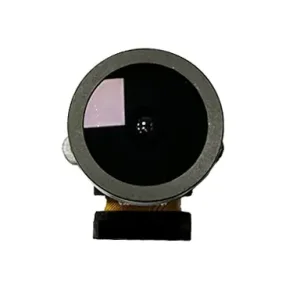
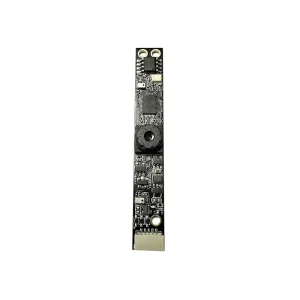
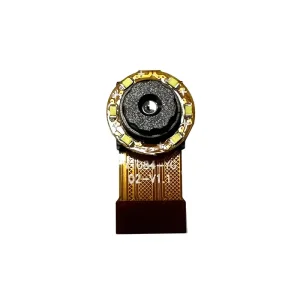
Engineered for seamless integration into industrial automation, intelligent surveillance, and high-speed motion capture environments across Turkey and Greater Eurasia.
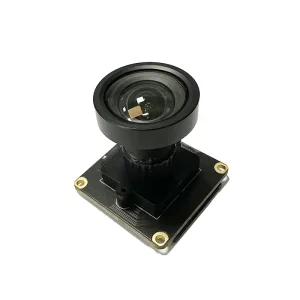
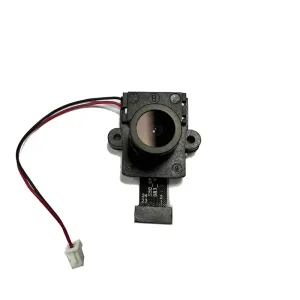
Analyzing how Turkey's industrial capital is transitioning into an automated, AI-driven manufacturing powerhouse.
As the primary economic, financial, and industrial heartland of Turkey, Istanbul occupies a unique geopolitical and commercial position bridging Europe and Asia. The Greater Marmara Region—spanning Istanbul, Kocaeli, Bursa, and Tekirdağ—accounts for over 50% of Turkey's total industrial output and serves as the epicenter for automotive manufacturing, textile automation, commercial logistics, maritime security, and defense technologies. In recent years, the convergence of Industry 4.0 paradigms and localized Smart City 2030 vision initiatives has accelerated the demand for advanced optoelectronic components, specifically high-definition, low-latency CMOS camera modules and embedded optical sensors.
Modern industrial systems operating across Istanbul’s organized industrial zones (OSBs), such as İkitelli OSB, Tuzla Kimya Sanayicileri OSB, and the Gebze High-Tech Hub, require optoelectronic solutions tailored to withstand dynamic operational stress. From thermal variations along the Bosporus maritime corridors to high-vibration automotive assembly lines in Kocaeli, engineering teams require OEM camera module suppliers who provide deep technical customization—ranging from custom PCB physical outlines, extended FPC flex lengths, customized anti-reflective optical coatings, to specialized Image Signal Processor (ISP) firmware tuning.
Proximity to Bursa and Kocaeli makes Istanbul the central hub for R&D in Driver Monitoring Systems (DMS), Advanced Driver Assistance Systems (ADAS), and commercial fleet dash cam telemetry.
Port of Ambarlı and Haydarpaşa rely heavily on high-dynamic-range (HDR) and starlight-grade night vision modules for automated container code scanning and Bosporus vessel tracking.
High-resolution distortion-free camera modules deliver micro-defect inspection across Istanbul’s massive textile manufacturing units and high-speed packaging lines.
Understanding the paradigm shift from passive image acquisition to onboard neural processing and real-time inference.
The global machine vision landscape is undergoing a systemic transition. Traditional camera systems relied heavily on centralized processing units to decode raw video streams, creating bandwidth bottlenecks and elevated power dissipation. Modern optoelectronic architecture integrates low-power CMOS image sensors directly with high-performance Image Signal Processors (ISP) and Neural Processing Units (NPUs) at the edge.
For system integrators and OEM engineers in Istanbul, selecting the optimal interface family—whether MIPI CSI-2, USB 2.0/3.0 UVC, DVP parallel, or GMSL2—is critical to achieving low latency and maximum signal integrity over extended operational cycles.
How specialized optical hardware solves complex real-world challenges in Turkey's primary commercial sectors.
Istanbul’s municipal centers, financial exchanges in Levent, and bustling retail markets require automated document scanning and optical barcode verification. Utilizing Autofocus Multi-Application Camera Modules with high-grade optical resolution ensures sharp text legibility, instant 1D/2D QR code decoding, and crisp document archiving under fluctuating ambient light conditions.
With millions of daily vehicle movements across the Bosporus bridges and Eurasia Tunnel, fleet management networks require ruggedized 1080P Driving Recorder Camera Modules. Featuring starlight low-light sensitivity and multi-frame HDR, these modules record clear license plate telemetry and cabin analytics even when entering dark tunnels or navigating heavy midnight precipitation.
Modern luxury residential complexes and commercial skyscrapers in Maslak and Başakşehir rely on Visual Doorbell & Access Control Camera Modules. Engineered with wide field-of-view (FOV) optics and integrated IR-cut filters, these cameras provide 24/7 crystal-clear facial recognition and visitor verification regardless of intense sun reflection or total darkness.
Industrial maintenance teams performing non-destructive testing (NDT) inside pipeline corridors, HVAC networks, or aerospace components near Istanbul Airport utilize 9mm Miniature 1080P HD Camera Modules. These micro-footprint modules pack high resolution into tight enclosures without compromising optical fidelity or mechanical thermal stability.
A strategic vision of upcoming technological advancements shaping the future of industrial embedded imaging.
Integration of native 4K UHD sensors with hardware-level spatial noise reduction and direct ISP-to-NPU data streaming. Enhanced high dynamic range (HDR) handling over 120dB for dynamic outdoor environments.
Combining standard 2D RGB image acquisition with VCSEL-driven Time-of-Flight depth sensing on single micro-PCB assemblies for advanced robotic navigation, volumetric scanning, and anti-spoofing access control.
Widespread adoption of Gigabit Multimedia Serial Link (GMSL) technology in commercial vehicles, autonomous mobile robots (AMRs), and large-scale industrial machinery, transmitting lossless uncompressed video over 15+ meters of coaxial cable.
Miniaturization of multispectral and hyperspectral optical filters directly onto consumer-grade micro camera modules, enabling advanced material analysis, agricultural inspection, and non-invasive medical diagnostic tools.
How we partner with Istanbul procurement directors and lead project engineers to deliver customized optical hardware.
Selection of CMOS sensors (Sony, Omnivision, Aptina) matched with precise optical lenses. ISP firmware custom-tuned for white balance, color saturation, wide dynamic range, and target illumination.
Custom circuit board outlines, multi-layer stack-ups, rigid-flex PCB configurations, extended low-EMI FPC ribbons, and thermal management solutions designed to fit proprietary enclosures.
Implementation of automated Active Alignment (AA) manufacturing processes during lens mounting to guarantee uniform image sharp focus across all four corners of the image plane. 100% aging and stress testing.
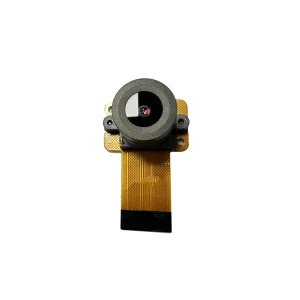
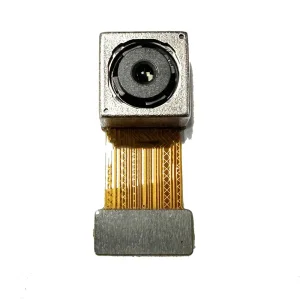
Explore our complete range of high-definition camera modules engineered for laptops, smart devices, dash cams, and access control platforms.
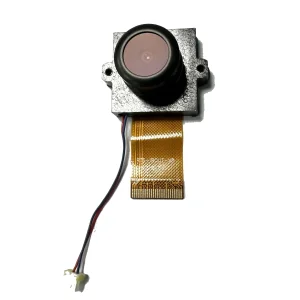
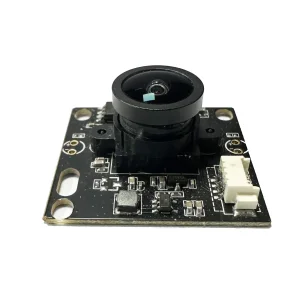
Addressing common engineering, logistics, and design integration inquiries for clients serving Greater Istanbul and the Marmara region.
For embedded AI systems utilizing platforms like NVIDIA Jetson Orin Nano, Rockchip RK3588, or Raspberry Pi 5, we strongly recommend MIPI CSI-2 camera modules due to their raw sensor data access, low CPU overhead, and microsecond-level latency. For plug-and-play desktop kiosks, Windows/Linux terminals, or document scanners, USB 2.0 / USB 3.0 UVC driverless modules provide the fastest software integration cycle.
Our marine-grade and outdoor access control camera modules utilize conformally coated PCB assemblies, anti-fog optical lens elements, and IP67/IP68 sealed housing options. The internal optical structures are assembled in Class 100 cleanrooms using specialized moisture-resistant optical adhesives to prevent internal fogging and delamination across broad thermal ranges (-30°C to +70°C).
Yes. As a true OEM/ODM manufacturer, we offer end-to-end optical and hardware customization. We can alter the Flexible Printed Circuit (FPC) length, implement custom EMI shielding, adjust lens FOV from ultra-wide 140° motion lenses to zero-distortion (<0.5%) document scanning lenses, and integrate mechanical IR-cut switches for seamless day/night operation.
Standard off-the-shelf evaluation samples are typically dispatched within 3 to 5 business days. Customized engineering samples (requiring custom FPC layout or unique lens holder design) take approximately 12 to 18 business days. Mass production lead times range between 3 to 4 weeks, with express door-to-door air freight service directly to Istanbul Ambarlı customs or Sabiha Gökçen logistics hubs.
Traditional manual thread-screwed optical assembly often introduces mechanical tilt, leading to blurry edges or inconsistent focal depth across the frame. Active Alignment (AA) utilizes robotic 6-axis positioning systems to power the CMOS sensor during assembly, focusing the lens on high-contrast targets in real time before fixing it with UV-cured optical epoxy. This guarantees optical uniformity and maximum Modular Transfer Function (MTF) sharpness across the entire image field.
Partner with a trusted global camera module factory. Contact our engineering support team today for technical datasheets, optical simulation models, and customized pricing.
Send Inquiry Now