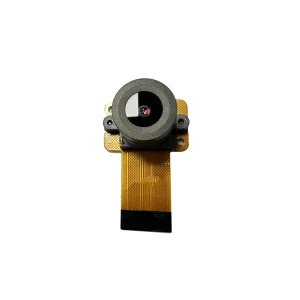
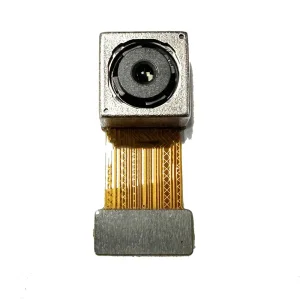
Panama’s pivotal geography as the "Hub of the Americas" creates an unmatched operational baseline for embedded computer vision, industrial optics, maritime edge computing, and automated logistics monitoring.
Panama’s economic framework is undergoing a profound digital transformation driven by the modernization of the Panama Canal, the expansion of the Colón Free Zone (Zona Franca de Colón), and heavy enterprise investments in smart logistics corridors, financial tech infrastructure, and international transshipment ports (such as Manzanillo International Terminal, Cristóbal, and Balboa). As autonomous inspection systems, automated license plate recognition (ANPR), facial recognition access control, and edge-AI camera hardware become integral to regional commercial operations, demand for industrial-grade optical sensor modules has skyrocketed.
From high-reliability distortion-free USB camera hardware deployed in airport security kiosks at Tocumen International Airport to ultra-wide-angle night-vision MIPI cameras operating in maritime mist and high-ambient humidity environments, device integrators in Panama require precise technical solutions. Engineering localized camera hardware involves addressing severe environmental stressors—including high tropical temperatures (averaging 32°C year-round), salt fog in coastal ports, and intense UV exposure—while maintaining signal integrity, thermal dissipation, and sub-millisecond shutter responsiveness.
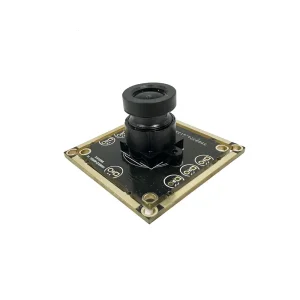
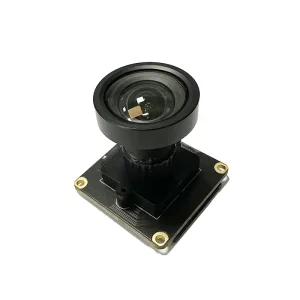
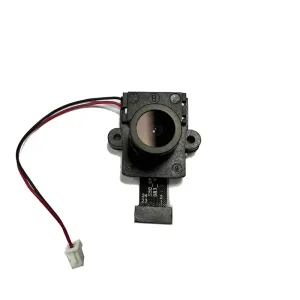
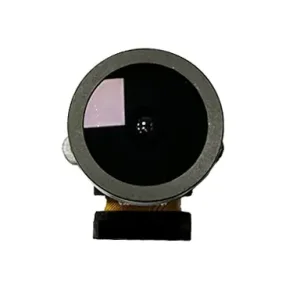
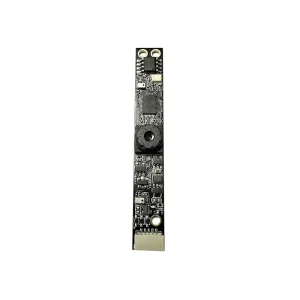
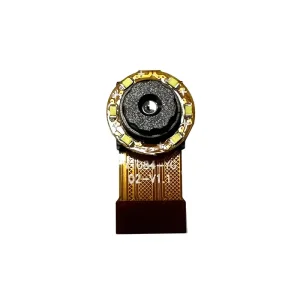
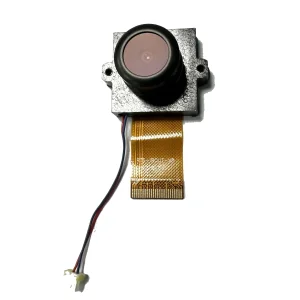
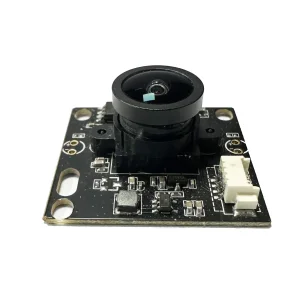
High-performance OEM/ODM vision sensor modules customized for logistics, terminal surveillance, and embedded commercial devices.
Understanding how global optical innovation aligns with Panama's unique economic sectors—from international trade logistics to smart city municipal security.
Global optical manufacturing has moved beyond raw video acquisition. Integrated Image Signal Processors (ISPs) now handle dynamic Noise Reduction (2D/3D DNR), Wide Dynamic Range (WDR up to 120dB), and hardware-level distortion correction right on the camera PCB. In Panama, edge processing is crucial for bandwidth-constrained maritime platforms and remote logistics checkpoints along the Pan-American Highway.
Standard commercial cameras suffer premature optical fogging, lens element delamination, and connector oxidation when exposed to Panama’s humid marine climate. Modern OEM modules utilize IP67/IP68 sealed optical barrels, conformal PCB coatings, and hydrophobic glass treatments to guarantee continuous, zero-downtime operation in port cranes and marine vessels.
System integrators in Panama City's banking and retail sectors favor UVC (USB Video Class) driverless modules for quick deployment across Linux, Android, and Windows systems. Concurrently, embedded engineers in smart city initiatives rely on high-throughput MIPI CSI-2 multi-lane interfaces for multi-camera stereo vision and real-time AI object detection.
A detailed engineering comparison designed to assist systems architects, hardware procurement directors, and embedded developers in evaluating interface selection for local applications.
| Interface Architecture | Primary Target Industry in Panama | Bandwidth / Speed | Max Cable Length | Optimal Lens Configuration |
|---|---|---|---|---|
| USB 2.0 / USB 3.0 (UVC) | Banking Kiosks, Document Scanners, POS Terminals | 480 Mbps / 5 Gbps | Up to 3m - 5m (Direct) | Distortion-Free (Fov < 85°), Fixed Focus / AF |
| MIPI CSI-2 (2/4-Lane) | Autonomous Container Inspection, Drone Mapping | Up to 2.5 Gbps per lane | < 30cm (FPC Cable) | Wide-Angle Low-Distortion Lens, F/1.8 Starlight |
| DVP Parallel Interface | Low-Cost Access Control, Simple Barcode Readers | Up to 96 MB/s | < 15cm PCB Trace | Standard M12/M7 Glass-Plastic Lenses |
| Wi-Fi / IP Network Stream | Remote Canal Perimeter Security, Agricultural Monitoring | 802.11 b/g/n / Ethernet | 100m (PoE Ethernet) | Ultra-Wide Angle 140° - 180° with Night Vision IR |
Selecting the appropriate optical system requires balancing resolution (from 720P HD for low-power telematics up to 4K Ultra HD for industrial inspection), sensor sensitivity (e.g., Sony STARVIS CMOS technology), shutter mechanisms (Global Shutter for high-speed container capture vs. Rolling Shutter for static monitoring), and optical distortion parameters. For document scanning and automated facial verification in Panama City financial centers, lens distortion must remain under 0.5% to avoid pixel warping during biometrics matching.
How targeted visual sensor technology addresses specific vertical challenges in Central America's primary commercial hub.
Ports along the Panama Canal (Balboa, Rodman, Cristóbal) operate 24/7 under harsh lighting transitions and salt spray. High-definition 4-Megapixel and 1080P Global Shutter camera modules integrated into gantry cranes and gate inspection barriers capture container optical character codes (OCR) and ISO markings at high speed without motion blur or color shift under intense sunlight.
The Colón Free Zone manages millions of tons of duty-free cargo annually. Automated visual doorbells, building access control camera modules, and 2K wide-angle night-vision monitoring modules protect secure inventory facilities. Featuring integrated 850nm/940nm IR-cut filters, these cameras seamlessly transition from bright equatorial day vision to zero-lux night surveillance.
Freight haulers operating across the Pan-American Highway connecting Panama to Costa Rica demand robust vehicle monitoring solutions. High-definition 1080P driving recorder modules equipped with wide-angle dynamic range sensors record driver vigilance (DMS), road hazards, and cargo cabin status under extreme vibration and fluctuating engine power supply voltage.
Explore our complete range of specialized vision components engineered for seamless integration into commercial, consumer, and industrial hardware.
How we collaborate with B2B device manufacturers in Panama and worldwide to deliver tailored optical sensor solutions from initial concept to mass production.
Our engineering team reviews your physical chassis constraints, focal distance requirements, FOV target (from standard 60° up to 180° fisheye), resolution, frame rate, lighting conditions, and communication interface (USB UVC, MIPI CSI-2, or DVP).
Using advanced Zemax optical modeling and CAD engineering, we select or build the ideal multi-element glass optical lens assembly, configure IR pass/cut filter combinations, design custom multi-layer rigid-flex PCBs, and optimize thermal pathways.
Functional working prototypes are assembled in dust-free SMT cleanrooms. Our optical engineers fine-tune sensor color matrices, gamma curves, auto-exposure responsiveness, and low-light noise cancellation specifically suited to your target operating environment.
In-depth technical answers addressing procurement, logistics, environmental resilience, and custom manufacturing for Panama and regional Central American clients.
Standard commercial camera hardware often degrades rapidly in tropical climates due to moisture ingress, lens fogging, and thermal noise. Our specialized modules for Panama utilize industrial-grade CMOS image sensors rated for operating temperatures from -30°C to +85°C. Lenses feature active optical bonding, brass or aluminum anti-corrosive barrels, hydrophobic front coatings, and optional conformal coating on the printed circuit board (PCB) to seal sensitive electronics against humidity and airborne salt particles common around Panama's ports.
Yes. Our USB camera modules adhere strictly to the USB Video Class (UVC) standard. They operate completely plug-and-play without requiring custom driver installations on Windows, Linux (Ubuntu, Debian, Yocto), Android, and macOS platforms. This standard compliance allows rapid integration into self-service banking kiosks, document scanners, and point-of-sale terminals deployed throughout Panama City's commercial districts.
Standard wide-angle lenses introduce optical barrel distortion (often 10% to 25%), which bends straight lines into curves. For automated barcode reading, OCR document scanning, and Automatic Number Plate Recognition (ANPR) at port check-in gates, barrel distortion causes software recognition algorithms to fail. Distortion-free camera modules utilize complex multi-element aspherical glass designs that maintain straight lines and uniform edge-to-edge optical sharpness with optical distortion under 0.5%.
Camera modules and electronic optical components exported to Panama are categorized under international Harmonized System (HS) codes (e.g., HS 8525.80). Shipments routed to the Colón Free Zone (Zona Franca de Colón) or Tocumen Logistics Park can benefit from streamlined customs clearance, duty-free storage, and re-export mechanisms across Latin America. We provide all necessary export documentation, including CE, FCC, RoHS certifications, and commercial invoices required by Panama's National Customs Authority (Autoridad Nacional de Aduanas).
Virtually every physical and optical attribute can be customized: PCB dimensions and shape, flex cable (FPC) length and pinout, CMOS image sensor model (Sony, OmniVision, SmartSens), lens Field of View (FOV from 30° up to 180°), optical focus type (Fixed Focus, Manual Focus, or Voice Coil Motor Autofocus), IR filter wavelength (650nm IR-cut, 850nm/940nm dual-pass), dynamic range, and housing encapsulation.
Standard off-the-shelf evaluation samples are typically dispatched within 3 to 5 business days. For customized OEM designs requiring dedicated PCB tooling and optical lens matching, prototype samples are delivered in 2 to 3 weeks. Full mass production batch orders generally require 3 to 4 weeks depending on component sourcing and total order volume, with express air freight delivery directly to Panama City (PTY) in 4 to 6 days.
Partner with an established optical camera module designer and manufacturer to bring high-reliability, precision vision hardware to your market.