
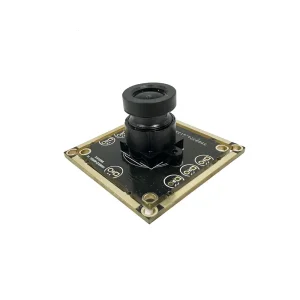
Industrial-grade, low-distortion, and high-definition vision hardware optimized for fast-turn prototyping and deployment in New York enterprise ecosystems.
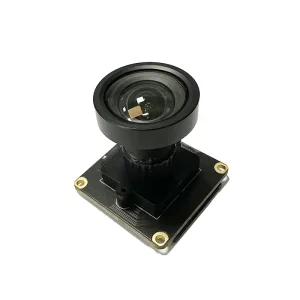
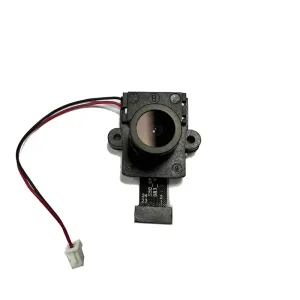
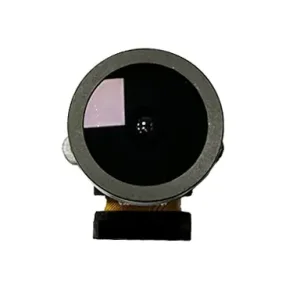
The commercial and industrial ecosystem of New York State—spanning the technological density of Manhattan's Silicon Alley, Brooklyn’s advanced manufacturing hubs, Long Island’s MedTech corridors, and Upstate industrial automation facilities—is undergoing a profound transformation driven by high-performance computer vision, edge AI, and optics mini-assembly integration. Today, enterprise buyers, system integrators, and OEM original equipment manufacturers in the New York metropolitan area require far more than off-the-shelf camera hardware. They demand tailored, micro-engineered Original Design Manufacturing (ODM) optical assemblies capable of reliable performance under harsh operational environments, stringent space constraints, and high-frequency real-time processing demands.
As smart terminals become embedded across public transport networks, luxury retail storefronts, financial institutions, and medical diagnostics centers throughout New York, the requirement for direct custom engineering at the chip-on-board (COB) and surface-mount technology (SMT) levels has escalated. ODM original suppliers situated in manufacturing capitals like Shenzhen present a critical strategic synergy: providing East Coast technology developers with ultra-rapid prototyping cycles, proprietary lens tuning, and robust cost structure benefits without sacrificing international quality compliance (ISO9001, ISO13485, CE, FCC, RoHS).
Engineered to deliver verifiable performance advantages for New York B2B device manufacturers.
Navigating global supply chain friction requires agile, highly scalable manufacturing partnerships. For system engineers across New York, partnering directly with specialized China OEM/ODM camera module factories provides an unrivaled competitive edge. Our optical manufacturing infrastructure utilizes fully automated Active Alignment (AA) equipment to bond lenses to CMOS sensors with sub-micron accuracy, ensuring uniform optical edge sharpness across every frame.
By bypassing multiple broker layers, New York engineering teams gain direct access to custom Flexible Printed Circuit (FPC) routing, customized ISP (Image Signal Processor) fine-tuning, dual-sensor stereo vision alignments, and specialized narrow-band optical bandpass filters tailored to NIR (Near-Infrared) lighting setups.
From Manhattan high-rises to Rochester optical research parks, our camera hardware powers critical real-world applications.
High-speed USB UVC modules integrated into unattended payment terminals, interactive storefront digital signs, and self-checkout kiosks across NYC borough retail centers, supporting distortion-free facial identification and instant QR/barcode decoding.
Ultra-miniature 9mm and high-resolution autofocus camera modules supplied to medical device developers on Long Island, engineered for high-precision micro-specimen inspection, digital document scanning, and automated clinical analyzers.
Wide-angle 2K night-vision modules designed for commercial high-rises and residential doorbells in Manhattan and Brooklyn, delivering crisp low-light facial visibility under severe street lighting glare or absolute darkness.
To assist New York hardware architects and firmware developers in making optimal specification choices, the breakdown below illustrates interface performance trade-offs for B2B deployment.
| Interface Standard | Primary Target Applications | Bandwidth / Speed | Max Cable Distance | OS Driver Complexity |
|---|---|---|---|---|
| USB 2.0 / USB 3.0 UVC | Kiosks, Laptops, Scanners, Desktop Terminals | Up to 480Mbps (USB 2.0) / 5Gbps (USB 3.0) | Up to 3–5 Meters (Standard) | Plug-and-Play (Driverless on Win/Linux/Mac/Android) |
| MIPI CSI-2 (2/4-Lane) | Edge AI, Raspberry Pi, Jetson Orin, Autonomous Robotics | Up to 2.5 Gbps per lane | < 20 cm (Direct FPC) | Requires V4L2 / Custom Kernel Sensor Driver |
| DVP Parallel | Low-power IoT, Cost-sensitive MCUs, Barcode Readers | Up to 80MB/s | < 10 cm (Short PCB Trace) | Low-level MCU Register Configuration |
| Wi-Fi / IP Network | Remote Security Monitoring, Doorbell Intercoms | 802.11 b/g/n / AC Wireless | 100+ Meters (Wireless Range) | H.264/H.265 RTSP/ONVIF Stream Integration |
Expert answers regarding optical module customization, MOQ, delivery times, and engineering support for East Coast buyers.
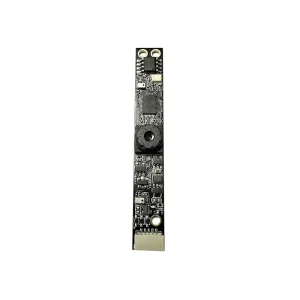
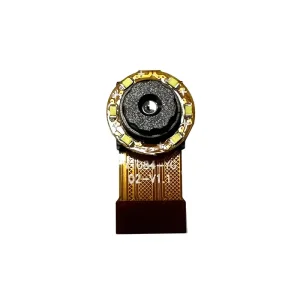
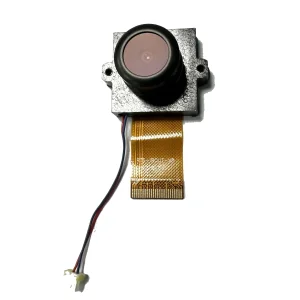
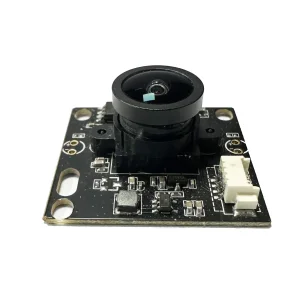
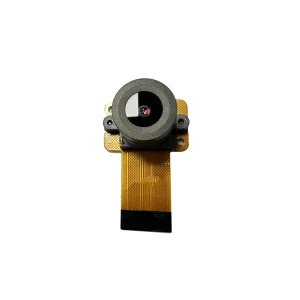
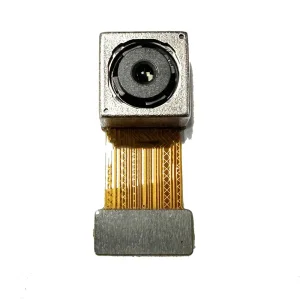
Explore our complete lineup of high-definition camera hardware, designed for seamless integration into multi-market systems.
Get customized optical recommendations, full datasheet pinouts, and competitive high-volume factory pricing tailored to your application requirements.