Engineered for seamless integration into northern Italy's automated manufacturing lines, robotics, automotive telematics, and medical diagnostics systems.
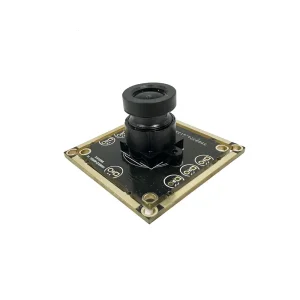
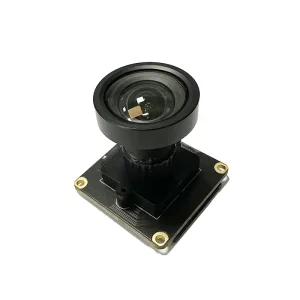
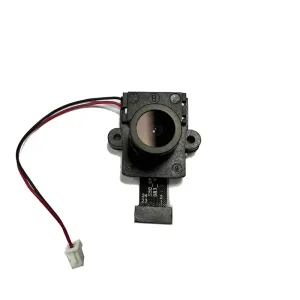
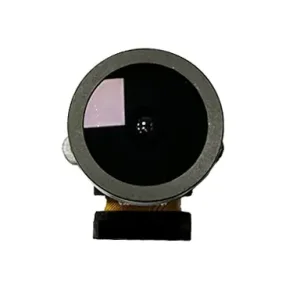
Analyzing Northern Italy’s digital transformation, Industry 4.0 adoption, and demand for micro-camera technologies.
Milan and the greater Lombardy region represent Italy's industrial backbone, generating over 22% of national GDP. High-speed, high-resolution machine vision modules are critically deployed across automated CNC centers, robotic assembly lines, and pharmaceutical packaging facilities.
The Milan-Brescia industrial corridor is a global hub for automotive tier-1 suppliers and Autonomous Mobile Robot (AMR) manufacturers. Sub-millimeter lens alignment and zero-distortion CMOS cameras enable real-time spatial mapping and optical inspection.
Global luxury brand houses centered in Milan rely on automated optical inspection (AOI) to verify micro-stitching, leather grain uniformity, and laser engraving accuracy, driving strict specifications for color-accurate 4K/2K imaging modules.
How state-of-the-art sensor integration, high-bandwidth interfaces, and AI processing redefine spatial imaging.
As resolution shifts from legacy 720P/1080P to 4K and multi-camera arrays, host-system processing demands ultralow latency. Modern camera modules utilize multi-lane MIPI CSI-2 interfaces or driverless USB 3.0 UVC protocols, ensuring uncompressed raw video transmission up to 120 FPS for latency-critical industrial AI edge devices.
Traditional wide-angle lenses introduce optical barrel distortion upwards of 15-20%, rendering them unsuitable for precise document scanning, barcode reading, or spatial measurement. Advanced active optical alignment techniques calibrate the image sensor and multi-element glass lens across six degrees of freedom (6-DoF), achieving optical distortion rates under 0.5%.
From night-vision surveillance systems in urban Milan to underground industrial utility monitoring, modern sensor architectures integrate back-illuminated pixel tech (BSI) and hardware-level WDR (up to 120dB). This guarantees high contrast clarity across extreme shadows and bright highlights simultaneously.
Miniature applications—such as 9mm micro-inspection scopes, compact laptop bezels, and smart video doorbells—require high component density on multi-layer FR4/Rigid-Flex substrates. Thermal mitigation design prevents image noise amplification caused by heat generation during continuous video encoding.
Selecting the optimal camera interface and sensor format for specialized enterprise workloads.
| Interface / Module Type | Target Dynamic Range | Distortion Rate | Ideal Milanese Industry Application | Driver Requirement |
|---|---|---|---|---|
| USB UVC Standard Module | 72 dB - 105 dB | < 0.5% (Distortion Free) | Laptop / Kiosk / Document Scanner / ATM | Driverless Plug & Play (UVC compliant) |
| Industrial High-Res (4MP/4K) | 100 dB - 120 dB WDR | < 1.0% | Automated Quality Control / PCB Inspection | SDK / DirectShow / V4L2 supported |
| 2K Wide-Angle Night Vision | 110 dB Starlight WDR | < 3.0% (Corrected) | Smart Building Intercom / Perimeter Safety | Embedded Linux / Android ISP pipeline |
| 140° Ultra-Wide Motion Module | 85 dB | Wide FOV Optical Design | Automotive Dashcam / Action & Telematics | Standard UVC / Serializer-Deserializer |
| 9mm Micro Camera Assembly | 68 dB - 80 dB | < 2.0% | Medical Endoscopy / Industrial Pipe Probe | USB 2.0 / Custom Flex Interface |
How customized optical hardware solves real-world engineering challenges in Milan's core commercial verticals.
Location Context: Automated logistics centers in Malpensa and Arese.
Challenge: Picking irregularly shaped cosmetic items required zero-distortion depth and position recognition under fluctuating indoor LED factory lighting.
Solution: Implementation of 4MP High-Definition Industrial Camera Modules equipped with low-distortion glass optics. The custom ISP calibration allowed 60 FPS capture with edge-detection accuracy down to 20 micrometers.
Location Context: Commercial headquarters in Porta Nuova and CityLife.
Challenge: Direct sunlight backlighting during noon hours rendered standard intercom video unreadable, failing facial authentication algorithms.
Solution: Deployment of 2K Wide-Angle Intelligent Monitoring Modules with integrated IR night vision and 120dB WDR sensor technology, maintaining facial clarity in direct backlighting and complete ambient darkness.
Location Context: Northern Italy heavy transport freight corridor.
Challenge: Severe road vibration and extreme cabin temperature spikes (-20°C in winter to +70°C dashboard heat in summer) caused focus drift in standard plastic lens barrels.
Solution: 1080P Full HD Driving Recorder Modules featuring temperature-compensated all-glass thermal lens barrels (6G optics) and reinforced surface-mount connectors, delivering zero focus degradation.
Location Context: Advanced biomedical research clusters in Milan.
Challenge: Non-invasive diagnostic devices required high-definition video output housed within an ultra-slim structural tube.
Solution: Integration of 9mm Miniature 1080P HD Camera Modules with custom flex-PCB routing and waterproof lens potting, meeting biocompatibility and small-diameter physical limits.
Pioneering advancements in optics, sensor integration, and artificial intelligence for industrial applications.
Explore our standard and customizable OEM imaging assemblies manufactured under ISO9001 certified quality standards.
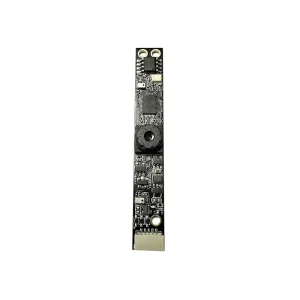
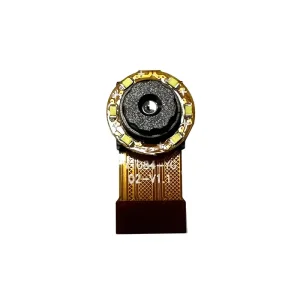
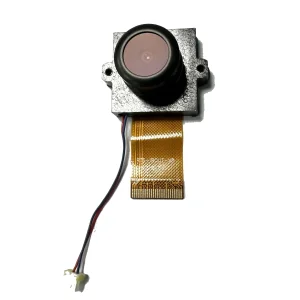
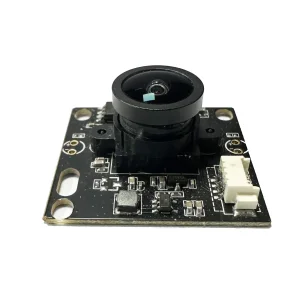
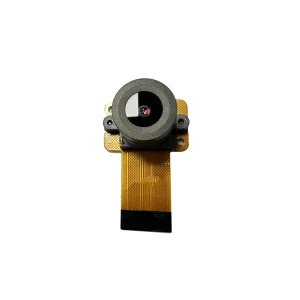
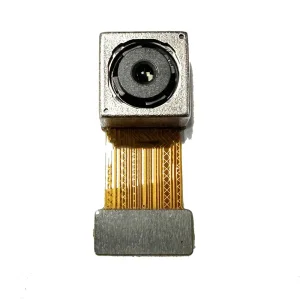
Partnering with global system integrators from conceptual optics design to high-volume manufacturing.
We tailor optical Chief Ray Angle (CRA) to match sensor microlens configurations, preventing corner vignetting and color shading in wide-angle and compact module footprints.
Engineers provide customized Image Signal Processor (ISP) firmware tuning—including auto-exposure curves, custom AWB matrix, noise reduction algorithms, and distortion correction coefficients for Linux, Windows, and Android targets.
Flexible PCB (FPC) shape engineering, custom connector pinout mapping, EMI shielding gaskets, and IP67 waterproof barrel sealing designed specifically for constrained customer enclosures.
Expert answers regarding compliance, optical customization, sample lead times, and system integration.
For standard sensor evaluation modules with stock lens configurations, samples ship within 3–5 working days. For custom FPC layout engineering, specific IR-filter coating, or custom mechanical mounting brackets, rapid prototyping takes approximately 12–15 business days. Mass production lead times range between 3 to 4 weeks upon tooling validation.
Yes, all raw materials, optical elements, solder pastes, and PCB substrates used in our factory comply strictly with EU environmental and electrical safety directives, including CE Mark, RoHS 3.0 (2015/863), and REACH SVHC regulations. Full compliance certificates and MSDS documentation are provided during product validation.
Standard wide-angle lenses suffer from severe barrel distortion (often >15%), bending straight lines at the periphery of the frame. Our distortion-free modules utilize specialized multi-element optical designs with aspherical glass elements that maintain geometric fidelity (optical distortion <0.5%). This eliminates the need for processor-intensive software de-warping, making them ideal for barcode scanning, OCR, and spatial robotics.
For minimal CPU overhead and zero latency, MIPI CSI-2 is recommended as it interfaces directly with host SoC ISPs (e.g., NVIDIA Jetson, NXP i.MX8, Raspberry Pi). If you require cross-platform driverless plug-and-play functionality across Windows, Linux, and Android over cable lengths up to 3–5 meters, USB UVC (USB 2.0 / USB 3.0) is the preferred industry standard.
