Engineered for high-reliability embedded applications in Toronto's autonomous transit, industrial automation, medical robotics, and smart city infrastructure.
Analyzing the operational requirements, sub-zero climatic constraints, and hardware engineering demands of Greater Toronto’s tech corridors.
The Greater Toronto Area (GTA), anchored by the Waterloo-Toronto Innovation Corridor, leads in autonomous shuttles, snowplow machine vision, and driver monitoring systems (DMS). Imaging systems deployed across Ontario highways require automotive-grade CMOS sensors rated for extreme thermal swings (-40°C winter cold to +85°C enclosure heat) and high dynamic range (HDR >120dB) to combat blinding winter snow glare.
Toronto’s Discovery District and University Health Network (UHN) spin-offs drive demand for high-resolution autofocus and low-distortion micro-camera modules. Used in automated document readers, point-of-care bio-analyzers, endoscopic visual instruments, and high-contrast laboratory automation where true color reproduction and sub-millimeter sharpness are essential.
Brampton and Mississauga logistics corridors rely heavily on vision-guided Autonomous Mobile Robots (AMRs), automated inventory drones, and self-checkout kiosks. Standardizing on zero-distortion USB and MIPI camera modules allows Toronto system integrators to achieve rapid barcode reading and real-time spatial mapping without complex algorithmic de-warping overhead.
When procurement managers and lead hardware engineers in Toronto evaluate high-volume component procurement under the topic of "Buy Product Manufacturers & Products in Toronto", the key operational requirement is balancing cutting-edge optical performance with cost efficiency and prototype agility. Acquiring embedded vision modules isn't simply buying off-the-shelf hardware; it requires matching sensor optical formats, lens Chief Ray Angles (CRA), signal transmission protocols, and thermal dissipation metrics.
Selecting the optimal electronic interface dictates host processor selection, system power envelope, and physical cable routing lengths within industrial equipment:
| Interface Protocol | Bandwidth / Speed | Max Cable Distance | Target Toronto Industry Use Case | Primary Hardware Platform |
|---|---|---|---|---|
| MIPI CSI-2 (2/4-Lane) | Up to 2.5 Gbps per lane | < 30 cm (Direct FPC) | Edge AI, Drones, AMRs, Handheld Medical | NVIDIA Jetson Orin, Raspberry Pi CM4/5, NXP i.MX8 |
| USB 2.0 / USB 3.0 UVC | 480 Mbps / 5.0 Gbps | Up to 3m - 5m (USB Standard) | Kiosks, Document Scanners, Video Conference | x86 Industrial PC, Windows/Linux/Android Terminal |
| GMSL2 / FPD-Link III | Up to 6.0 Gbps | Up to 15m (Coaxial Cable) | Automotive Dash Cams, Outdoor Fleet Heavy Machinery | Vehicle ECU, Central ADAS Domain Controller |
| DVP Parallel | Up to 100 Mbps | < 15 cm | Cost-Sensitive Smart Home, Simple Barcode Readers | Low-Power Microcontrollers (STM32, ESP32) |
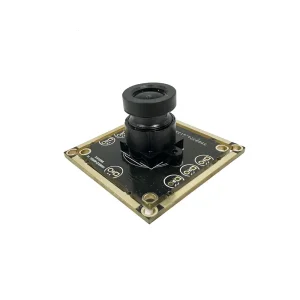
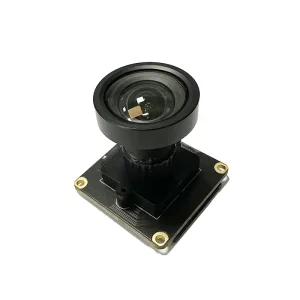
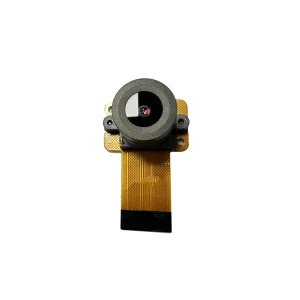
Standard wide-angle lenses introduce optical fisheye distortion that alters geometric fidelity. For high-precision visual scanning, document capture, and robotic spatial calibration, software de-warping consumes precious CPU/GPU compute cycles and degrades pixel interpolation quality. Utilizing distortion-free standard camera modules (<0.5% optical distortion) incorporates specialized multi-element aspherical glass-plastic hybrid optics (such as 2G4P or 6G optical stack-ups) that correct light rays physically before reaching the CMOS silicon sensor.
Shenzhen technology hubs like YXD Optics (Shen Zhen You Xiang Da Technology Co., Ltd., founded in 2015) supply a critical link for Toronto hardware OEMs. Developing custom camera modules domestically in North America often incurs lengthy 12-to-16 week tooling cycles and exorbitant engineering fees. In contrast, leveraging specialized optical cleanroom facilities in Shenzhen delivers:
How embedded camera modules drive operational efficiency across key industries in the Greater Toronto Area.
Commercial vehicle safety regulations across Highway 401 demand continuous 1080P Full HD recording. Equipped with starlight low-light sensitivity sensors (e.g., Sony STARVIS) and wide dynamic range, these modules record clear license plates through snow, dark rural roads, and harsh headlight glare.
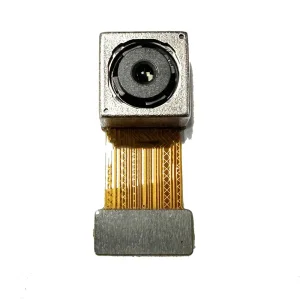
Used extensively in healthcare networks and financial institutions across Downtown Toronto. High-megapixel (4MP/8MP) autofocus USB camera modules instantly focus on identity documents, passports, and barcode checks without requiring manual mechanical adjustment.
Toronto’s high-density residential developments require reliable visual doorbells with night-vision infrared illumination. Integrated ODM camera modules feature dual IR-cut filters that automatically switch between realistic daylight color and ultra-sharp night-vision monochrome imaging.
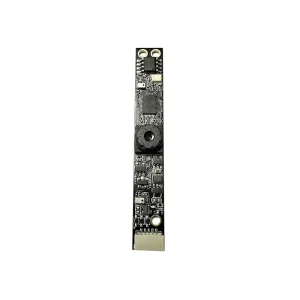
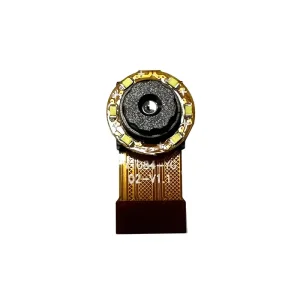
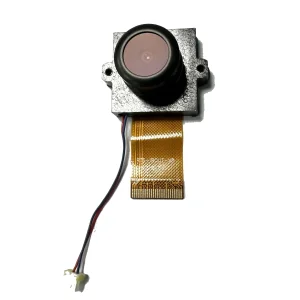
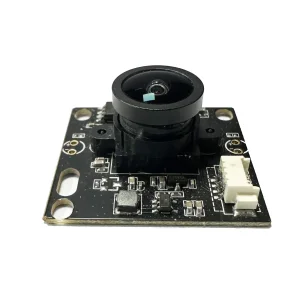
Explore our complete range of specialized vision modules available for immediate sample delivery and custom mass production for Toronto enterprise buyers.
Technical guidance for Canadian procurement teams, systems engineers, and product designers.
We deliver rapid prototype samples directly to Toronto, Markham, Mississauga, and Waterloo via expedited air express (DHL, FedEx, UPS). Customs clearance procedures into Canada are streamlined, with fully compliant HS Code documentation provided for customs duty handling, typically arriving within 3 to 5 business days after factory sign-off.
Yes. As a premier OEM/ODM camera module manufacturer, YXD Optics provides custom flexible printed circuit (FPC) design, specialized optical lens Field of View (FOV ranging from 60° distortion-free to 180° fisheye), custom sensor mounting PCB outlines, and specific pinout assignments to seamlessly interface with host processors like NVIDIA Jetson, Raspberry Pi, Rockchip, and NXP.
Modules designated for automotive and outdoor applications undergo rigorous environmental reliability testing, including thermal shock cycles (-40°C to +85°C), high-humidity storage (95% RH at 60°C), and continuous burn-in vibration tests. We utilize industrial-grade CMOS image sensors and thermally stable metal/glass lens housing barrels to prevent focus shift across temperature fluctuations.
Yes. All standard USB 2.0 and USB 3.0 UVC (USB Video Class) camera modules conform to universal driverless standards. They operate instantly on Windows 10/11, Linux (Ubuntu, Debian, Yocto), macOS, and Android platforms without requiring third-party driver installations.
Accelerate your engineering development cycle with direct engineering support, custom prototyping samples, and competitive factory pricing from YXD Optics.
Send Inquiry Now