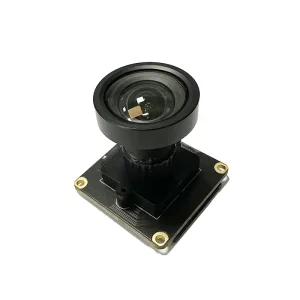
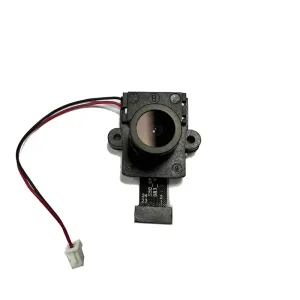
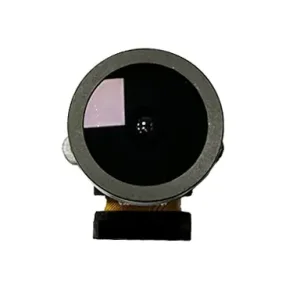
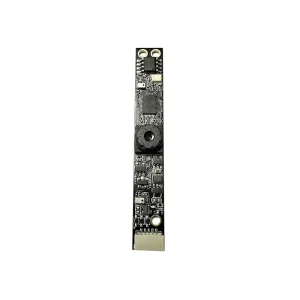
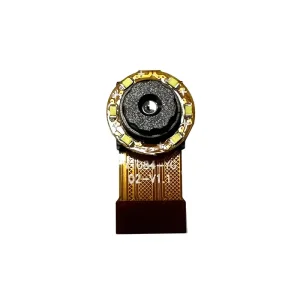
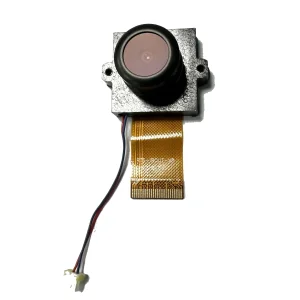
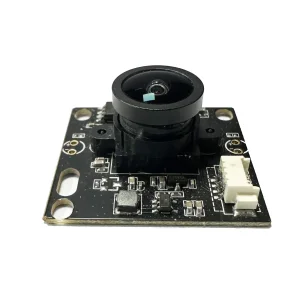
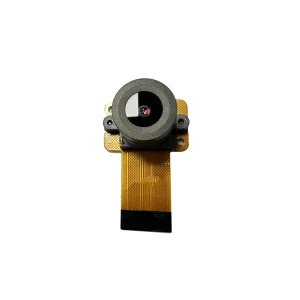
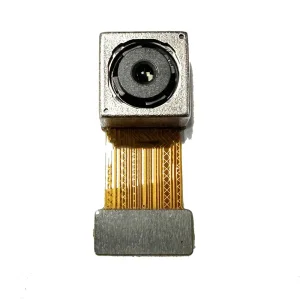
Engineered for Singapore's automated manufacturing, smart security, and edge AI vision deployments.
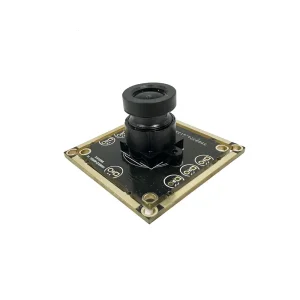
Analyzing procurement dynamics, regional innovation hubs, and optical module demand drivers across Southeast Asia.
Singapore stands as Southeast Asia’s undisputed nexus for advanced manufacturing, semiconductor fabrication, biopharmaceutical medtech, and autonomous robotics. As multinational hardware companies, regional headquarters, and R&D centers expand across the Jurong Innovation District (JID), Changi Business Park, and Tuas Biomedical Park, the requirement for ultra-high-precision optical components—specifically high-definition CMOS camera modules—has experienced exponential growth.
When engineering teams and enterprise procurement directors evaluate options to buy product companies and leverage camera module factories in Singapore, they operate within a highly sophisticated ecosystem. While Singapore serves as the strategic engineering, IP management, and regional hub, the physical manufacturing supply chain relies heavily on seamless integration with high-volume, cleanroom-certified optical factories in specialized industrial zones like Shenzhen, China. This hybrid cross-border model provides Singaporean enterprises with the ultimate competitive advantage: Tier-1 optical engineering precision backed by rapid-scale OEM/ODM mass manufacturing capacity.
The transformation of Singapore under the Smart Nation 2025/2030 initiatives has created unprecedented intent for intelligent computer vision solutions. Embedded camera modules are no longer simple image capture devices; they are the fundamental primary sensors for artificial intelligence, neural network processing, and automated optical inspection (AOI).
Navigational sub-assemblies for Autonomous Guided Vehicles (AGVs) operating in PSA Singapore automated port terminals and high-density semiconductor cleanrooms require low-latency MIPI CSI-2 and global shutter camera modules.
Singapore’s medical technology sector demands medical-grade miniature camera modules (under 9mm diameter) for endoscopes, diagnostic equipment, and automated lab fluid analyzers certified to stringent HSA standards.
Commercial skyscrapers across Marina Bay and smart residential estates utilize 2K Wide-Angle WDR modules with near-infrared (NIR) night vision for instant facial recognition and building access control.
Global technology buyers headquartered in Singapore demand strict adherence to quality parameters, full traceability, and minimal optical distortion. Key selection metrics include:
To bridge the gap between initial prototyping and enterprise mass deployment, our manufacturing ecosystem provides turnkey OEM/ODM customization. This includes custom Flexible Printed Circuit (FPC) design, multi-layer PCB layout optimization, IR filter selection (650nm / 850nm / 940nm bandpass), and precise lens bonding using Active Alignment (AA) technology.
By leveraging Active Alignment equipment, our factories achieve optical center alignments within 1 micron, ensuring edge-to-edge sharpness across high-megapixel sensors (from 2MP Full HD up to 4K ultra-high resolution).
Strategic development trends shaping next-generation optical vision solutions in Singapore and globally.
Integration of onboard Neural Processing Units (NPUs) directly onto camera module PCBs, enabling real-time object detection and facial encoding at 60 FPS directly on the edge.
Transition to Short-Wave Infrared (SWIR) sensors and wafer-level micro-optics, allowing vision systems to inspect silicon wafers in Singapore semiconductor fabs through opaque layers.
Development of ultra-compact 1080P/4K sub-miniature modules for next-generation minimally invasive surgical robotics and advanced medical wearables.
Widespread implementation of Time-of-Flight (ToF) depth sensing and high-speed Global Shutter sensors to eliminate motion blur in robotic picking and drone delivery.
Procuring camera components for devices distributed within Singapore or exported to EU/US markets requires absolute compliance with international and regional regulatory frameworks. Our factory products undergo exhaustive validation:
Certified automotive-grade and industrial manufacturing lines guaranteeing less than 5 PPM failure rates across mass production batches.
Complete hazardous substance testing reports available for seamless customs import clearance into Singapore and international hubs.
COB (Chip-on-Board) and SMT mounting executed inside dust-free cleanrooms to prevent optical sensor pixel contamination.
Explore our comprehensive matrix of customized camera modules available for sampling and high-volume procurement.
Expert engineering and commercial insights for sourcing camera modules and optics from specialized factories.
Connect with our senior optical engineering team. Get customized product recommendations, datasheets, and competitive OEM/ODM factory pricing tailored for your enterprise in Singapore or globally.