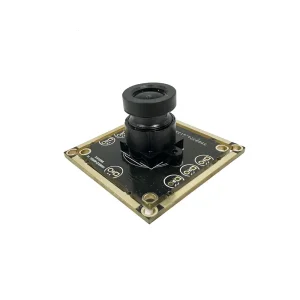
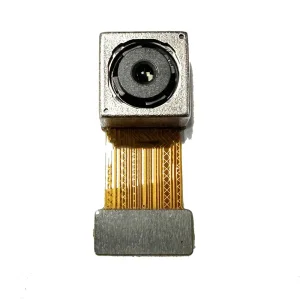
Explore our flagship OEM/ODM optical assemblies engineered for B2B applications in automotive, smart building access, medical inspection, and embedded industrial vision.
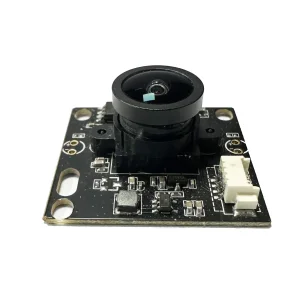
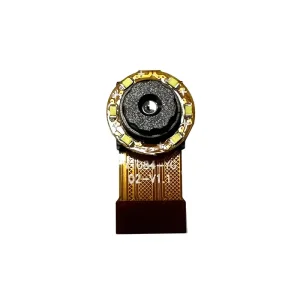
Analyzing the macro economics, supply chain dynamics, and technological demands driving the modern wholesale optical manufacturing industry.
The global precision optics market is undergoing a seismic paradigm shift. Modern optical hardware is moving rapidly away from static single-focal length systems toward dynamic, multi-depth, and advanced Multifocale Lenzen (Multifocal Lenses) optical architectures. Driven by exponential growth in autonomous mobility, industrial automation, edge-AI vision, and smart building infrastructure, European B2B procurement directors and global original equipment manufacturers (OEMs) require sophisticated sourcing partnerships with established B2B optical suppliers (*Leverancier*).
Historically, optical designers were constrained by fixed focal length compromises: optimizing either for near-field depth (such as close-up document scanning and biometric scanning) or far-field vision (such as perimeter surveillance and automotive obstacle detection). The integration of hybrid multifocal optical designs, coupled with multi-element glass-plastic (G+P) lens geometry and micro-actuated autofocus CMOS modules, eliminates these technical bottlenecks. Today, a premier China-based optical manufacturing partner serves as the core technology engine for global device innovators across Europe, North America, and Asia-Pacific.
In regions such as the Benelux (Netherlands, Belgium, Luxembourg), high-tech manufacturing, medical diagnostics, and agricultural automation require highly reliable optical suppliers (*Leverancier*). High precision, ISO-certified cleanroom manufacturing, and strict European CE/RoHS compliance are prerequisite baselines for entering this tier-1 industrial market.
By leveraging Shenzhen's unparalleled electronics supply chain, our manufacturing facility bridges advanced optical design with cost-efficient mass production. From active alignment (AA) SMT processes to high-volume sensor wafer bonding, B2B buyers obtain industrial-grade reliability at competitive wholesale scales.
Key technical innovations shaping the future of industrial camera engineering and custom optical lens fabrication.
In analyzing the 2025–2030 optical technology roadmap, several critical engineering trends are defining how OEMs request and implement wholesale optical components:
Strategic foresight into next-generation optical manufacturing, metasurface flat optics, and hybrid depth-sensing architectures.
Deployment of high-sensitivity Sony STARVIS CMOS sensors matched with F/1.6 ultra-large aperture optical lenses. Implementation of 100% Active Alignment (AA) process to guarantee uniform edge-to-edge sharpness across multi-megapixel sensors.
Transitioning from traditional mechanical glass lens grinding to wafer-level polymer molding and sub-wavelength nanostructure flat optics (Metasurfaces). This drastically reduces module height by 50% while offering programmable multifocal response.
Fully integrated optoelectronic packages combining high-resolution visual spectrum RGB sensors, infrared illuminated dot projectors, and multifocal lenses into a single miniaturized module for spatial computing and autonomous robotic navigation.
Real-world integration of specialized camera modules across smart infrastructure, automotive telematics, and commercial devices.
Challenge: Outdoor doorbells facing extreme lighting contrasts (harsh sunlight backlight vs pitch-black night ambient light) while requiring wide coverage to recognize visitor faces and packages on the ground.
Solution: Custom ODM camera module with Wide Dynamic Range (WDR > 120dB), integrated IR-Cut switcher, and high-resolution 140° low-distortion lens. Ensures immediate facial recognition accuracy for building intercoms.
Challenge: Capturing clear license plate details on vehicles moving at high speeds during low-light nighttime rain conditions without dynamic motion blur.
Solution: Starlight-grade 1080P / 2K CMOS module coupled with 6-layer precision glass (6G) optical assembly, wide aperture, and high thermal stability (-40°C to +85°C operation).
Challenge: Capturing fine typography and 2D barcodes across variable distances without manual readjustment or peripheral image distortion.
Solution: High-speed Voice Coil Motor (VCM) autofocus camera module featuring zero-distortion lens design and driver-free USB UVC / MIPI interfaces for seamless OS integration.
Challenge: Integrating full HD video feeds into narrow surgical or industrial inspection shafts without overheating or bulky wiring.
Solution: Ultra-compact 9mm diameter miniature module utilizing flexible printed circuit (FPC) tail, ultra-low power power management IC, and high spectral fidelity glass elements.
How we ensure zero-defect quality, exact optical alignment, and rapid scaling from initial concept prototyping to mass production.
Zemax and Code V optical simulations to optimize MTF, field curvature, chromatic aberration, and relative illumination prior to physical tooling fabrication.
Robotic Active Alignment equipment adjusts the lens barrel across 6 degrees of freedom relative to the CMOS sensor, ensuring focal plane perfection across the entire image field.
Every mass-production batch undergoes environmental thermal shock (-40°C to +85°C), humidity aging, vibration testing, and continuous high-temperature aging validation.
In-depth answers to technical, logistical, and customization questions asked by global optics buyers and embedded systems hardware engineers.
Browse our expanded portfolio of high-definition camera modules for custom industrial integration, vehicle telematics, and smart edge hardware.