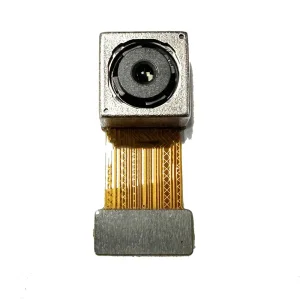
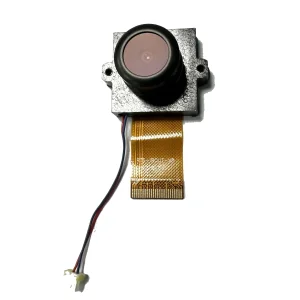
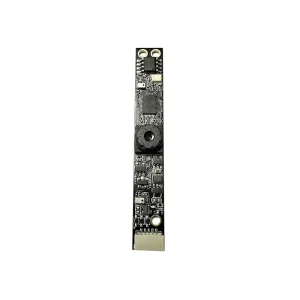
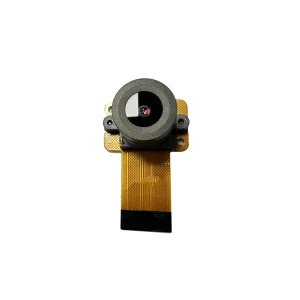
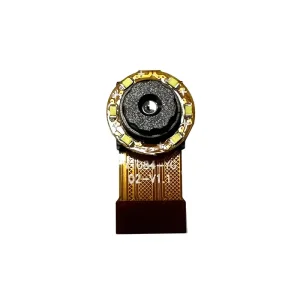
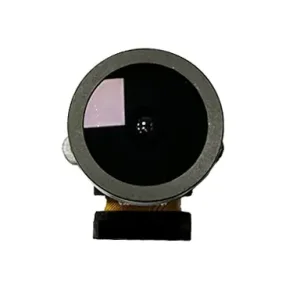
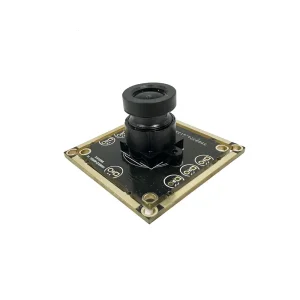
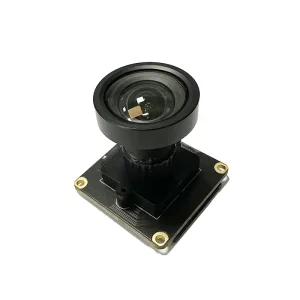
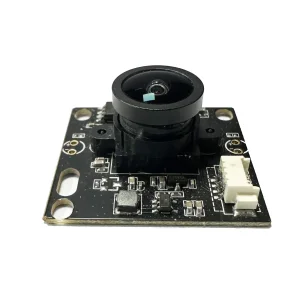
Engineered for seamless integration into smart doorbells, access control terminals, and high-definition architectural monitoring systems.
From Analog Intercoms to Edge-AI Vision Systems: A Strategic Engineering Overview
The global security landscape is undergoing a massive paradigm shift. Front door surveillance has evolved from simple analog video doorbells into sophisticated, edge-AI-enabled optical control centers. Modern commercial and residential properties no longer view front door monitoring merely as a reactive verification tool; it is now the primary line of defense in smart access control, automated package delivery management, and real-time threat intelligence.
Procurement directors and systems integrators face increasing complexity when sourcing high-reliability camera modules. Factors such as sensor format efficiency (e.g., 1/2.7" vs. 1/3" CMOS), interface latency (MIPI CSI-2 vs. USB UVC vs. Network IP), lens MTF (Modulation Transfer Function) stability, and optical distortion compensation determine whether an entry-point surveillance system delivers enterprise-grade reliability or suffers from elevated false-positive rates and degraded nighttime optical clarity.
Leveraging Shenzhen's Complete Electro-Optical Ecosystem for Unmatched Innovation Speed & Scale
Shenzhen houses the world's most concentrated optical ecosystem. Sensor packaging, active alignment (AA) lens mounting, high-frequency SMT lines, and dynamic ISP tuning are co-located within a 30-minute radius, dramatically compressing sample iteration time.
Leading Chinese factories employ multi-axis fully automated Active Alignment equipment. By aligning sensor chips with high-resolution low-distortion lenses in real-time under live video display, corner sharpness and image uniformity are mathematically optimized.
Direct access to primary semiconductor foundries and glass/plastic hybrid lens producers allows Chinese manufacturers to offer starlight-level night vision and 4K optical clarity at wholesale price points unavailable elsewhere.
Factory production protocols incorporate continuous high-temperature aging chambers (-20°C to +70°C operating validation), ESD dynamic discharge protection testing, waterproofing seal verification, and 100% MTF resolution validation.
Next-Generation Technologies Defining the Commercial & Residential Security Benchmark
Cloud-dependent motion detection is rapidly being replaced by localized Edge AI. Modern front door camera modules feature integrated NPUs (0.5 TOPS to 2.0 TOPS) capable of running lightweight neural networks directly on chip. This enables instantaneous classification of facial features, package delivery drops, pet movement, and vehicle detection without bandwidth lag or cloud privacy vulnerabilities.
Single-lens cameras often suffer from blind spots directly beneath the door handle where parcels are deposited. Industry demand has shifted toward dual-sensor designs: a primary horizontal wide-angle lens paired with a secondary downward-facing lens, eliminating physical blind spots entirely.
Leveraging ultra-large physical apertures (F1.0 to F1.2) combined with high-sensitivity back-illuminated (BSI) CMOS image sensors, next-gen surveillance modules achieve vivid, full-color imaging in near-pitch-black conditions, minimizing the need for glaring external white LEDs.
For battery-operated smart doorbells, power management is paramount. Emerging module architectures feature fast-boot ISP firmware capable of waking up from deep sleep mode to active optical recording and AI framing in under 300 milliseconds upon PIR trigger.
Tailored Optical Solutions for Smart Buildings, Logistics, and Commercial Gateways
In high-density apartment complexes and gated communities, front door cameras act as multi-user access terminals. Requirements mandate wide FOV lenses (typically 130° to 160° diagonal) paired with hardware distortion correction to ensure visitors standing off-center are clearly identifiable without optical stretching. Integration with MIPI or USB UVC interfaces ensures seamless streaming to central building processors running SIP audio and video protocols.
The booming global e-commerce sector demands continuous, high-reliability video verification at automated locker entry ports and warehouse access doors. Camera modules engineered with low-distortion fixed focus lenses ensure precise optical reading of 1D/2D barcodes on package labels under variable lighting, while simultaneously recording high-resolution video proof of drop-off.
Corporate headquarters and retail flagships require visual hardware that interfaces directly with ONVIF and RTSP enterprise surveillance backbones. Modules with native hardware WDR (>120dB) and starlight CMOS sensors guarantee continuous visual integrity even when subject to intense specular reflection, direct glare, or night-time street lamps.
Engineering Optical Reliability for Real-World Installation Contexts
Front doors exposed to direct afternoon sunlight experience thermal soak exceeding +65°C inside camera enclosures. Low-cost plastic lens holders deform under high thermal stress, causing severe focus drift (blurriness). Factory customized all-glass lenses with metal barrels maintain zero thermal defocusing across broad temperature shifts.
In Northern European and North American winter climates, internal condensation can fog optical elements. Sub-zero operational testing, combined with sealed hydrophobic optical coatings and thermal insulation FPC designs, ensures immediate image clarity upon startup at -20°C.
Residential porches frequently lack ambient night lighting. Utilizing IR-cut switchable filter modules (ICR) with 850nm or 940nm stealth infrared illuminators ensures crystal-clear monochrome video capture up to 10 meters without visible light disturbance.
A Strategic Roadmap for Hardware Engineering & Procurement Teams
When issuing RFQs (Request for Quotations) or establishing ODM engineering programs for front door surveillance camera services, global sourcing teams must evaluate critical optical and hardware parameters to avoid costly redesign cycles:
Choose MIPI CSI-2 for embedded Linux/Android SoCs requiring ultra-low latency and direct ISP tuning control. Choose USB UVC for rapid plug-and-play integration into commercial kiosks or PC-based access systems. Choose Wi-Fi / Network modules for standalone wireless smart home products.
Balance broad coverage against facial recognition accuracy. Standard wide-angle lenses (120°-140° DFOV) provide complete entryway visibility. Ensure specified optical distortion is below 15% or paired with on-chip de-warping firmware to maintain natural aspect ratios.
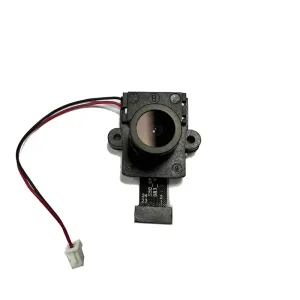
Enclosures for sleek doorbells are severely space-constrained. Modern module designs offer ultra-narrow PCBs (down to 9mm width or customized circular footprints) with flexible printed cables (FPC) tailored to fit snugly around housing screws and battery compartments.
Select appropriate IR filters: Dual-band filters for cost-sensitive daylight/IR environments, or dynamic mechanical ICR (IR-Cut Removable) switches for superior true-color daytime reproduction and high IR sensitivity at night.
Expert Answers to Engineering and Supply Chain Inquiries
Select from our field-proven hardware solutions designed for global export and custom OEM deployment.