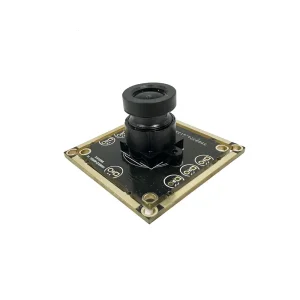
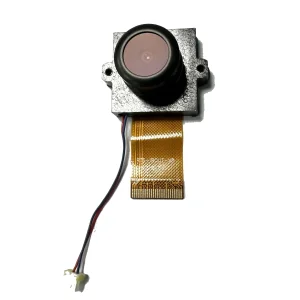
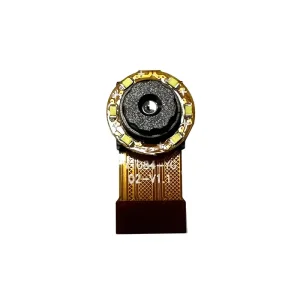
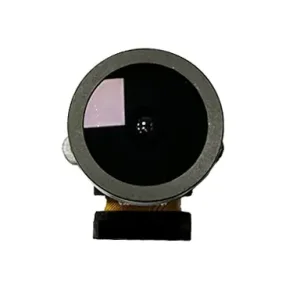
Direct factory precision components, optimized for embedded vision, high-speed capture, and industrial shockwave stability.
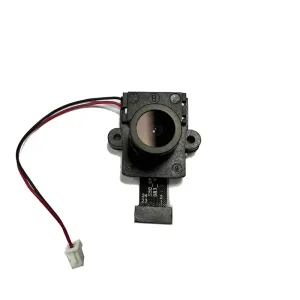
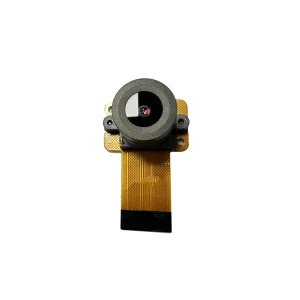
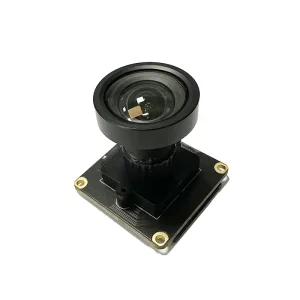
An in-depth analysis of shockwave mitigation, optical alignment engineering, high-bandwidth signal integrity, and robust OEM system manufacturing.
In modern industrial automation, automotive recording, medical diagnostics, and edge-computing robotics, the demanding physical environments present persistent challenges to visual sensor integrity. The OEM X31 Shockwave Architecture was engineered specifically to solve high-frequency acoustic shockwave distortion, mechanical vibration harmonics, and extreme thermal fluctuations. Unlike standardized consumer-grade camera sensors, OEM X31-compliant modules combine reinforced structural chassis, active optical alignment (AA), micro-dampening elastomers, and low-latency digital signal processors (DSP) into a unified high-reliability module.
Established through over a decade of continuous precision optic research in Shenzhen, China, our manufacturing facilities integrate strict ISO/IATF 16949 production workflows. Modern high-resolution sensors operating at 1080P, 2K, or 4K resolutions suffer from severe frame-tearing and displacement jitter when subjected to localized pressure spikes or physical shock waves. By incorporating tuned piezoelectric dampeners and multi-layer flex-rigid printed circuit boards (FPCBs), the X31 specification guarantees clean signal transmission via MIPI CSI-2, USB 2.0/3.0 UVC, or DVP interfaces under ambient stress levels up to 50G.
Analyzing the macroeconomic expansion of shockwave-resistant optical sensor deployment across Tier-1 global manufacturing markets.
Autonomous vehicle (AV) perception systems, advanced driver assistance (ADAS), commercial fleet dash recorders, and in-cabin driver monitoring demand rugged shockwave dampening to ensure uninterrupted visual telemetry during high-vibration transits.
Autonomous Mobile Robots (AMRs) and high-speed robotic sorting arms utilize X31-stabilized camera modules to execute zero-latency SLAM navigation, object recognition, and machine vision inspection in noisy factory environments.
Video doorbells, biometric building intercoms, and perimeter surveillance installations require thermal endurance, IP-rated seals, and distortion-free wide-angle coverage to process clear facial recognition metadata.
The accelerating integration of Artificial Intelligence at the Edge (Edge AI) has shifted camera module selection criteria. Modern visual systems no longer merely display video to human operators; they feed high-bandwidth raw pixel data directly into neural networks. In this operational context, image degradation caused by shockwaves, rapid temperature fluctuations, or structural flexion leads directly to algorithmic misclassification. Consequently, global buyers across North America, Europe, and Asia-Pacific are mandating OEM X31 manufacturing protocols for critical vision infrastructure.
Comprehensive technical breakdown evaluating mechanical, electrical, and optical operational parameters.
| Performance Benchmark | Standard OEM Camera Module | OEM X31 Shockwave Module | System Level Advantage |
|---|---|---|---|
| Optical Alignment | Manual / Passive Fixturing | 6DoF Active Alignment (AA) | Sub-pixel edge clarity, zero center displacement. |
| Shockwave Resistance | 10G to 15G (Max 11ms) | 50G Peak Acceleration (Mil-Std-810G) | Eliminates image tearing & sensor detachment risk. |
| Dynamic Range (HDR) | 65dB - 80dB Standard CMOS | 120dB Starlight Low-Light HDR | Retains image contrast under harsh direct sunlight/headlights. |
| Distortion Rate | 3.5% - 8.0% (Fisheye/Wide) | < 0.05% Distortion-Free Optics | Optimal for barcode scanning & direct OCR text reading. |
| Operating Range | -10°C to +60°C | -40°C to +85°C Industrial Grade | Continuous operation in harsh outdoor/in-vehicle environments. |
| Interface Bus | DVP / USB 2.0 Only | MIPI CSI-2 / USB 3.0 UVC / Wi-Fi IP | High frame rates (up to 120 FPS) with low CPU overhead. |
Customized optical configurations tailored for field-proven operational environments.
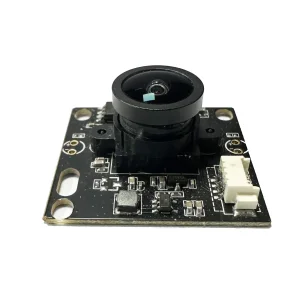
In automated logistics hubs and tablet-based desktop scanners, optical distortion causes registration errors during high-speed scanning. By deploying the Autofocus Multi-Application X31 Camera Module with distortion-free glass elements, systems achieve instantaneous focal lock on moving barcodes, 1D/2D matrix codes, and high-density text labels without edge warping.
Modern smart doorbells and access control intercom panels operate continuously in unpredictable exterior lighting. Utilizing 2K Wide-Angle Starlight Sensor Modules equipped with IR-Cut switchers, the X31 housing blocks environmental moisture while providing crystal-clear facial recognition capability up to 15 meters in near-total darkness.
Commercial automotive recorders and dash cams face extreme mechanical shock, high engine bay temperatures, and low-light highway conditions. The 1080P Starlight Driving Recorder Module integrates wide dynamic range algorithms into a thermal-stable alloy barrel, guaranteeing clear license plate capture regardless of vehicle vibration or glare.
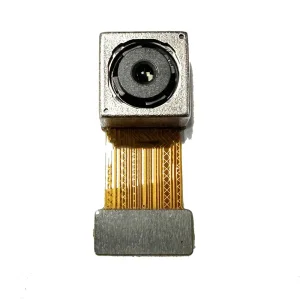
In ultra-compact industrial borescopes, inspection probes, and portable diagnostic equipment, spatial volume is strictly limited. The 9mm Miniature 1080P HD Camera Module delivers full high-definition video throughput across flexible printed cables (FPC) while maintaining robust ESD and electromagnetic shield protection.
Pioneering advancements in optical manufacturing, sensor integration, and micro-shockwave dampening.
Implementation of 8-axis robotic laser alignment stations, bringing optical tilt tolerance below 0.01° for 4K embedded sensor arrays.
Embedding zero-latency neural image signal processing (NISP) directly onto the module PCB to execute hardware noise reduction at 120 FPS.
Transitioning from traditional multi-element glass stack-ups to sub-wavelength flat metasurface lenses, reducing total module length by 60%.
Integrating single-photon avalanche diode (SPAD) quantum sensors for absolute zero-light imaging with shockwave-proof ceramic substrates.
Direct insights from senior optical design engineers regarding customization, interface standards, and reliability testing.
An OEM X31 Shockwave compliant module must feature dynamic active optical alignment (sub-2µm variance), reinforced physical housing designed to absorb mechanical shocks up to 50G, an operational thermal envelope between -40°C and +85°C, high electromagnetic shielding (EMI/ESD compliance), and custom FPC trace tuning to preserve MIPI/USB signal integrity during continuous high-frequency vibration.
YXD employs custom multi-element aspheric glass lens design pipelines paired with internal distortion-correction algorithms. While standard wide-angle modules display heavy barrel distortion (fisheye effect), our low-distortion glass optics achieve optical distortion rates under 0.05%, ensuring straight line fidelity crucial for barcode scanning, document capture, and machine vision alignment.
For high-performance applications (Raspberry Pi 5, NVIDIA Jetson, Rockchip ARM SoCs) requiring high frame rates and minimal CPU latency, MIPI CSI-2 is optimal. For plug-and-play host integration on Windows, Linux, Android, or macOS laptops/kiosks, USB 2.0/3.0 UVC requires no custom drivers. For low-cost microcontrollers (MCUs) running basic image capture, DVP parallel interfaces remain economical.
As a specialized direct manufacturer, we offer complete OEM/ODM customization: including sensor selection (Sony, Omnivision, SmartSens), optical Field of View (FOV from 60° to 180°), fixed focus vs. VCM autofocus, IR filter wavelength bandpasses (850nm/940nm dual bandpass), custom PCB outline dimensioning (down to miniature 9mm structures), and tailored FPC lengths.
Every production batch undergoes 100% automated optical inspection (AOI), high-temperature aging burn-in tests (72 continuous hours at +70°C), thermal shock cycling (-40°C to +85°C), high-frequency vibration testing, and image tuning verification (SFR/MTF resolution charts, white balance uniformity, and dark current noise checks).
Select any module below to inspect full dimensional blueprints, datasheets, and sampling options.