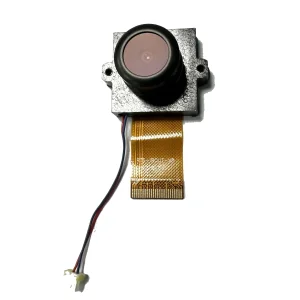
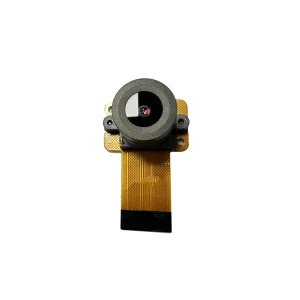
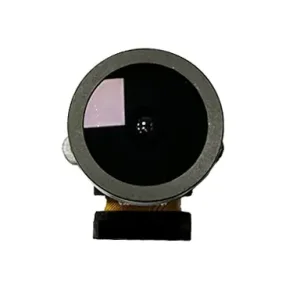
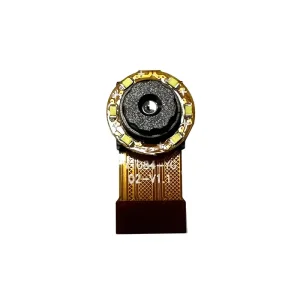
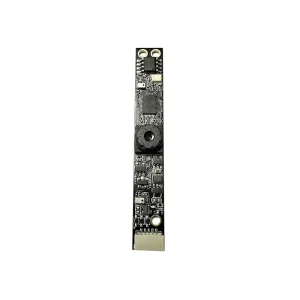
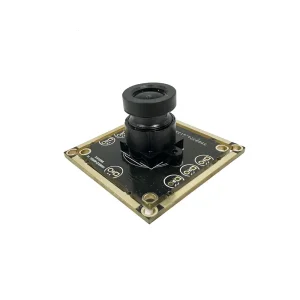
Explore high-performance embedded camera modules engineered with custom concave and convex optical elements for enterprise surveillance, automotive recording, and industrial vision.
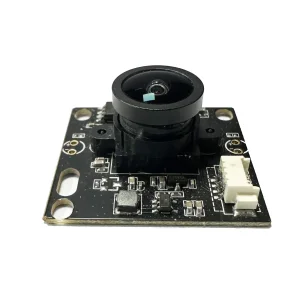
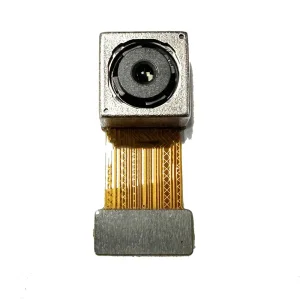
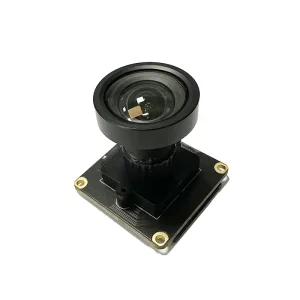
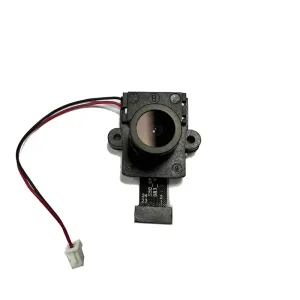
In the realm of closed-circuit television (CCTV) engineering and automated video surveillance, asking whether a camera uses a concave or convex lens appears straightforward. However, the true answer lies at the intersection of optical physics, geometrical ray tracing, and multi-element lens design. The fundamental short answer is: CCTV cameras fundamentally rely on convex lenses as their primary objective element to converge light rays onto an electronic image sensor (CMOS or CCD). However, modern high-definition, AI-driven CCTV camera modules never use a single, standalone glass lens. Instead, they incorporate a sophisticated compound lens assembly composed of both convex (converging) and concave (diverging) spherical or aspherical glass/plastic lens elements.
As a leading Shenzhen-based OEM/ODM camera module manufacturer, Shen Zhen You Xiang Da Technology Co., Ltd. (YXD) engineers precision compound optical modules tailored for global security integration, smart city traffic monitoring, automated access control, and low-distortion edge devices. This whitepaper provides procurement directors, system integrators, and optical engineers with an end-to-end technical dissection of CCTV camera optics, structural compound element designs, emerging technological roadmaps, and global compliance standards.
To understand why modern surveillance systems require intricate element combinations, one must evaluate the core optical behavior of light refraction across curved surfaces:
Convex Lenses (Converging Lenses): A convex lens is thicker at its center than at its edges. When parallel incident light rays pass through a convex lens, they refract inward toward a single focal point ($F$). Because CCTV systems require a real image to be focused onto a physical image sensor plane, a convex lens geometry is strictly necessary. The sensor converts the incoming focused photons into electrical charges, creating crisp video streams.
Concave Lenses (Diverging Lenses): A concave lens is thinner at its center and thicker along its periphery. Incoming parallel light rays bend outward (diverge) as they pass through the lens, making them appear to originate from a virtual focus point behind the lens. A standalone concave lens produces only virtual images, which cannot be captured by an electronic sensor array. Therefore, a CCTV camera cannot function using solely concave optics.
| Optical Attribute | Convex Lens (Converging) | Concave Lens (Diverging) | Compound CCTV Assembly (G+P Hybrid) |
|---|---|---|---|
| Primary Function | Focuses light to form real inverted images | Diverges light rays to form virtual images | Corrects aberrations, focuses light across full FOV |
| Sensor Application | Mandatory objective refractive front-element | Internal corrective element (Aberration reduction) | Standard in 1080P, 4K, & 8K CCTV Camera Modules |
| Aberration Control | Prone to positive spherical & chromatic aberration | Introduces negative aberration to counteract convex flaws | Near-zero chromatic dispersion & sub-0.5% distortion |
| Focal Length Impact | Positive focal length ($+f$) | Negative focal length ($-f$) | Tailored net positive focal length ($+F_{eff}$) |
While a simple convex glass lens can form an image, it suffers from catastrophic optical defects, including spherical aberration, chromatic dispersion, field curvature, and barrel distortion. In enterprise CCTV installations—where facial identification, automated license plate recognition (ALPR), and long-range peripheral monitoring are critical—single-element distortion is unacceptable.
To overcome these limitations, YXD engineers construct multi-element optical stacks (often designated as 4G, 2G2P, 4G2P, or 6G configurations, where 'G' stands for Glass and 'P' for Plastic):
By cementing a convex lens element crafted from crown glass (low dispersion) to a concave lens element made from flint glass (high dispersion), optical designers create an achromatic doublet. This cancels out color fringing across visible and IR spectrums.
Integrating precision-molded aspherical elements—which break away from traditional spherical curvatures—enables a single element to perform the corrective work of multiple spherical lenses, shrinking module z-height without compromising modulation transfer function (MTF).
CCTV security cameras must operate 24/7. An electro-mechanical IR-cut filter switcher or dual-passband optical coating switches between visible spectrum filtering by day and 850nm/940nm infrared transmission by night, avoiding focal shifts.
The security optics industry is rapidly transitioning from passive glass assemblies into intelligent, dynamic optical front-ends. Procurement teams and engineering planners must consider these five critical technology waves when designing next-generation camera systems:
1. Metasurface & Flat Optics Integration: Sub-wavelength nanostructure arrays (metalenses) are enabling flat optical structures that replace bulky spherical glass elements. Metalenses eliminate chromatic aberration across wide bandwidths while scaling down camera module thickness by up to 70%.
2. Electrically Tunable Liquid Lenses: Replacing mechanical motor-driven auto-focus units, liquid lenses leverage electrowetting technology to alter lens curvature within milliseconds. This offers instantaneous focus adjustments for high-speed traffic enforcement and industrial robotics, eliminating mechanical wear and tear.
3. AI Computational Optics Co-Design: Modern ISP (Image Signal Processor) algorithms are designed concurrently with optical lens groups. By intentional optical encoding, hardware-level aberrations are mathematically mapped and neutralized in real time via edge AI algorithms, allowing wider field-of-view lenses without geometric edge distortion.
4. SWIR (Short-Wave Infrared) Extended Optics: Extending night vision capabilities beyond standard 850nm/940nm IR, SWIR optics (1000nm–1700nm wavelength range) enable CCTV vision systems to penetrate dense fog, heavy smog, marine haze, and tinted glass with crystal clarity.
YXD customizes complete embedded optical solutions designed around unique environmental and operational constraints across diverse industrial verticals:
Smart Cities & Intelligent Transportation Systems (ITS): High-speed roadways demand narrow FOV telephoto convex lens assemblies coupled with ultra-fast global shutter sensors to eliminate motion blur. Lenses with zero thermal drift (utilizing full-glass barrels and temperature-compensated optics) prevent focus defocusing across temperature spikes from -40°C to +85°C.
Commercial Video Doorbells & Access Control: Building intercoms require panoramic ultra-wide-angle optics (140° to 180° FOV) to eliminate peripheral blind spots. YXD utilizes custom concave corrective front optics to deliver rectilinear mapping, ensuring human faces remain naturally proportioned without fisheye curvature distortion.
Industrial Automation & Robotic Inspection: Automated Optical Inspection (AOI) tools demand low-distortion USB/MIPI camera modules. By maintaining distortion rates below 0.1%, optical systems can guarantee sub-millimeter measurement accuracy across electronic assembly lines and robotic pick-and-place arms.
Navigating international regulatory landscapes is essential for tier-1 security OEMs. YXD maintains an uncompromising commitment to international standards and regional compliance frameworks:
NDAA Compliance Assurance: For North American and European government installations, YXD provides non-TAA / NDAA-compliant camera module configurations utilizing non-restricted SoC and image sensor pairings (e.g., Sony, Omnivision, SmartSens) backed by clean-room hardware auditing.
Environmental & Safety Certifications: All camera modules produced at our facility strictly comply with RoHS 2.0, REACH, CE, and FCC directives. Optical glass components are 100% lead-free and cadmium-free.
Quality Management Systems: Our manufacturing plant operates under certified ISO 9001:2015 and IATF 16949 automotive quality management pipelines. Every production batch undergoes comprehensive optical testing including MTF testing, thermal shock endurance, vibration testing, and high-humidity burn-in routines.
Located in the heart of Shenzhen’s optics and electronics manufacturing ecosystem, YXD leverages China Industry 4.0 automation to deliver unmatched cost efficiency, rapid engineering prototyping, and robust supply resilience:
Six-Degrees-of-Freedom Active Alignment (AA): High-resolution sensors (4K and above) possess pixel pitches smaller than 1.4µm. Traditional mechanical thread screwing causes tilt and corner softness. YXD utilizes fully automated 6-axis AA robotics to adjust the optical lens relative to the CMOS sensor in real-time, achieving uniform corner-to-corner sharp image rendering.
Dust-Free Cleanroom Assembly: Optical mounting and SMT packaging take place within ISO Class 5 (Class 100) and Class 6 cleanrooms, preventing micro-dust particles from settling on image sensor cover glass and ruining optical clarity.
Vertical Supply Chain Integration: From raw optical glass pressing and CNC barrel machining to custom FPC circuit design, surface mount technology (SMT), and end-of-line optical calibration, YXD controls the full value chain. This localized ecosystem shrinks custom prototyping turnarounds down to 14 days while offering scaled manufacturing capabilities exceeding 500,000 units per month.
When selecting an OEM optical partner or specifying camera modules for custom hardware projects, engineering managers should evaluate prospective suppliers against these technical parameters:
Clear, authoritative engineering answers regarding CCTV optics, lens geometry, and custom module customization.
Select from our benchmark vision modules or request custom optical barrel and PCB layout engineering for your enterprise application.