Precision-engineered camera hardware designed for extreme outdoor durability, seamless AIoT integration, and low-latency image capture.








An in-depth analysis for system architects, procurement directors, and hardware engineers evaluating original equipment manufacturers (OEMs).
The global market for OEM outdoor video surveillance cameras is undergoing a foundational paradigm shift. Driven by rapid advances in AI-edge computing, high-quantum-efficiency optical sensors, and harsh-environment enclosures, modern surveillance systems have transitioned from passive recording terminals into proactive, real-time spatial intelligence nodes. Modern enterprises no longer demand standard video streams; they require highly specialized optical architectures capable of executing complex Computer Vision (CV) tasks directly at the edge—spanning Automatic Number Plate Recognition (ANPR), perimeter thermal anomaly detection, facial verification, and object classification under extreme environmental stress.
Selecting an OEM/ODM manufacturing partner in this evolving domain requires evaluating core optical competencies, cleanroom manufacturing automation, quality validation workflows, and supply chain resilience. As physical security infrastructures interconnect with global IoT architectures, hardware engineers must navigate strict optical tolerances, Signal-to-Noise Ratio (SNR) management, Wide Dynamic Range (WDR) performance exceeding 120dB, and compliant cybersecurity frameworks (such as NDAA and GDPR standards).
Utilizing high-precision Active Alignment (AA) equipment during module assembly to guarantee MTF (Modulation Transfer Function) uniformity across corner-to-corner image planes, eliminating optical tilt and de-center artifacts.
Certified IP67, IP68, and IK10 vandal-proof housing integrations engineered with anti-reflective nanocoatings, integrated thermistor heaters, and nitrogen-purged hermetic sealing for continuous operation between -40°C and +85°C.
Modular sensor board architectures supporting high-throughput MIPI CSI-2/CSI-3, UVC USB 2.0/3.0, parallel DVP, and direct Ethernet IP stream output tailored for embedded SoCs, microcontrollers, and IPCs.
Empowering tier-1 international brands and enterprise integrators with high-yield, ISO-certified camera manufacturing processes.
Key technological vectors transforming outdoor video surveillance camera design, optics selection, and edge processing.
Traditional IR cut-filter toggling is rapidly giving way to ultra-large aperture lenses (F/1.0 to F/1.2) paired with back-illuminated (BSI) and stacked CMOS sensors featuring sub-micron pixel technology. Modern outdoor surveillance OEMs integrate ISP tuning algorithms that preserve full-color video under 0.0001 Lux illumination without emitting invasive white light clutter.
Off-grid outdoor surveillance systems deployed along oil pipelines, remote agricultural zones, and environmental preserves demand sub-watt operational profiles. OEM camera modules now integrate deep-sleep wake-on-motion triggers, ultra-low-power PIR image sensors, and localized H.265+ smart encoding to minimize solar battery drain and cellular bandwidth expenditure.
Combining visible light RGB optical modules with LWIR (Long-Wave Infrared) microbolometers on a single unified PCB motherboard enables zero-blind-spot perimeter defense. Thermal vision identifies heat contrast through dense fog, dust, and smoke, while RGB channels execute high-resolution facial or license plate identification once targets enter focal ranges.
Transitioning processing load from centralized cloud VMS (Video Management Systems) to embedded neural processing units (NPUs) within the camera chassis reduces latency to under 10ms. Modern OEM designs integrate 2 TOPS to 32 TOPS NPU engines directly alongside the image signal processor (ISP), running real-time object detection models directly on raw MIPI video frames.
Purpose-built optical camera module architectures tailored for demanding real-world deployment environments.
High-frame-rate (60fps–120fps) optical modules equipped with global shutter technology, anti-glare polarization filters, and high-speed shutter controls engineered to capture crisp license plate data on vehicles traveling at high speeds under severe sun flare or dark night conditions.
Compact wide-angle modules with built-in distortion correction, optimized for visual doorbells, building video intercoms, and turnstile access control. Incorporates HDR to clearly capture facial features even when visitor backgrounds are flooded with bright direct sunlight.
Vibration-tested starlight camera modules tailored for dash cams, fleet recording systems, and automated guided vehicles (AGVs). Feature low-latency USB or MIPI outputs, reinforced flex cables (FPC), and robust electromagnetic shielding (EMI) for electrical noise immunity.
Selecting the right hardware transport protocol between camera module and host processor to optimize bandwidth, signal length, and latency.
| Interface Protocol | Ideal Application Scenario | Host Processor Integration | Maximum Cable Length | Key Hardware Advantage |
|---|---|---|---|---|
| MIPI CSI-2 / CSI-3 | Raspberry Pi, Embedded Jetson AI, Autonomous Robots | SoC with dedicated MIPI receiver lanes | < 30 cm (FPC) / Up to 15m with SerDes | Zero-latency uncompressed raw Bayer stream, minimal CPU overhead |
| USB 2.0 / USB 3.0 UVC | Industrial PCs, Kiosks, Video Conferencing, Scanners | Standard USB Host (Windows, Linux, Android) | 3m to 5m (Direct) / 15m+ (Active Optical Cable) | Universal driverless plug-and-play simplicity, rapid prototype phase |
| Parallel DVP | Cost-Sensitive IoT Terminals, Microcontrollers (MCUs) | Low-cost Processor with DVP interface | < 15 cm PCB trace length | Economical BOM cost, simple timing architecture for low-res capture |
| Wi-Fi / IP Network | Solar-Powered Outdoor Units, Visual Doorbells, Smart Home | Network Router / Cloud VMS / App Platform | Wireless Range (100m+ line of sight) | Flexible wireless placement without laying dedicated data cables |
A disciplined five-step engineering pipeline guaranteeing project success from initial optics specification to high-volume manufacturing.
Collaborative requirement analysis covering sensor size, lens optical FOV, distortion limits (zero-distortion vs. fisheye), target frame rate, power budget, and mechanical dimensional boundaries.
Custom flexible printed circuit (FPC) layout, rigid-flex design, multi-layer PCB impedance control, lens barrel housing customization, and thermal dissipation modeling.
Precision Surface Mount Technology (SMT) component assembly, sensor placement in Class 100 cleanrooms, and robotic 6-axis Active Alignment to achieve edge-to-edge optical sharpness.
Custom tuning of Auto White Balance (AWB), Auto Exposure (AE), High Dynamic Range (HDR) exposure blending, noise reduction matrices, and color reproduction curves.
100% batch burn-in stress aging under high temperature and humidity, thermal shock cycling (-40°C to +85°C), vibration resistance verification, and waterproof pressure testing.
Direct technical clarity on OEM surveillance camera customization, interface protocols, and optical engineering.
Versatile camera hardware ready for custom enclosure integration, tablet integration, and high-speed monitoring systems.


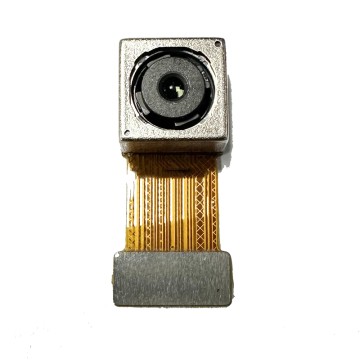
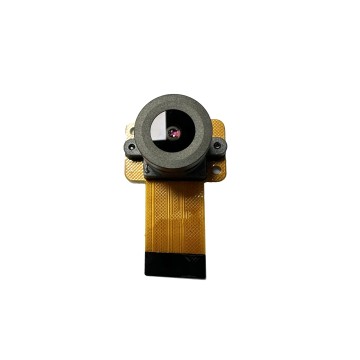
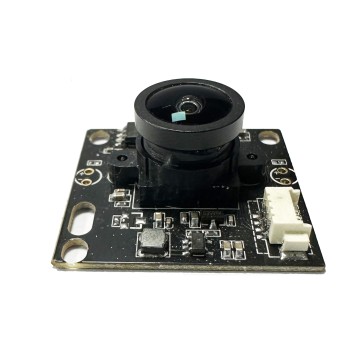
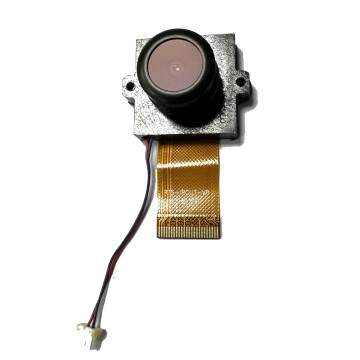
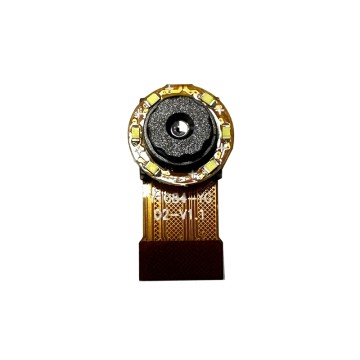
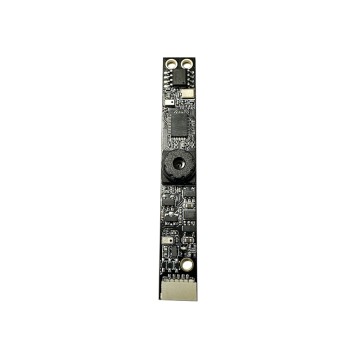
Founded in Shenzhen in 2015, YXD optics stands as an industry leader in specialized optical design and camera module manufacturing.
Shen Zhen You Xiang Da Technology Co., Ltd. (YXD) operates state-of-the-art optical assembly facilities in Shenzhen, China. Spanning a decade of engineering excellence, YXD specializes in the end-to-end design, prototyping, and mass production of MIPI, USB UVC, DVP, Wi-Fi, and Raspberry Pi compatible camera modules equipped with low-distortion and distortion-free optical lenses.
Recognized as a trusted OEM/ODM supplier to international Fortune 500 enterprises, YXD maintains strict adherence to standardized manufacturing procedures. Every optical lens, sensor package, and circuit board undergoes rigorous automated optical inspection (AOI), active lens alignment, and environmental burn-in stress testing to guarantee flawless reliability across global commercial, automotive, industrial, and smart home applications.
