Field-tested OEM vision modules engineered for instant motion wake-up, high frame rates, low distortion, and seamless host platform integration.







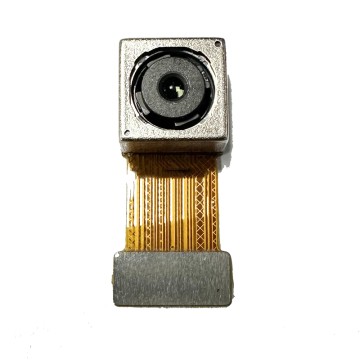
Motion detector camera modules have evolved from simplistic passive sensing accessories into sophisticated optical-edge AI computing nodes. Traditionally, motion-activated visual recording relied heavily on primitive Passive Infrared (PIR) sensors paired with external microcontrollers. While effective for basic wake-up routines, traditional PIR systems suffered high false-alarm rates triggered by thermal shifts, blowing vegetation, or small animals, while exhibiting significant latency during initial image capture.
Today's global enterprise procurement landscape demands integrated, low-latency, and ultra-low-power **OEM Motion Detector Camera Modules** capable of hybrid sensing: combining hardware-level PIR or millimeter-wave (mmWave) radar trigger mechanisms with edge-side Convolutional Neural Networks (CNNs) directly on the Image Signal Processor (ISP) or host SoC. This paradigm shift guarantees microsecond-level cold-start image capture, zero frame drops, precise human/vehicle motion classification, and drastic power savings ideal for battery-operated smart home devices, cellular IoT trail cameras, dash cams, and industrial remote assets.
When engineering directors and supply chain managers evaluate OEM motion detector camera manufacturers, technical specifications extend far beyond simple megapixels. Sourcing decisions are now anchored on four critical pillars:
Next-generation OEM modules incorporate dedicated PMUs allowing CMOS sensors and optics to remain in ultra-low power states (<15µA) until triggered by hardware interrupts, preserving multi-year battery lifecycles.
Achieving a 140° wide field of view (FOV) while keeping optical TV distortion under 1.5% ensures accurate computer vision spatial mapping, edge detection, and distortion-free facial identification.
Integrating back-illuminated (BSI) sensor technology with large pixel dimensions (up to 3.0µm) guarantees full-color video retention down to 0.001 Lux without excessive IR illumination power consumption.
As a leading Shenzhen-based OEM/ODM camera module manufacturer operating since 2015, Shen Zhen You Xiang Da Technology Co., Ltd. (YXD Technology) designs custom motion-sensing vision pipelines engineered to resolve complex physical integration challenges. Below is an architectural overview of how optical components, image sensors, bus interfaces, and micro-controllers interface in our custom production lines.
Choosing the correct bus interface dictates overall board layout, cable routing, host CPU requirements, and power management strategies. The table below illustrates standard module configurations offered by YXD Technology for B2B buyers:
| Bus Interface | Max Resolution | Wake-up Latency | Cable Length | Primary Target Applications |
|---|---|---|---|---|
| MIPI CSI-2 (2/4-Lane) | 4K UHD (8MP / 12MP) | < 30 ms | < 30 cm (FPC) | Raspberry Pi, AI Edge Compute, Drones, Robotics |
| USB 2.0 / 3.0 UVC | 1080P / 2K / 4K | < 100 ms | Up to 5 meters | Smart Kiosks, Laptops, Document Scanners, Medical |
| DVP Parallel | 720P / 1080P | < 50 ms | < 15 cm | Low-cost MCUs, Barcode Readers, Access Control |
| Wi-Fi / Network IP | 2K (1440P) / 4MP | < 200 ms | Wireless (IP) | Battery Doorbells, Smart Home Security, Trail Cams |
Optical distortion degrades motion detection accuracy, especially when pixel-level frame subtraction algorithms are executed at the edge. YXD Technology specializes in high-precision optical lens design, offering fixed-focus (FF) and auto-focus (AF) modules featuring glass-plastic hybrid lenses (e.g., 2G2P, 1G3P, 6G structures). Our optical engineers tune lens curves to maintain TV distortion below 1.0% across 140° ultra-wide field-of-view angles, ensuring sharp edge clarity from center to perimeter without optical vignette.
Tailored turnkey camera module solutions engineered to solve application-specific optical, environmental, and computational constraints.
Smart intercoms and video doorbells require rapid motion-triggered boot-up, wide coverage to eliminate blind spots, and clear facial detail under harsh backlighting. YXD provides 2K wide-angle camera modules integrated with dual IR-Cut filters, WDR (>105dB), and optimized FPC cables designed to withstand continuous outdoor environmental exposure.
Vehicle dash cams and fleet management terminals rely on parking-mode motion detection to preserve car battery charge while monitoring surrounding movements. YXD supplies starlight 1080P and 4MP driving recorder camera modules capable of high-frame-rate video capture under extreme operating temperatures (-30°C to +85°C).
Commercial payment terminals and facial recognition access control gates demand instant user approach detection to activate displays and scan codes. YXD's USB UVC distortion-free and miniature 9mm camera modules deliver plug-and-play driverless integration for Windows, Android, and Linux host systems.
Automated production lines and remote asset monitoring devices demand stable image quality, minimal optical degradation over time, and custom sensor tuning. Our MIPI and USB industrial camera modules undergo rigorous continuous aging tests to guarantee 24/7 reliability in dusty or high-vibration settings.
Founded in 2015 in Shenzhen, China—the epicenter of global electronics manufacturing—Shen Zhen You Xiang Da Technology Co., Ltd. has grown into a premier OEM/ODM camera module manufacturer serving Fortune 500 companies, system integrators, and specialized device makers across North America, Europe, and the Asia-Pacific region.
100% of our motion camera modules undergo automated optical inspection (AOI), image sensor pixel calibration, high-temperature aging chambers (65°C / 48 Hours), and thermal cycle testing.
Direct long-term strategic supply partnerships with tier-1 CMOS sensor manufacturers (Sony, OmniVision, SmartSens, GalaxyCore) guarantee component longevity and stable lead times (5–7 year lifecycle support).
All camera modules comply strictly with global environmental and safety standards, including RoHS, REACH, CE, FCC, and ISO9001 quality management guidelines.
From initial design concept to volume shipment, YXD Technology offers a fully transparent 5-step engineering process tailored for international procurement teams:
Define resolution, FOV, interface bus, dimension constraints, target budget, and wake-up specs.
Zemax optical lens matching, sensor selection, FPC layout, and structural schematic generation.
Sample build (7–12 business days) with dedicated ISP tuning for low light and motion clarity.
Thermal shock, vibration, signal integrity, and image quality verification in client housings.
As smart devices continue to demand localized intelligence without relying on cloud computation, OEM motion detector camera modules are undergoing three major evolutionary breakthroughs:
Traditional image sensors capture entire frames at fixed intervals regardless of movement, generating massive data redundancy. Emerging event-based vision sensors (EVS) sample pixels asynchronously—only transmitting signal data when a specific pixel detects an intensity change. YXD Technology is actively researching micro-EVS optical assemblies that drastically reduce data bandwidth and lower system power consumption down to milliwatts during continuous motion monitoring.
To eliminate false positives caused by adverse weather, shadows, or thermal turbulence, future OEM modules incorporate onboard sensor fusion. Hardware signals from PIR elements and 60GHz mmWave micro-radars are processed via an integrated MCU that wakes up the primary CMOS image sensor only when both distance and thermal thresholds are crossed, ensuring 99.9% detection accuracy in outdoor security and wildlife recording systems.
Integrating compact 0.5 TOPS to 2 TOPS NPUs directly onto the camera module PCB enables real-time object classification (human vs. vehicle vs. pet) before passing the video stream to the main host processor. This decentralized architecture preserves host memory bandwidth and dramatically lowers overall device wake-up latency.
Detailed technical and operational answers to common inquiries from hardware engineers, product managers, and sourcing teams.
Select from our core catalog of standardized and customizable vision modules designed for immediate deployment.
