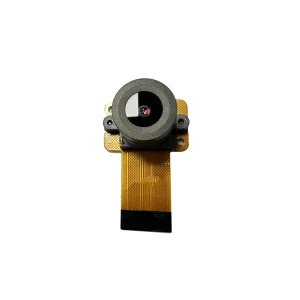
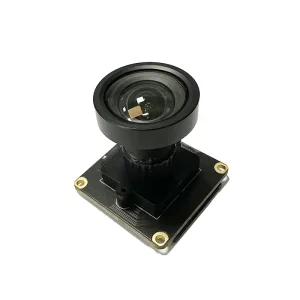
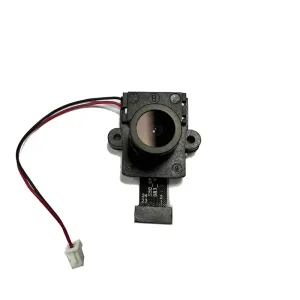
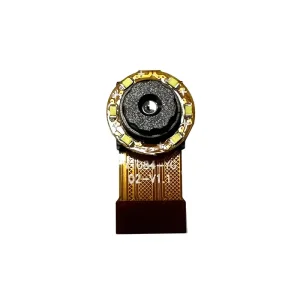
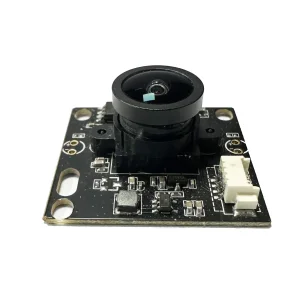
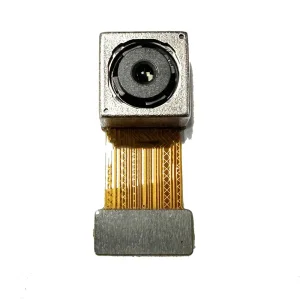
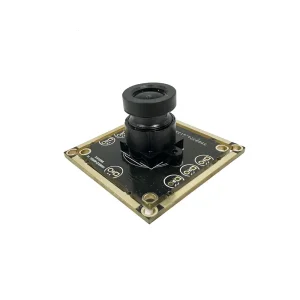
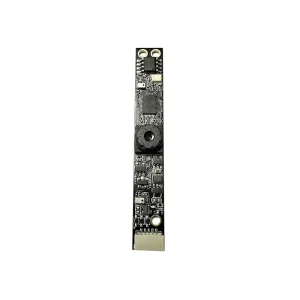
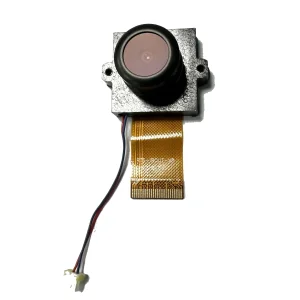
High-reliability optical assemblies engineered for severe outdoor environments, high-frame-rate automotive recording, and sub-lux indoor vision processing.
The global security and visual intelligence landscape is undergoing a paradigm shift. Traditional video monitoring systems—once characterized by passive optical capture and centralized Network Video Recorder (NVR) processing—have evolved into active, AI-driven cyber-physical sensor nodes. Original Equipment Manufacturers (OEM) and Original Design Manufacturers (ODM) sit at the center of this transformation. Navigating this dynamic requires balancing low-power system-on-chip (SoC) architectures, specialized optical physics, and localized compliance standards.
In modern industrial and commercial deployments, the requirement for indoor and outdoor surveillance cameras transcends basic illumination capture. Modern optical assemblies must process wide dynamic range (WDR) environments up to 140dB, maintain zero focal shift under ambient temperature swings ranging from -40°C to +85°C, and compute real-time computer vision algorithms directly at the edge. To satisfy these stringent performance matrices, OEM manufacturers must maintain deep vertical integration across lens grinding, surface-mount technology (SMT) packaging, active alignment (AA) optical calibration, and custom firmware development.
Integration of Neural Processing Units (NPUs) offering 2 to 32 TOPS directly onto camera module SoCs. Enables real-time object classification, license plate recognition (LPR), and anomaly detection without cloud latency or bandwidth overload.
Deployment of back-illuminated (BSI) CMOS sensors with pixel pitches exceeding 2.9µm, paired with wide-aperture optics (f/1.0 to f/1.2) to capture true-color video at ambient illumination levels lower than 0.0001 Lux.
Implementation of hardware Root of Trust (RoT), secure boot mechanisms, and encrypted pipeline transmission (TLS 1.3 / SRTP) at the firmware level, ensuring compliance with global security initiatives.
An evaluation of global procurement dynamics, regulatory trade barriers, and technology adoption cycles across key continental markets.
Exporting surveillance hardware demands compliance with regional regulatory ecosystems. The global commercial market is bifurcated by distinct engineering, security, and data protection requirements across North America, the European Union, the Middle East, and the Asia-Pacific region. OEM manufacturers must design modular platforms capable of adapting to these localized mandates without requiring complete board re-spins.
| Geographic Region | Primary Regulatory Compliance | Key Environmental / Hardware Specs | Dominant Application Scenarios |
|---|---|---|---|
| North America | NDAA Section 889, FCC Part 15 Class B, UL 62368-1 | Non-restricted SoC chipsets, dual-band Wi-Fi 6 / PoE+, IK10 impact resistance | Critical infrastructure, enterprise logistics hubs, smart retail analytics |
| European Union | GDPR, CE, Cyber Resilience Act (CRA), RoHS/REACH | In-camera privacy masking, encrypted edge storage, low carbon footprint materials | Public transportation networks, urban municipal monitoring, commercial offices |
| Middle East (GCC) | SIRA (Dubai), MCC (Qatar), MOI standards | Extreme temperature tolerance (-20°C to +75°C), IP68 waterproofing, anti-sandstorm coatings | Oil & Gas facilities, luxury hospitality, desert highway monitoring |
| Asia-Pacific | CCC (China), BIS (India), TELEC (Japan) | Ultra-high density analytics, ultra-low bitrate H.265+/AV1 compression, multi-sensor setups | High-density smart cities, port automation, high-speed rail corridors |
To insulate enterprise buyers from supply chain shocks, top-tier OEM camera exporters establish multi-source hardware topologies. Sensor selection revolves around proven CMOS backplanes from Sony (STARVIS 2 architecture), OmniVision (LightGen technology), and SmartSens. Microprocessor architectures are diversified across Ambarella, Novatek, Rockchip, and SigmaStar platform options. This flexible strategy allows system integrators to specify target performance tiers while securing multi-year manufacturing longevity.
Detailed technical analysis of lens design, image signal processor (ISP) tuning, and rugged mechanical enclosures for enterprise surveillance setups.
Utilizing 4G2P or 6G glass-heavy optical stacks featuring athermalization technology. Prevents focal degradation under extreme environmental heating, preserving high modulation transfer function (MTF) performance across the field of view.
Custom pipeline tuning for 3D Noise Reduction (3DNR), High Dynamic Range (HDR) multi-exposure synthesis, and Chromatic Aberration Correction (CAC). Delivers clean frame capture optimized for artificial intelligence parsing.
Die-cast aluminum alloy housings engineered with die-cut silicone gaskets, breathing gore valves for condensation regulation, and high-impact polycarbonate domes rated to IK10 impact protection standards.
Enterprise outdoor surveillance cameras rely heavily on IEEE 802.3af/at/bt PoE standards, delivering up to 60W of regulated DC power alongside multi-gigabit data streams. Signal integrity over extended 100-meter copper runs is preserved through transient voltage suppression (TVS) diodes, protecting internal circuitry against lightning surges up to 6kV.
How customized OEM optical modules solve operational challenges across contrasting industrial and commercial environments.
Requires low-profile form factors, wide FOV (distortion-free >120°), fast motion wakeup (<200ms), and dual-band wireless connectivity. Integrates integrated IR night illumination and acoustic echo-canceling mic arrays.
Designed for severe vibration profiles (MIL-STD-810G), fluctuating vehicle battery voltages (9-36V DC wide input), and rapid temperature swings. Optimizes image stabilization and low-light dash recording.
Engineered with fast autofocus modules to scan high-density 1D/2D barcodes on moving conveyor belts. Features glare-suppression optical polarization filters and high-frame-rate capture (60fps to 120fps).
Encased in 316L stainless steel housings with NEMA 4X chemical resistance ratings. Engineered to withstand high-pressure saltwater spray, aggressive atmospheric acids, and airborne particulate contaminants.
Procuring surveillance hardware across international borders requires strong post-sales support, field application engineering (FAE) assistance, and transparent warranty governance. Leading Chinese OEM camera manufacturers have shifted from transactional supply models to collaborative co-development partnerships.
FAE teams offer end-to-end support throughout the product development life cycle. This includes assisting system integrators with Linux driver adaptation, tuning custom Image Signal Processor (ISP) parameters for specific lighting conditions, and verifying mechanical fit using 3D CAD modeling. Furthermore, compliant exporters adhere strictly to international standards, including ONVIF (Profile S, G, T, M) for seamless VMS integration, as well as CE, FCC, RoHS, and REACH certifications.
A look at the next decade of optical surveillance technology, edge computing architectures, and quantum sensor physics.
Shifting from traditional frame-based imaging to asynchronous, event-driven pixel readout. Captures pixel-level intensity changes in microsecond timescales, reducing bandwidth consumption by 90% while eliminating motion blur in high-speed traffic contexts.
Deploying compact Vision-Language Models directly onto onboard camera SoCs. Enables natural language query processing directly on the camera node (e.g., "Find a blue delivery van stopping near Gate B") without server-side processing.
Replacing standard silicon substrate BSI sensors with Colloidal Quantum Dot (CQD) thin-film photodetectors. Expands spectral sensitivity seamlessly from visible light into Short-Wave Infrared (SWIR, 1000nm–1700nm) at a fraction of InGaAs sensor costs.
Comprehensive engineering and procurement guidance for system integrators, device OEMs, and enterprise buyers.
Explore our full technical catalog of embedded imaging modules, wide-angle lens systems, and custom vision hardware.