
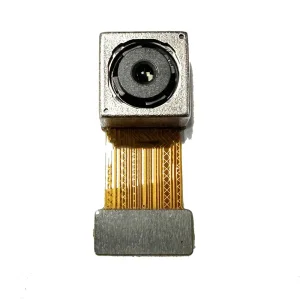
Discover high-definition camera architectures engineered for mission-critical surveillance, automotive telemetry, and automated access control deployments.
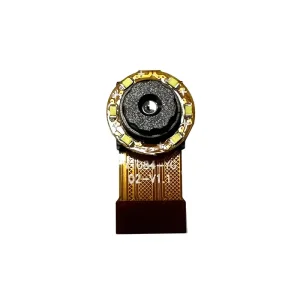
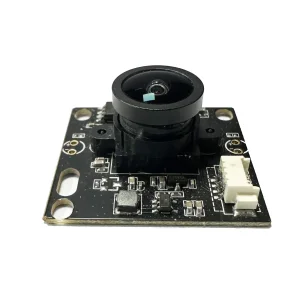
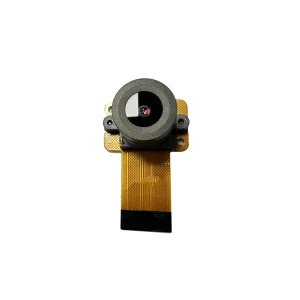
Navigating supply chain resilience, optical edge compute transition, and total cost of ownership (TCO) in wireless vision systems.
Global procurement teams prioritize tier-1 optical engineering partners to insulate operations against upstream silicon bottlenecks. Through strategic partnerships with leading sensor fabs (Sony, OmniVision, SmartSens), Shenzhen You Xiang Da Technology ensures predictable multi-year component lifecycles and deterministic lead times for high-volume rollouts.
Wireless enterprise security infrastructure requires ultra-low operating currents during surveillance standby. Modern deployments transition from heavy always-on video pipes to low-power motion gating, integrating DVP parallel or sub-LVDS MIPI streaming to trigger host microprocessors within sub-100ms thresholds, drastically extending off-grid battery lifespans.
Purchasing off-the-shelf consumer optics for mission-critical facilities results in degraded Mean Time Between Failures (MTBF). Industrial vision architecture demands a strict coupling of sensor ISP, board-level thermal dispersion, and custom anti-reflective optical coatings designed to withstand prolonged ultraviolet exposure and harsh thermals.
Deploying high-efficiency optical modules configured for challenging physical envelopes and enterprise compute frameworks.
Access points require optimal exposure matching across severe backlighting scenarios. Utilizing specialized WDR (Wide Dynamic Range) starlight sensors combined with tailored IR-cut switching filters, our visual doorbell and terminal camera modules eliminate facial shadowing and deliver actionable biometric detail in both direct sunlight and 0.01 Lux nocturnal settings.
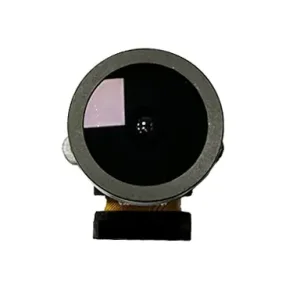
Automotive and logistics environments demand resistance against continuous mechanical resonance and sudden lux transitions. Our 1080P wide-angle automotive camera modules feature multi-element glass lenses (all-glass optics) mounted on reinforced FR-4 PCBs, securing optical centering accuracy through extensive thermal cycling tests (-30°C to +85°C).
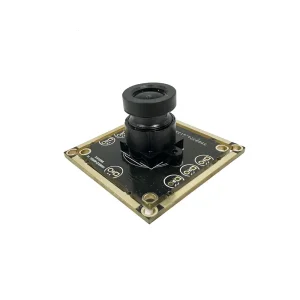
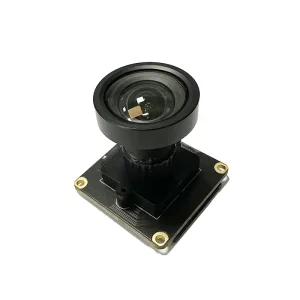
Distortion-free imaging is critical for optical character recognition (OCR), barcoding, and automated production telemetry. Our autofocus standard modules utilize precision voice coil motors (VCM) and aspherical optical elements that achieve optical distortion profiles beneath 0.5%, preserving straight planar coordinates across the active imaging field.
Translating breakthroughs in computational photography and neuromorphic sensing into industrial OEM/ODM production pipelines.
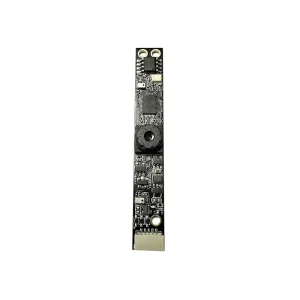
Standardizing ultra-compact form factors down to 9mm outer-diameters. Mass implementation of driverless USB UVC protocol profiles and standardized 15-pin/22-pin FPC configurations for Raspberry Pi 4, Pi 5, and industrial Single Board Computers.
Direct integration of low-power Neural Processing Units (NPUs) onto the camera module substrate. Processing real-time edge facial tracking, human bounding boxes, and object classification prior to transmitting encrypted frames to the primary wireless SoC.
Transitioning high-speed inspection and automated robotic navigation lines to compact global shutter CMOS sensors, eliminating rolling shutter spatial artifacts under high-velocity manufacturing and high-frequency artificial lighting.
R&D alignment for event-based neuromorphic vision modules and dual-spectrum RGB-IR sensor fusion, enabling military-grade perimeter authentication and zero-latency intrusion detection across ambient-blind conditions.
Certified engineering workflows built to support defense, medical, telematics, and smart enterprise procurement standards.
Sensor bonding and surface mounting occur inside ISO-certified cleanroom environments. Automated Chip-on-Board (COB) die attach and Surface Mount Technology (SMT) eliminate optical contamination, ensuring absolute sensor surface purity before lens barrel sealing and adhesive curing.
Every industrial production batch is subjected to comprehensive thermal shock, vibration sweep, high-humidity storage, and 72-hour continuous power burn-in cycles. This testing validates that solder joints, active optical alignments, and image sensor current draws remain stable over long duty-cycles.
We engineer camera assemblies to satisfy stringent international requirements, including CE, FCC, RoHS, and REACH protocols. Comprehensive material declarations, schematic documentation, and driver package support ensure frictionless import procedures and seamless system integration for global product teams.
Explore verified camera architectures available for rapid prototyping, customized engineering adaptations, and volume fabrication.
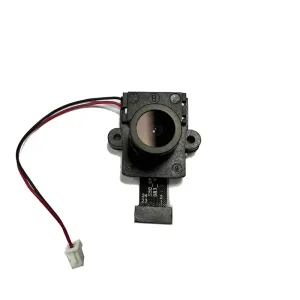
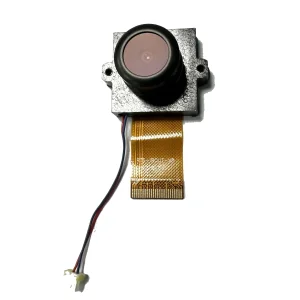
Detailed answers addressing electrical interface matching, mechanical envelope customization, and bulk production assurance.