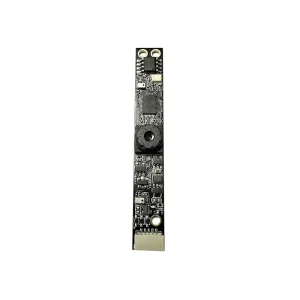
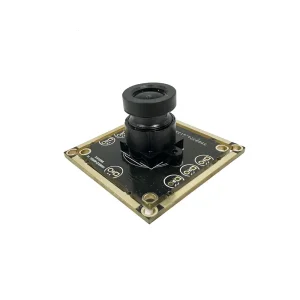
Precision-engineered optical hardware designed for edge facial matching, biometric access control, driving safety, and high-speed image processing.
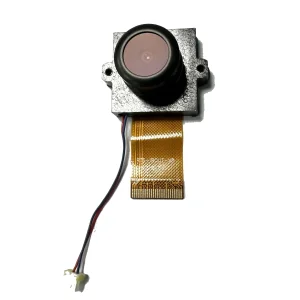
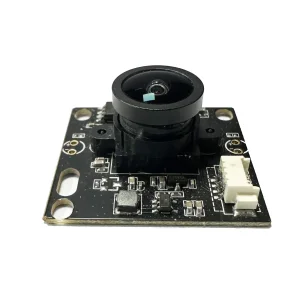
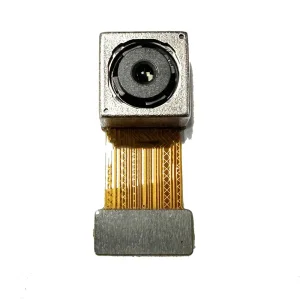
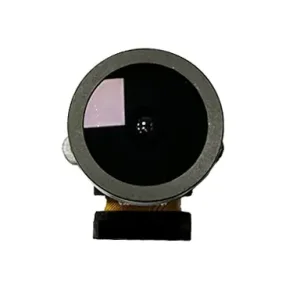
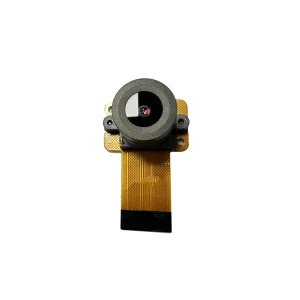
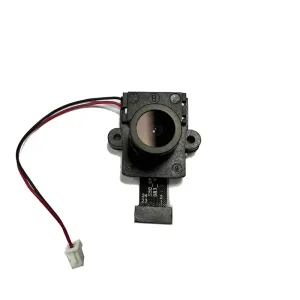
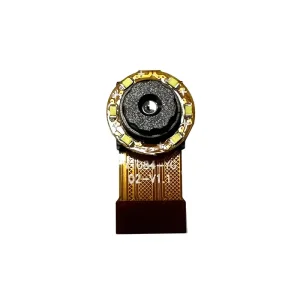
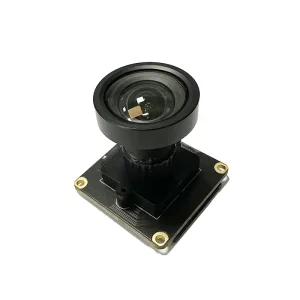
Analyzing the shift from cloud-dependent verification to zero-latency, sub-millimeter edge optical recognition.
The global biometric identity verification market is experiencing a profound paradigm shift. As security requirements tighten across financial networks, smart municipal infrastructure, border management, and automated enterprise facilities, traditional 2D optical capture is rapidly giving way to dedicated Edge-AI Facematcher Engines. Modern OEM facematchers integrate advanced CMOS sensors, narrow-band Near-Infrared (NIR) illuminators, 3D Structured Light optics, and embedded Neural Processing Units (NPUs) directly into single-board architectures.
As a leading OEM Facematcher Company & Factory, our optical engineering methodologies solve the fundamental vulnerabilities of classic computer vision: environmental lighting decay, dynamic motion blur, non-linear distortion, and presentation attack vulnerabilities (photos, 3D masks, and deepfake video injections). By decoupling biometric processing from latency-prone cloud servers and moving feature extraction to hardware-level vision modules, enterprise clients achieve sub-100ms match verification while satisfying stringent global data privacy frameworks such as GDPR, CCPA, and ISO/IEC 30107-3 liveness protection metrics.
The acceleration of embedded facematcher systems is defined by four macro engineering imperatives:
Moving face vector feature mapping (512-dimensional facial embeddings) completely onto onboard NPUs prevents raw video feeds from traversing external networks. Raw image buffers are flushed instantaneously post-verification, ensuring total operational compliance with international privacy standard mandates.
Single RGB sensors are fundamentally constrained under harsh backlight or total pitch darkness. Modern industrial OEM facematcher platforms fuse high-sensitivity RGB CMOS sensors with dedicated 850nm/940nm Narrow-Band Pass Near-Infrared (NIR) imaging arrays to guarantee 24/7 pixel clarity regardless of atmospheric light variances.
Inside the hardware pipeline: from optical ray-tracing to signal conditioning and hardware interface protocols.
Designing an enterprise-grade OEM facematcher requires precise co-design of optical lenses, image signal processors (ISP), and mechanical packaging. At our manufacturing facility, optical alignment is performed at sub-micron tolerances. Below is the technical breakdown of our proprietary hardware pipeline:
| Hardware Vector | Standard Commercial Camera | Industrial OEM Facematcher Module | Performance Gain Impact |
|---|---|---|---|
| Optical Spectrum | Visible Light Only (400nm - 700nm) | Dual RGB + NIR Bandpass (850nm/940nm) | Immunity to ambient shadows and pitch darkness |
| Dynamic Range (WDR) | 60 dB - 72 dB Standard Range | 120 dB - 140 dB True Multi-Exposure WDR | Eliminates facial washout under direct sunlight |
| Lens Optical Distortion | > 15% Barrel Distortion (Wide Angle) | < 0.5% Ultra-Low Distortion Optics | Prevents geometric warping of facial landmarks |
| Liveness Detection (PAD) | Software 2D Motion Heuristics | Hardware 3D Structured Light / Stereo NIR | Prevents 99.99% of spoof attacks (ISO/IEC 30107-3) |
| Host Bus Interface | USB 2.0 High-Speed Only | MIPI CSI-2 (4-Lane) / USB 3.0 UVC Driverless | Ultra-low latency raw frame delivery to NPU |
In automated facial matching algorithms, small spatial errors in mapping eye distance, nose bridge curvature, or jawline geometry lead to false rejection rates (FRR). Standard wide-angle lenses introduce non-linear optical distortion that bends pixels near the image edges. Our OEM factory utilizes specialized 6-Element (6P) Glass-Plastic Hybrid Lenses engineered specifically for zero optical distortion. Furthermore, during assembly, we utilize automated 6-Axis Active Alignment (AA) equipment to calibrate the lens to the CMOS sensor focal plane, maintaining Modulation Transfer Function (MTF) sharpness across the entire image field exceeding 150 cycles/mm.
Unlike consumer cameras that optimize image signal processing (ISP) for vibrant, aesthetically pleasing colors, a dedicated facematcher ISP is calibrated specifically for algorithmic feature extraction. The ISP firmware implements auto-exposure curves optimized for facial skin tone reflectance, adaptive edge enhancement to crisp up facial landmarks, and dynamic noise reduction (3DNR) that retains micro-texture detail even in low-light environments under 0.01 Lux.
Engineered hardware tailored to the extreme environmental and operational demands of worldwide industries.
Integrated into automated teller machines (ATMs), point-of-sale (POS) kiosks, and self-service banking terminals. Our modules feature dual-spectrum liveness verification to authenticate transactions instantly without requiring physical cards or mobile phones.
Deployed in high-throughput enterprise headquarters, airports, and metro transit turnstiles. Operating smoothly under dynamic outdoor light changes, the camera module verifies identity in sub-100ms speeds to maintain fluid pedestrian traffic flow.
Tailored for Driver Monitoring Systems (DMS) and Occupant Monitoring Systems (OMS). Mounted on the steering column or A-pillar, our 940nm NIR camera modules track driver eye-gaze, fatigue vectors, and face identity even through heavy sunglasses.
A transparent, standardized engineering roadmap ensuring enterprise reliability from schematic design to mass production.
Our optical engineers collaborate with your team to select optimal sensor dimensions, field-of-view (FOV), focal distance, IR filter cut-off wavelengths, and host connectivity (MIPI/USB/DVP).
We engineer custom PCB outlines and high-density flexible printed circuits (FPC) designed to fit tightly inside compact hardware enclosures while suppressing electromagnetic interference (EMI).
Cleanroom SMT surface mounting combined with automated Active Alignment (AA) ensures precision alignment of optical axes, eliminating tilt and off-center optical distortion errors.
Every single batch undergoes 100% thermal stress testing (-30°C to +70°C), image aging validation, drop testing, and MTF optical resolution checks prior to international shipment.
Navigating the convergence of multi-sensor fusion, edge AI accelerators, and quantum-resistant biometric security.
As biometric security requirements evolve, the hardware architecture of facematchers is rapidly integrating advanced optical sensor technologies. Our OEM/ODM research and development laboratory is currently driving progress in three key technological vectors:
While dual-camera stereo vision offers high-resolution depth mapping, next-generation industrial facematchers are transitioning toward integrated Direct Time-of-Flight (dToF) VCSEL Laser Arrays. By calculating the photon time-of-flight down to the picosecond, the camera module constructs a millimeter-accurate 3D point cloud of the human face. This physical 3D topology is immune to 2D photograph spoofing, synthetic silicone masks, and projected display attacks, delivering absolute biometric certainty in high-security military and financial nodes.
Traditional camera modules output uncompressed raw Bayer data or MJPEG frames to a host application processor via USB or MIPI buses. Future-proof OEM facematchers incorporate tiny, low-power NPU chips directly onto the module’s sub-board. The camera module no longer outputs video; instead, it outputs an encrypted 512-byte math vector representing facial landmark ratios. This architectural shift slashes host processor workload by over 80% and completely eliminates video stream interception risks.
Outdoor access control points face extreme lighting contrast—from blinding midday sun facing the camera to pitch-black nighttime operation. Our starlight-grade CMOS image sensors leverage multi-exposure HDR technology, taking high-speed sequential frames at varying shutter speeds and merging them hardware-side into a perfectly balanced frame with up to 120dB of dynamic range.
In-depth technical answers for system integrators, optical engineers, and enterprise procurement teams.
Explore our full line of specialized optical camera modules manufactured for global enterprise buyers and system integrators.