Field-proven optical camera modules built for harsh outdoor operation, wide dynamic illumination, and continuous 24/7 mission-critical surveillance.
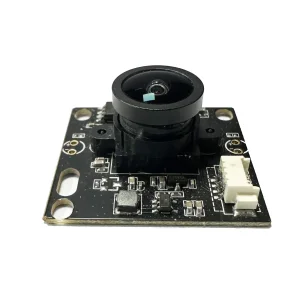
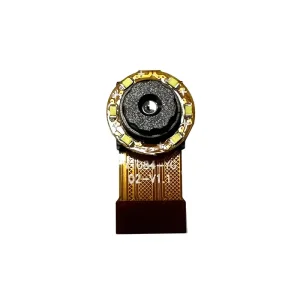
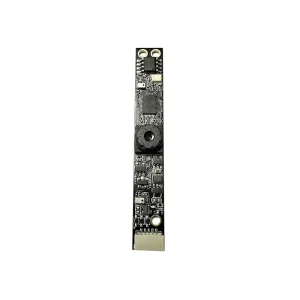
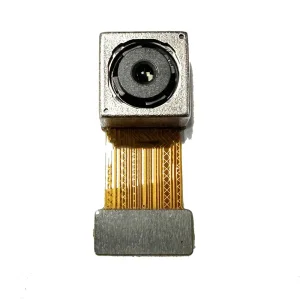
The global security surveillance ecosystem is rapidly shifting from passive video recording to proactive AI situational intelligence. Discover the primary technological vectors redefining outdoor optical systems.
Modern exterior security deployments demand immediate, deterministic object categorization at the camera head. Modern OEM architectures integrate 1.5 to 8.0 TOPS dedicated Neural Processing Units (NPUs) directly into the sensor-adjacent processor. This enables on-device deep learning algorithms—such as real-time YOLO human/vehicle segmentation, license plate extraction (LPR), and optical flow motion vectoring—drastically mitigating cloud latency and upstream bandwidth overhead.
Traditional black-and-white infrared night vision is obsolete for advanced evidentiary forensic investigation. Next-generation OEM exterior cameras combine large back-illuminated (BSI) CMOS sensors (e.g., Sony STARVIS 2 with 2.9µm+ pixel pitch) with super-wide F1.0 apertures and multi-spectrum ISP noise filtering. The result is continuous 24-hour color imaging in ambient environments under 0.0005 Lux, without needing overt white illumination that exposes camera positions.
Outdoor camera nodes face thermal shock, airborne particulate abrasion, and extreme solar UV degradation. Industrial ODM factories now utilize die-cast ADC12 aluminum housings, fluorine-coated front optical elements with nano-hydrophobic properties to shed water droplets, and automated vacuum potting. These physical layers guarantee certified IP67/IP68 hermetic ingress protection alongside IK10 mechanical impact ratings capable of withstanding 20 Joules of physical impact.
Combining uncooled Vanadium Oxide (VOx) long-wave infrared microbolometers (8~14µm) with high-definition visible CMOS optical trains enables robust perimeter security through smoke, dense fog, precipitation, and total visual blackout. Sensor fusion algorithms overlay thermal heat signatures directly onto high-resolution visible frames, pinpointing overheated industrial equipment, localized flame outbreaks, and cloaked perimeter trespassers.
The expansion of exterior cameras across utility pipelines, perimeter fencing, and rural infrastructure demands independent power. Leading OEM factories are producing sub-milliwatt deep-sleep architectures tied to rapid-wake PIR and mmWave micro-radar sensors. These nodes boot from a low-power standby mode (<15mW) to full 4K H.265/H.266 recording and 4G/5G-NR cloud transmission in under 180 milliseconds, maximizing battery autonomy across multi-week overcast conditions.
Given stringent global compliance environments, OEM exterior camera platforms must prevent hardware-level tampering and unauthorized network penetration. Modern enterprise boards feature embedded Hardware Security Modules (HSM) or TPM 2.0 cryptoprocessors. They support cryptographically signed secure boot sequences, encrypted non-volatile flash storage (AES-XTS 256), and dynamic TLS 1.3 streaming to protect against side-channel memory extraction and rogue firmware injection.
B2B procurement directors and product managers face critical tradeoffs when sourcing exterior camera systems. Use our structural comparison to evaluate cost, optical customization, IP ownership, and production lifecycle.
| Evaluation Parameter | Standard OEM Manufacturing | Full ODM Custom Design | Off-the-Shelf Turnkey Modules |
|---|---|---|---|
| NRE & Tooling Investment | Low to Moderate ($3K - $10K for housing/FPC modifications) | High ($25K - $80K+ for custom optical tooling & dies) | Zero Initial NRE ($0 upfront development cost) |
| Time to Market (TTM) | 4 - 8 Weeks (Using pre-qualified SMT and lens assemblies) | 16 - 28 Weeks (Full design, DFM, EVT, DVT, PVT stages) | Immediate (Stock to 2 weeks dispatch) |
| Optical System Customization | Sensor selection, FOV swap (60°-140°), IR cut threshold | Full bespoke glass element formula, motorized zoom, custom VCM | Fixed focal length, pre-set distortion curve |
| Minimum Order Quantity (MOQ) | 500 - 1,000 Units per scheduled batch | 3,000 - 10,000 Units initial production commitment | 50 - 200 Units baseline order |
| IP Ownership & Firmware | Joint IP; Customer owns brand, external ID and shell | Client owns custom PCB layout, schematics and application code | Supplier maintains 100% proprietary code and architecture |
| Compliance Certification Path | Pre-screened CE/FCC/RoHS; Easy pass for host product | Dedicated agency testing (UL, IP68, IK10, NDAA Section 889) | Carries factory standard certifications only |
| Target Application Fit | Smart home brands, intercoms, industrial OEM equipment | Defense contractors, high-security facilities, smart city grids | Rapid prototyping, low-volume commercial field pilots |
Verify that your manufacturing partner utilizes ISO Class 100 to Class 1000 cleanrooms equipped with Automated 6-Axis Active Alignment (AA) systems. AA aligns the optical axis of multi-element lenses with the center of the CMOS sensor with sub-micron precision, preventing peripheral image softness in wide-angle outdoor optics.
Outdoor camera reliability cannot be assumed. Require an on-site testing audit verifying walk-in thermal chambers (-40°C to +85°C), continuous high-humidity salt spray chambers (ASTM B117), multi-axis electrodynamic vibration tables, and automated pressurized water immersion rigs.
For industrial and municipal exterior camera systems, lifecycle availability is critical. Ensure your factory has verified component-level traceability through MES (Manufacturing Execution Systems) and guarantees guaranteed sensor and SoC procurement lifecycles spanning 5 to 7 years.
Engineered optical-to-cloud hardware frameworks customized to eliminate blind spots, handle extreme backlighting, and operate continuously under challenging environmental conditions.
Core Challenge: Large public spaces require broad spatial coverage without losing high-resolution facial and behavioral detail at long distances.
Architecture: Dual-channel panoramic multisensor camera heads combined with 30x optical telephoto PTZ tracking. Employs hardware defogging, optical image stabilization (OIS), and sub-millisecond edge vehicle tracking over secure gigabit PoE+ networks.
Core Challenge: Overpowering headlight glare, high-velocity motion blur, and extreme nighttime contrast shifts.
Architecture: Global shutter CMOS sensor modules coupled with narrow-band 850nm/940nm pulsed IR strobe lighting. Delivers crisp, un-blurred license plate isolation up to 160 km/h with integrated algorithmic optical character recognition (OCR) directly at the camera node.
Core Challenge: Severe contrast shifts between dark container bays and direct outdoor solar illumination.
Architecture: Triple-exposure staggered HDR (>130dB) with wide-aperture 4K low-distortion optics. Eliminates shadow clipping across loading docks, while embedded edge classification detects unauthorized personnel crossing hazardous staging zones.
Core Challenge: Oil pipelines, solar farms, and remote utility pylons without wired power or broadband backhaul.
Architecture: Ultra-low-power micro-radar triggered camera modules combined with localized photovoltaic battery systems. Encrypted video clips and telemetry events are pushed over high-efficiency low-bandwidth LTE Cat-M1/NB-IoT or Starlink satellite modems.
Our Shenzhen production lines adhere to stringent automotive-grade IATF 16949 and ISO 9001 quality management workflows, ensuring optical clarity and high batch-to-batch consistency.
Rather than relying on mechanical tolerances, our automated AA assembly lines power the image sensor in real time, projecting high-frequency MTF test targets. High-precision robotic positioning stages adjust pitch, roll, yaw, X, Y, and Z axes to achieve balanced center-to-edge focal sharpness across every pixel before UV glue curing.
Every industrial exterior camera batch undergoes continuous 48-to-72 hour burn-in cycling inside climate chambers fluctuating rapidly from -40°C to +85°C. This accelerates component infant mortality, verifying that ceramic capacitors, solder joints, sensor wire bonding, and ISP thermal sinks maintain full signal integrity.
To back up true IP67 and IP68 claims, all camera enclosures undergo high-sensitivity negative pressure decay and dry helium mass spectrometer leak testing. This prevents moisture ingress, optical element fogging, and internal humidity build-up caused by diurnal expansion and contraction.
Optical assemblies are evaluated against rigorous MTF charts at both spatial frequencies of 100 lp/mm and 200 lp/mm. We measure and eliminate astigmatism, coma, spherical aberration, and lateral chromatic fringing, ensuring your vision system accurately resolves distant low-contrast targets.
Outdoor camera lines are susceptible to induced lightning surges and high static discharges. Our modules incorporate multi-stage TVS diode arrays and gas discharge tubes tested to withstand up to 6kV surges (IEC 61000-4-5) and ±15kV air / ±8kV contact electrostatic discharge (IEC 61000-4-2).
Every single SMT-manufactured PCB undergoes 3D Solder Paste Inspection (SPI) followed by multi-angle 3D Automated Optical Inspection (AOI) and industrial X-ray inspection for high-density BGA packages, eliminating hidden solder bridging, voids, and component misalignment.
Navigating global security regulations requires transparent supply origins, rigorous data security protocols, and international electro-technical certifications.
For US government, municipal, and allied international security tenders, our OEM factory provides clean-bill supply lines entirely free from covered telecommunications silicon. We partner with vetted SoC and sensor vendors (including Ambarella, Novatek, Sony, and OmniVision) to ensure risk-free global export eligibility.
Our standard camera modules and custom OEM assemblies arrive pre-certified for global industrial and consumer markets. Comprehensive documentation packs include test lab reports for radiated emissions, harmonic flicker, RoHS hazardous materials screening, and REACH SVHC chemical declarations.
European and North American privacy statutes require robust local privacy masking and strict stream encryption. Our engineering team implements real-time hardware dynamic facial pixelation, AES-256 encrypted storage partitions, and secure RESTful ONVIF Profile S/G/T/M APIs to streamline compliance.
Stay ahead of technological shifts with our R&D engineering schedule, spanning neuromorphic sensing, all-glass liquid lenses, and edge generative video metadata pipelines.
Mass rollout of Sony STARVIS 2 sensors with integrated dual-core 4 TOPS edge AI processing. 140dB quad-exposure staggered HDR and real-time on-device license plate recognition.
Adoption of voltage-controlled liquid lenses for ultra-fast focus without mechanical wear, paired with sub-miniature 3-axis Micro-Gimbal Stabilization (MGS) built for windy outdoor deployments.
Deployment of bio-inspired asynchronous event-based vision sensors. Captures motion dynamics at microsecond temporal resolution with zero motion blur and <10mW continuous system power.
Direct integration of compact multimodal Vision-Language Models (VLMs) on the camera node, enabling natural language video search, hazard forecasting, and self-calibrating ISP tuning.
Get clear, authoritative answers from our application engineering and supply chain teams regarding optics, integration, and manufacturing schedules.
For standard sensor-and-lens combinations utilizing pre-existing tooling, prototype functional samples ship in 2 to 3 weeks. If your engineering scope requires custom FPC flex geometries, specialized PCB layout, or custom glass optical tooling, the complete DFM, SMT fabrication, and Active Alignment prototype phase takes 4 to 6 weeks.
We implement a three-tier protection process: First, the optical block is assembled in a low-humidity cleanroom (<20% RH) with molecular sieve desiccant packets placed internally. Second, optical front elements feature permanent hydrophobic and anti-fog internal coatings. Third, our PCB layouts include integrated thermistor-regulated PTC heating traces around the lens barrel.
For modular integration within an existing external housing, MIPI CSI-2 is ideal for direct, uncompressed low-latency connection to local SoCs (under 20cm FPC). USB 2.0/3.0 UVC provides driverless integration for industrial edge PCs. For distributed deployments exceeding 5 meters, our factory designs Ethernet IP modules supporting gigabit PoE with H.264/H.265/MJPEG compression.
Yes. We operate verified clean-line supply chains. When requested for US municipal or NDAA-governed projects, we configure your cameras using approved chipsets from suppliers such as Novatek, Ambarella, or Rockchip alongside sensors from Sony or OmniVision, providing full supply chain traceability and compliance documentation.
Standard catalog modules have low MOQs starting at 50 to 100 units for engineering pilots. Semi-custom modifications (such as custom wire harnesses, specialized IR-cut filters, or tuned FOVs) start at 500 units. Full ground-up ODM developments involving custom tooling and bespoke PCB outlines generally require a 1,000 to 3,000 unit commitment.
Our imaging laboratories utilize calibrated multi-illuminant light booths (D65, TL84, A-light) and wide-dynamic reflective chart systems. Our ISP engineers manually tune auto-exposure curves, gamma, 3D noise reduction, saturation, and multi-exposure WDR handover thresholds to prevent highlight blowout while preserving low-light detail.
Yes. We support standard S-mount (M12), CS-mount, and C-mount systems, alongside custom motorized zoom and focus (2.8-12mm / 5-50mm) stepper motor integrations. All optical barrels are made from thermally stable aluminum alloy to prevent thermal defocus drift when temperatures swing between summer and winter.
We provide full hardware integration packages: 3D STEP/IGES CAD models, detailed 2D interface drawings with critical tolerances, pinout definitions, Linux V4L2 and Android driver source trees, sensor initialization register lists, and optical MTF/distortion diagnostic reports.
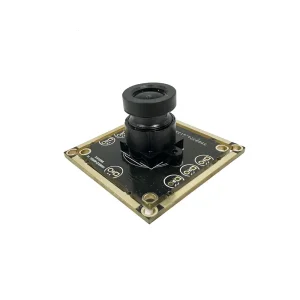
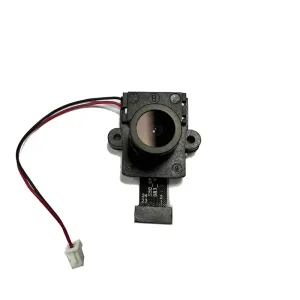
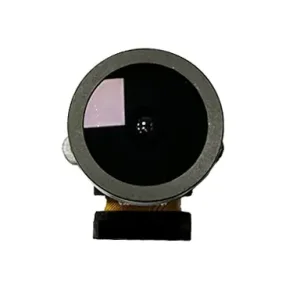
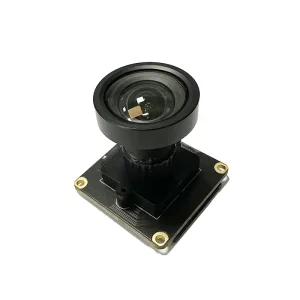
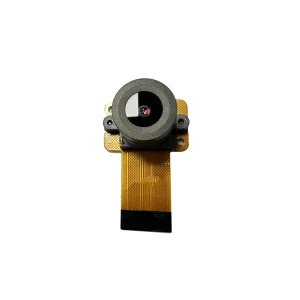
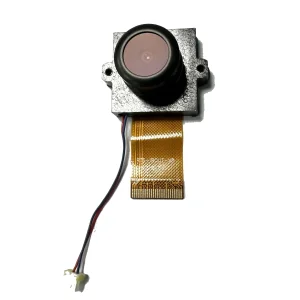
Browse our field-tested camera modules, designed for security monitoring, industrial machine vision, in-vehicle recording, and automated access control.
Connect with our Shenzhen optical and hardware engineering teams. Receive comprehensive DFM assessments, sensor-to-lens matching proposals, and functional engineering evaluation samples.
Request Technical Consultation & Catalog