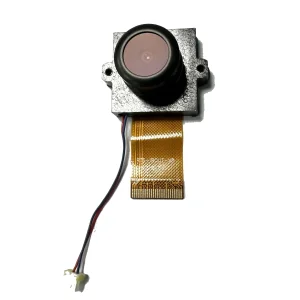
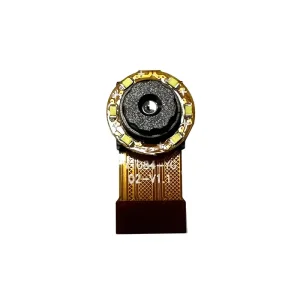
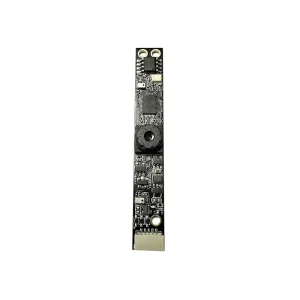
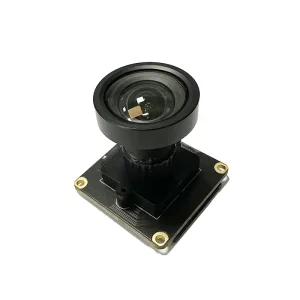
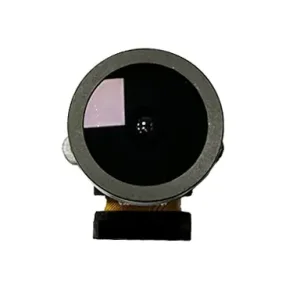
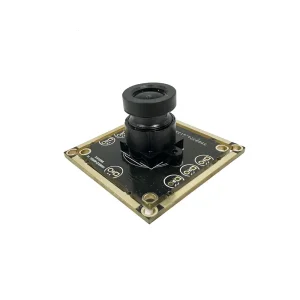
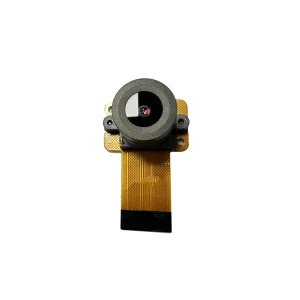
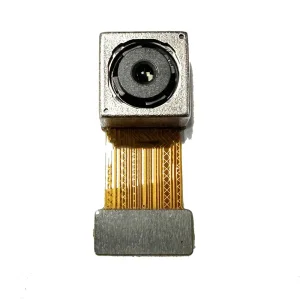
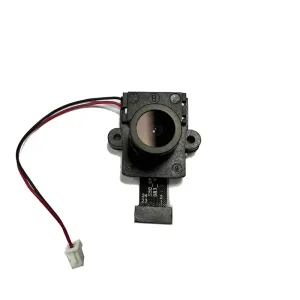
Industrial-grade camera sensors, low-distortion lens assemblies, and high-speed embedded imaging engines optimized for integration into UAV payloads and night surveillance platforms.
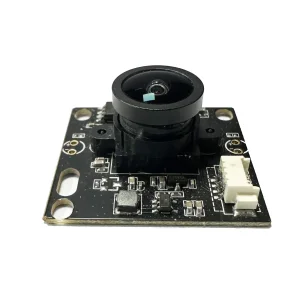
How Next-Generation Low-Light Sensors, Uncooled Thermal IR Payloads, and Edge-AI Processing are Redefining Zero-Lux Autonomous Operations Worldwide
In modern aerial intelligence, Drone Vigilancia Nocturna (night vision surveillance drones) has shifted from specialized defense hardware into an indispensable operational asset across commercial, civil, and industrial sectors. Operating uncrewed aerial vehicles (UAVs) in pitch-black environments requires fundamentally different sensor architecture than daylight missions. OEM manufacturers and global exporters are at the forefront of this revolution, integrating high-sensitivity CMOS sensors, long-wave infrared (LWIR) microbolometers, and low-latency MIPI/UVC digital interfaces directly into lightweight gimbal payloads.
Historically, night surveillance relied heavily on high-power active infrared (IR) illuminators mounted on airframes. However, active IR suffers from major operational drawbacks: severe battery drain, limited illumination range, and high vulnerability to anti-drone detection systems. Today’s premier OEM drone surveillance companies utilize passive multispectral sensor fusion. By combining ultra-low-light starlight sensors capable of color imaging at 0.0001 lux with thermal imaging cores operating in the 8–14 µm spectral band, modern drones achieve complete situational awareness without revealing their physical position.
"True information gain in night aerial reconnaissance is achieved when optical clarity, thermal sensitivity, and SWaP-C (Size, Weight, Power, and Cost) constraints are perfectly balanced within the OEM payload specification."
A comparative engineering evaluation of optical and infrared sensor choices for B2B drone integration.
Utilizes large-pixel back-illuminated (BSI) CMOS sensors (e.g., Sony STARVIS 2 series). Expands dynamic range beyond 120 dB and captures full-color 1080P/4K video down to 0.0001 lux without external illuminators.
Employs Vanadium Oxide (VOx) or Amorphous Silicon (a-Si) microbolometers with 12µm pixel pitch. Provides crisp thermal imagery across 640×512 or 1280×1024 resolutions with thermal sensitivity (NETD) under 30 mK.
Combines optical edge detection with thermal temperature overlays on a single ISP chip. Allows operators to read vehicle license plates or identify personnel outlines through smoke, haze, and absolute darkness.
| Technology Vector | Optimal Spectrum | Primary Operational Advantage | Key Engineering Trade-off | Ideal OEM Application |
|---|---|---|---|---|
| Starlight Optical CMOS | 0.4 µm – 0.9 µm (Visible + NIR) | Preserves full color, high resolution & visual detail under moonlight | Requires minimal ambient light source (>0.0005 lux) | Urban perimeter monitoring, traffic enforcement |
| Uncooled LWIR Thermal | 8.0 µm – 14.0 µm (Long-Wave IR) | Detects heat signatures through total darkness, fog, and foliage | Lower native resolution compared to optical optical sensors | Search & Rescue, wildfire tracking, defense border patrols |
| Dual-Sensor AI Payload | Visible + LWIR Simultaneous | Real-time target identification and automated tracking via Edge AI | Higher SWaP requirement (higher power & payload mass) | Tactical military drone surveillance, critical infrastructure protection |
Customizable OEM imaging engines optimized for rigorous field operations in demanding international markets.
High-voltage electrical grids, solar farms, and oil pipelines require 24/7 continuous surveillance. OEM drones equipped with 2K/4K low-distortion camera modules and radiometrical thermal cores allow automated night flights to detect electrical hot-spots, insulator breakdown, and unauthorized perimeter breaches before catastrophic failures occur.
Nautical night missions demand wide field-of-view (FOV) optics with salt-spray resistance (IP67) and anti-fog lens coatings. Exporters supply dual-light camera gimbals featuring optical stabilization (OIS) and high-speed MIPI interface boards, enabling long-range vessel tracking, illegal fishing detection, and covert shoreline defense patrols.
During nocturnal disaster relief operations, smoke and complete darkness severely impair human responders. Night vision surveillance drones provide real-time thermal telemetry directly to command centers via encrypted RTSP/SRT wireless video streams, pinpointing missing persons and tracking wildfire movement in real time.
Meeting rigorous international manufacturing criteria, cyber security standards, and export regulations.
For international buyers, system integrators, and defense contractors sourcing Drone Vigilancia Nocturna solutions, product reliability and regulatory compliance are non-negotiable. Leading OEM manufacturers in Shenzhen and global export hubs implement complete end-to-end quality control workflows to satisfy stringent international standards.
Next-generation innovations reshaping the future of night surveillance and autonomous flight.
Moving beyond traditional frame-based capture, event-based vision sensors track pixel-level intensity changes in microsecond intervals, enabling latency-free nocturnal collision avoidance for high-speed autonomous drones.
Edge AI hardware embedded inside OEM camera modules allows multi-drone night swarms to communicate wirelessly, distributing search grids automatically and synthesizing multi-angle thermal imagery in real time.
Deep learning algorithms running directly on payload ISP hardware dynamically upscale thermal thermal signatures, reconstructing pixel-level human and vehicle features even under severe atmospheric noise.
Engineering answers to key procurement and hardware integration questions.
Starlight sensors rely on ambient optical light (such as starlight, moonlight, or city glow) to amplify visible spectra, offering high-resolution full-color video capable of reading numbers or identifying clothing colors. Thermal IR cores detect heat radiation emitted by objects regardless of ambient light, rendering objects visible in total darkness (0.0000 lux) and through thick smoke, fog, or vegetation cover. Dual payload systems combine both technologies for optimal performance.
MIPI CSI-2 is ideal for compact drones where the camera connects directly to an onboard edge-AI processor (e.g., Nvidia Jetson or Raspberry Pi) with minimal latency and high bandwidth. USB UVC offers rapid plug-and-play prototyping across various Linux flight controller architectures. Network (RTSP/IP/Ethernet) modules are preferred for long-range gimbal systems requiring hardware encoding and direct transmission over long-range radio datalinks.
NETD (Noise Equivalent Temperature Difference) measures the thermal sensor's ability to distinguish minute temperature differences. A lower NETD value (e.g., < 30 mK compared to 50 mK) yields significantly sharper thermal contrast, enabling operators to detect small targets (such as animals or humans) at far greater standoff distances under cold or low-contrast environmental conditions.
Yes. As an OEM/ODM camera module manufacturer, optical parameters can be tailored to match your precise enclosure. This includes fitting specific focal length lenses for tailored Field of View (FOV), integrating dual-band IR-pass or motorized IR-cut filters, and engineering custom Flexible Printed Circuit (FPC) lengths with EMI shielding to ensure zero interference with drone radio telemetry.
Modules undergo rigorous environmental stress testing: continuous thermal chamber cycling (-40°C to +85°C), high-vibration burn-in testing to simulate drone motor harmonics, optical MTF resolution testing, and image sensor calibration to eliminate dead pixels and non-uniformity across extended flight hours.
Explore our full line of industrial camera modules and specialized lenses engineered for surveillance, automation, and vision applications.