Engineered in Shenzhen for industrial, access control, vehicle forensics, and private network surveillance without external internet reliance.
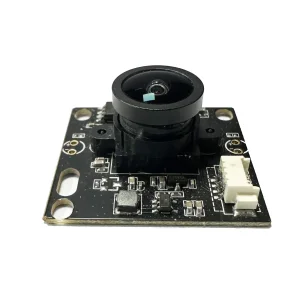
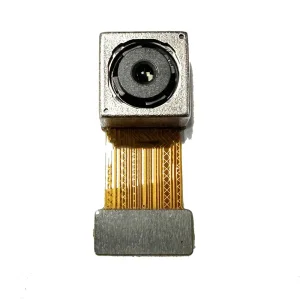
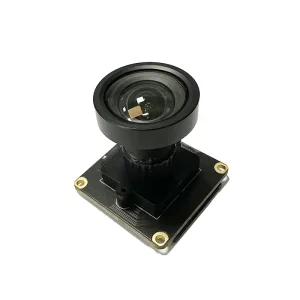
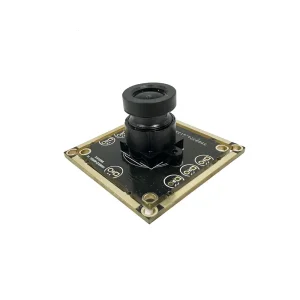
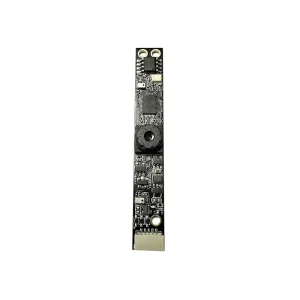
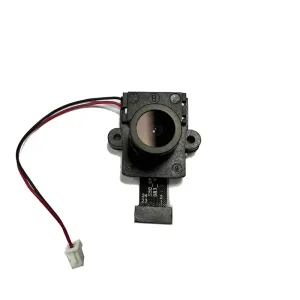
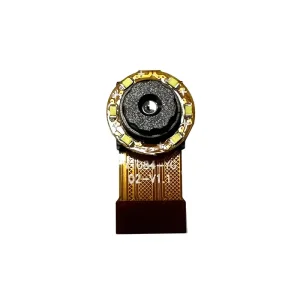
Why Tier-1 enterprise infrastructure, sensitive government campuses, healthcare institutions, and remote industrial operators are replacing cloud-tethered IP cameras with autonomous, offline-first imaging hardware.
In modern industrial safety and security operations, the paradigm of ubiquitous cloud-connected cameras has encountered a decisive tipping point. For nearly a decade, consumer and commercial security markets were dominated by SaaS-managed IoT cameras relying on constant AWS, Azure, or proprietary cloud connections for video telemetry, dynamic DNS streaming, and remote credential authentication. However, enterprise risk management teams, defense agencies, and industrial cyber architects are discovering that public cloud dependencies present unacceptable cybersecurity vulnerabilities, recurring subscription overheads, and regulatory compliance liabilities.
The global security community's pivot to "No Internet Security Cameras" stems from deep empirical data regarding attack vectors. Commercial devices that maintain persistent outbound tunnels over ports 80, 443, or proprietary P2P relay protocols are inherently susceptible to zero-day supply chain breaches. Vulnerabilities like hardcoded cloud credentials, exposed UPnP (Universal Plug and Play) routing, unauthenticated RTSP endpoints, and remote buffer overflow exploits have converted millions of internet-connected cameras into botnet relays (such as Mirai derivatives) or unauthorized exfiltration paths into corporate enterprise intranets.
When an optical surveillance node has physical access to sensitive financial trading desks, cleanroom microelectronics assembly lines, biotechnology laboratories, or critical utility substations, any digital communication pipeline terminating beyond the local firewalled intranet represents a severe national and corporate security liability. Hence, OEM/ODM hardware that operates strictly without external WAN gateways—relying solely on closed-circuit RS-485, localized Ethernet VLANs, isolated NVRs, point-to-point MIPI/USB connections, or encrypted on-device non-volatile storage—has become a mandatory procurement baseline.
Beyond active cyber infiltration, global legislative frameworks are exerting immense pressure on procurement directors:
Unmatched integration of precision glass mold toolings, Class-100 cleanroom SMT, rapid Active Alignment (AA), and agile component ecosystems powering global custom vision devices.
Shenzhen (specifically the Bao'an, Longhua, and Nanshan corridors) hosts the world's most concentrated optical supply chain. Silicon wafer distribution, image sensor packaging (CSP, COB), multi-layer rigid-flex PCB fabrication, and optical glass/plastic lens barrel machining operate within a 30-kilometer radius. This geographic density compresses prototyping iterations from months to days.
Modern high-megapixel camera modules (4MP, 8MP, 4K) cannot achieve edge-to-edge optical clarity using passive screw-in lens mounting. Chinese ODM facilities leverage automated 6-axis Active Alignment (AA) robots. The image sensor is powered on while collimator targets project test patterns; computerized robotic arms align the optical lens axis to sub-micron accuracy before UV glue curing.
YXD factory lines enforce 100% burn-in thermal aging chambers, operating continuously from -30°C to +75°C. Stress tests evaluate MTF (Modulation Transfer Function) stability, solder fatigue across thermal shock cycles, ESD resistance up to ±15kV air discharge, and high-humidity ingress durability to guarantee years of unmaintained offline operation.
| Architecture Feature | Consumer Cloud Security Cameras | Standard Commercial IP Cameras | ODM Air-Gapped / No-Internet Cameras |
|---|---|---|---|
| Network Gateway Dependency | Mandatory public internet WAN connection | Requires DNS, DHCP & cloud relay server | Zero WAN dependency; local LAN, USB, or point-to-point only |
| Cyber Attack Surface | High: Open ports, cloud servers, remote P2P relay | Medium: Exposed ONVIF ports on corporate LAN | Zero remote surface; no external IP routing or remote backdoors |
| Recurring Cost (TCO) | Continuous monthly cloud storage & AI fee | Periodic NVR software license renewals | One-time hardware CAPEX; 0 operational SaaS subscriptions |
| Storage Architecture | Remote AWS/Azure AWS S3 bucket | Centralized shared server / NAS array | Encrypted local MicroSD / eMMC or dedicated local NVR |
| Biometrics & AI Processing | Cloud-side server compute (privacy risk) | Hybrid cloud / VMS server analytics | 100% on-device Edge NPU inference (0ms outbound data) |
| Regulatory Feasibility | Fails strict NDAA, GDPR, HIPAA, and military tests | Requires extensive firewall VLAN segmentation | Native compliance with strict isolation & defense audits |
From off-grid mining excavations to high-security institutional access, discover how localized embedded camera modules solve real-world security challenges.
Electrical substations, nuclear cooling facilities, clean-water pumping stations, and gas transmission junctions strictly enforce NERC CIP compliance. Video cameras in these environments must never touch routable external IP spaces. Hardware modules operate via closed fiber-optic serial feeds directly to on-premise SCADA control consoles.
Hospital intensive care units (ICUs), psychiatric rehabilitation centers, and surgical operating rooms require video confirmation for patient fall prevention and procedural auditing. Internet-free camera modules ensure that high-resolution patient biometrics and surgical telemetry can never be intercepted or leaked via third-party cloud breaches.
Semiconductor wafer fabrication cleanrooms, aerospace wind-tunnel prototyping bays, and defense research complexes demand absolute trade secret quarantine. Optical inspection and security modules equipped with physical hardware shutter pins and local eMMC data logging prevent industrial espionage from state-sponsored actors.
Open-pit copper mines, offshore oil rigs, commercial logging concessions, and extensive solar farms operate hundreds of kilometers beyond commercial cellular or broadband coverage. Offline camera systems powered by solar micro-grids store 4K incident footage directly onto industrial-grade high-endurance SD cards or local mesh NVR nodes.
How the convergence of edge-AI neural processing units (NPU), decentralized flash topologies, and zero-trust firmware is redefining camera module capabilities.
Historically, cameras lacked computational power, requiring video streaming to cloud servers for person detection, facial recognition, and license plate reading (LPR). Today's ODM modules integrate low-power NPUs (0.5 to 4.0 TOPS) directly onto the camera PCB. Machine learning models run entirely on-sensor, triggering physical dry-contact relay outputs or isolated sirens without transmitting a single byte of video data.
Offline cameras rely heavily on constrained local storage media. The industry migration from legacy H.264 compression to intelligent H.265+ Smart Codecs and royalty-free AV1 hardware encoders allows a 4MP 1080P stream to consume less than 1.2 Mbps bitrate. This enables an industrial 512GB pSLC micro-SD card to retain continuous high-resolution rolling recordings for weeks without external overwriting.
Without cloud monitoring, physical device hardening becomes critical. Next-generation ODM cameras incorporate cryptographically secured hardware roots-of-trust (such as secure enclaves and TPM 2.0 chips) directly onto the substrate. Any physical disassembly triggers an encrypted flash zeroization procedure, rendering recovered memory chips unreadable to industrial spies.
A rigorous B2B purchasing framework for evaluating optical tolerances, firmware origin, thermal longevity, and supply chain accountability before signing volume purchase agreements.
Demand an auditable Bill of Materials verifying the foundry origin of the CMOS sensor (e.g., Sony Starvis, OmniVision PureCel), ISP processor, power management ICs, and EEPROM firmware chips.
Require spectrophotometer and MTF (Modulation Transfer Function) charts proving resolution clarity exceeding 150 lp/mm at the image center and 100 lp/mm at the extreme corners across design temperatures.
Confirm the ODM allows compiling firmware from bare-metal source or provides locked U-Boot binaries that have stripped all WAN diagnostic routines, NTP auto-updates, and third-party remote telemetry.
Ensure signal lanes (USB D+/D-, MIPI data pairs, Ethernet magnetics) carry TVS diode arrays rated for IEC 61000-4-2 Level 4 electrostatic discharge and surge spikes common in heavy industrial deployments.
Industrial vision procurement requires long lifecycle availability. Verify that the ODM manufacturer signs product roadmap commitments guaranteeing component pin-to-pin availability for a minimum of 7 to 10 years.
Direct factory samples and scalable OEM/ODM mass-production batches manufactured in strict compliance with ISO9001 and automotive IATF 16949 standards.
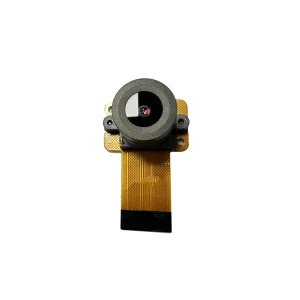
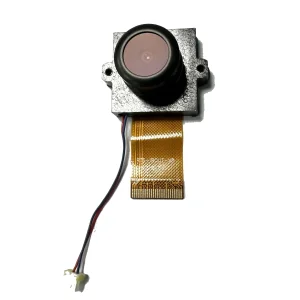
In-depth engineering answers addressing firmware customization, air-gapped storage durability, local VMS interoperability, and custom lens manufacturing.
No-internet camera modules output video through non-routable or localized physical interfaces. For embedded systems, direct parallel DVP, MIPI CSI-2, or driverless USB UVC protocols pipe raw or encoded frames directly to an on-board host processor (such as a Raspberry Pi, Rockchip, NXP i.MX8, or NVIDIA Jetson). In IP network deployments, the modules utilize local RTSP/ONVIF streams routed strictly across isolated, air-gapped Layer-2 Ethernet VLANs terminated into a dedicated physical Network Video Recorder (NVR), completely bypassing internet gateways, UPnP routing, and external DNS lookups.
Yes. YXD provides 100% NDAA-compliant OEM/ODM camera modules. We deliberately substitute any blacklisted SoC silicon (e.g., HiSilicon) with certified compliant image signal processors and sensor silicon from Novatek, Ambarella, Sony, OmniVision, Onsemi, or Texas Instruments. We deliver signed Certificates of Origin and verifiable component Bills of Materials (BOM) enabling seamless integration into systems targeted at U.S. federal projects, military facilities, and allied defense procurements.
For standalone offline cameras, YXD engineers high-speed UHS-I/UHS-II MicroSD card interfaces, eMMC 5.1 soldered on-board flash storage, or direct NVMe/SATA controller links. We implement cyclic circular FIFO write routines with bad-block management and sudden power-loss safeguards. Firmware algorithms automatically flush cached I-frames to flash memory in the event of an abrupt voltage drop, preventing video container (.mp4 or .ts) corruption.
We integrate edge AI chipsets featuring embedded Neural Processing Units (NPUs) offering between 0.5 and 4.0 TOPS INT8 performance. Lightweight quantized CNN models (such as YOLOv8-tiny, MobileNet, or custom Haar cascade classifiers) run directly inside the camera's local memory footprint. The camera performs person/vehicle classification, perimeter tripwire detection, and license plate recognition in real-time with sub-20ms inference latency, triggering physical dry-contact alarm outputs or local audio relays without external cloud calls.
Yes. In-house optical design is one of YXD's core competitive pillars. We formulate custom multi-element all-glass (4G, 6G, 2G4P) optical assemblies ranging from ultra-wide 140° panoramic lenses with optical distortion correction algorithms to narrow 12° telephoto lenses for long-range perimeter fencing. For document scanning and facial biometrics, we deliver zero-distortion optical lenses with optical TV distortion rated below 0.1%.
Leveraging our integrated Shenzhen supply chain, initial optical simulation, PCB schematics, and mechanical 3D CAD modeling are completed within 7 to 10 business days. Working functional prototypes produced via rapid CNC tooling and Class-100 cleanroom active alignment SMT lines are dispatched in 15 to 20 days. Following customer image tuning and reliability sign-off, full steel mold tooling and mass production ramp-up can be achieved within 30 to 45 days.