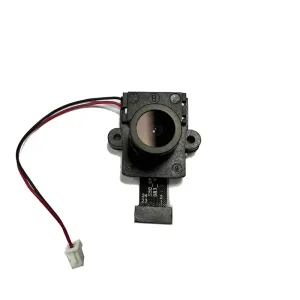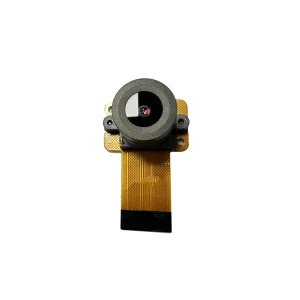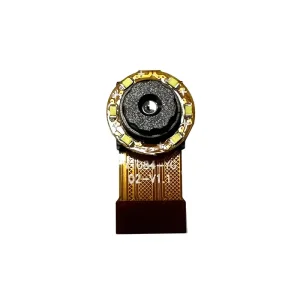
Engineered for 24/7 low-lux surveillance, autonomous edge systems, and ultra-compact embedded integrations. Fully customizable optical train, ISP parameters, and sensor sub-assemblies.
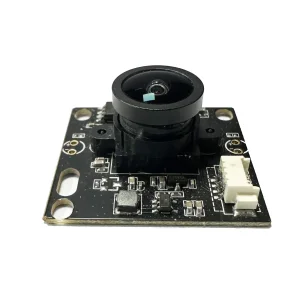
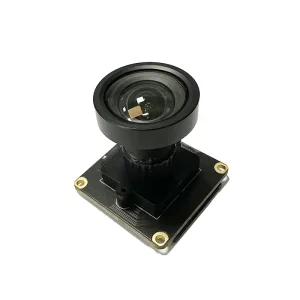
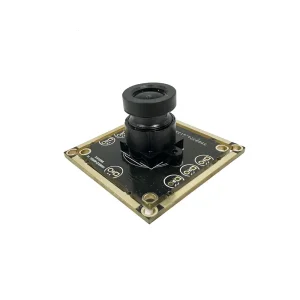
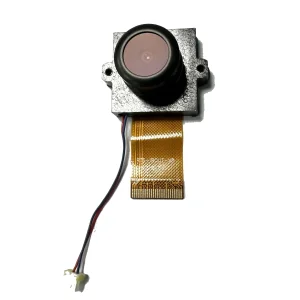
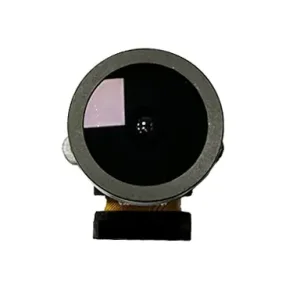
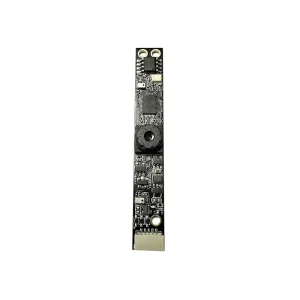
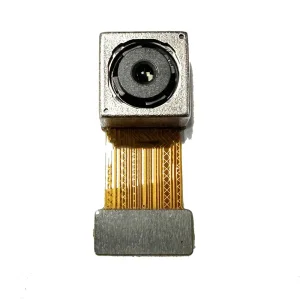
Modern security infrastructures demand persistent operational integrity in total photonic deprivation (0.0001 Lux). As a primary China ODM supplier, we integrate optical physics, sensor architecture, and computational ISP pipeline calibration.
The paradigm of night vision imaging has migrated from traditional active monochrome infrared floodlighting to intelligent, multi-spectral chromatic synthesis. Global original equipment manufacturers (OEMs) and smart appliance brands no longer settle for grainy, over-exposed target imagery caused by conventional 850nm IR arrays. The market requirements dictate True Color Full-Day Surveillance, demanding comprehensive synchronization among large-format backside-illuminated (BSI) CMOS sensors, super-aperture optics (F1.0–F1.2), and low-noise AI-driven noise-reduction neural processors.
Custom glass-metal barrels optimized for thermal stability (-30°C to +85°C), minimizing focal drift across massive F1.0 apertures while collecting up to 400% more light than conventional F2.0 security lenses.
Utilizing high quantum efficiency (QE) near-infrared sensors (e.g., Sony Starvis 2 architecture) capable of capturing color imagery under sub-0.001 lux without requiring visible spotlight saturation.
Combining 3D dynamic temporal filtering (3D-NR), hardware-accelerated local tone mapping, and AI-powered multi-exposure HDR to resolve headlight bloom and complete shadow voids concurrently.
Shenzhen represents the epicenter of global electro-optical precision assembly. Our cleanroom facilities combine localized sensor wafer access with micro-optics manufacturing to deliver unmatched cost efficiency and agility.
Direct proximity to world-class precision lens grinders, SMT foundries, IR-cut filter coaters, and flex-PCB fabrication allows YXD to compress iteration cycles from months into single business weeks.
Our production lines deploy six-axis Active Alignment robots that tune lenses and image sensors in real-time under low-light collimators, guaranteeing MTF edge-to-edge sharpness across entire sensor diagonals.
High reliability is engineered via continuous high-temperature aging chambers (85°C/85% RH), thermal shock testing (-40°C to +105°C), and high-vibration tests matching automotive AEC-Q100 benchmarks.
Night vision imaging performance is governed by target reflectivity, ambient atmospheric scattering, and illumination spectra. We adapt hardware pipelines to specific regional and environmental challenges.
Integrated 940nm invisible illumination systems for Driver Monitoring Systems (DMS) and Occupant Detection (OMS). Delivers crisp eye-tracking without visual disturbance to drivers under high-speed dark highway conditions.
Long-range dual-sensor fusion (visible light + thermal or NIR) for enterprise industrial parks, ports, and critical utility substations. Enables reliable human and vehicle classification up to 150 meters away in dense fog or pitch-black darkness.
Global shutter and low-latency MIPI CSI-2 camera modules optimized for high-speed automated guided vehicles (AGVs) operating in unlit distribution warehouses, executing V-SLAM localization and sub-millimeter obstacle avoidance.
Selecting the appropriate hardware configuration balances bill of materials (BOM), heat dissipation envelopes, and environmental low-lux targets.
| Architecture Type | Lux Threshold | Color Rendition | Typical Optics Setup | Key Engineering Constraint | Target B2B Application |
|---|---|---|---|---|---|
| Traditional IR Cut (850nm) | 0.01 Lux (Active IR) | Monochrome (B/W) | Standard F2.0 Glass | Noticeable red LED glow; target overexposure | Entry Residential Doorbells |
| Covert NIR (940nm) | 0.005 Lux (Active IR) | Monochrome (B/W) | AR-Coated 940nm Pass Filter | Lower sensor QE requires higher LED drive power | Cabin DMS, Covert Law Enforcement |
| Starlight Full-Color (BSI) | 0.0005 Lux (Ambient) | Vibrant 24/7 Color | Large F1.0 / F1.2 Aspherical | Shallow depth of field requires precision AA | Perimeter Industrial Defense |
| Dual-Sensor Fusion (AI ISP) | 0.0001 Lux (Zero Light) | Enhanced Multi-Spectrum | Co-axial Dual Visible+IR Lenses | Algorithmic parallax matching computation load | Smart Cities, Border Surveillance |
From schematic conception to container-load mass production. Our systematic NPI (New Product Introduction) pipeline minimizes cycle risks for enterprise purchasing departments.
Optical ray tracing, FOV selection, distortion constraints, and housing dimensional fitment checks.
Rigid-flex PCB routing, power decoupling optimization, and precision sensor SMT with EMI shielding.
Six-axis automated robotic collimation, gluing, and thermal UV curing for uniform edge sharpness.
Dynamic range tuning, automatic white balance (AWB), 3D-NR parameters, and lux-threshold curves.
Continuous high-temp aging burn-in, drop tests, ESD tests, and statistical process control sign-off.
Comprehensive answers addressing optical constraints, sensor integration, interface protocols, and custom production schedules.
Continuous production inventory with verified durability. Select standard reference platforms or request ODM tailoring for enclosure-specific mechanics.