Direct from our Shenzhen automated manufacturing center. Explore our flagship optical sub-assemblies and camera modules engineered with custom Plano-Convex and low-distortion lens systems.
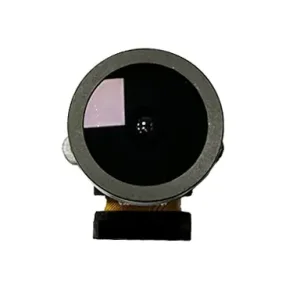
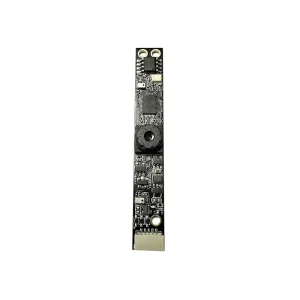
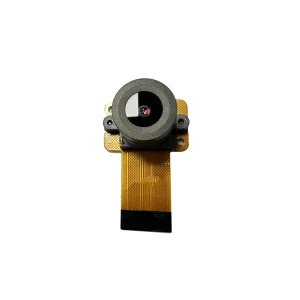
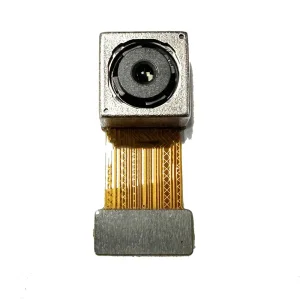
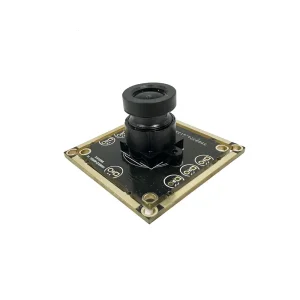
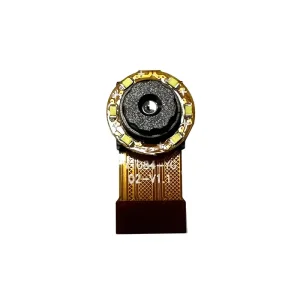
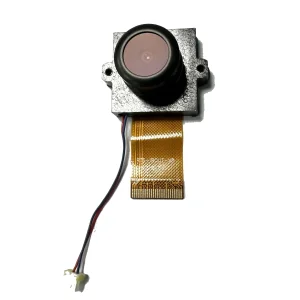
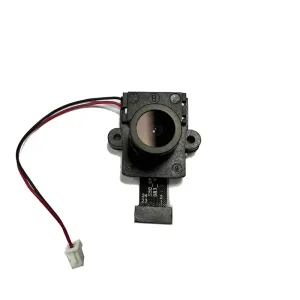
In modern optoelectronics, imaging systems, and photonic devices, the Lente Plano Convexa (Plano-Convex Lens) remains a foundational transmissive optical element. Engineered with one flat (plano) surface and one outward-curved spherical (convex) surface, these lenses feature a positive focal length ($f > 0$) designed to collect, focus, and collimate light in monochromatic and broadband applications.
As a leading ODM Lente Plano Convexa Manufacturer & OEM Factory headquartered in Shenzhen, Shen Zhen You Xiang Da Technology Co., Ltd. (YXD Optics) combines advanced glass blank pressing, sub-nanometer CNC polishing, and high-vacuum Broadband Anti-Reflective (BBAR) coating technologies. We empower tier-1 optical system integrators, camera module designers, and biomedical device manufacturers with customized lens optics tailored to demanding performance tolerances.
Optical Principle: To minimize spherical aberration when focusing infinite conjugate light, the curved surface of the Plano-Convex Lens should always face toward the incident parallel beam or the infinite conjugate distance. This distributes light refraction evenly across both surfaces.
Combining Shenzhen's world-class electronics supply chain with fully automated optical fabrication techniques to guarantee rapid prototyping, scalable mass production, and strict cost performance.
Our factories employ high-speed CNC spherical generators and Magnetorheological Finishing (MRF) units capable of achieving surface roughness ($Rq$) under 0.5 nanometers, eliminating sub-surface damage in high-power laser applications.
Optical lens elements and micro-camera modules are assembled within ISO Class 5 (Class 100) laminar flow clean booths. Automated ultrasonic washing guarantees microscopic cleanliness prior to optical cement bonding or barrel mounting.
From raw optical glass procurement (CDGM, Schott, Ohara, Corning) to SMT sensor placement, active alignment, and final MTF testing, YXD provides a seamless, risk-free ODM manufacturing lifecycle for global OEM buyers.
Exploring how advancements in metasurfaces, hybrid molded glass-plastics, and ultra-short pulse laser coatings are reshaping the optics industry.
Traditional Plano-Convex lenses encounter inherent chromatic aberration across multi-spectral wavelengths. YXD's forward-looking R&D team is integrating flat sub-wavelength nanostructure arrays (metasurfaces) onto the plano surface of glass substrates. This hybrid approach enables broadband chromatic aberration correction while preserving high optical throughput for compact LiDAR and AR/VR head-mounted displays.
As industrial picosecond and femtosecond laser processing expands into semiconductor manufacturing, Plano-Convex focusing lenses require exceptional Laser-Induced Damage Threshold (LIDT) ratings. Our factory utilizes Ion-Beam Sputtering (IBS) to produce hard metal-oxide thin films achieving LIDT > 15 J/cm² @ 1064nm (10ns pulse width), eliminating thermal lensing effects.
To survive extreme thermal fluctuations (-40°C to +125°C) in automotive ADAS camera modules, precision glass molding is rapidly replacing traditional plastic optics. Molded Plano-Convex element designs offer high refractive index stability ($dn/dT$) and zero moisture absorption, crucial for vehicle environmental compliance.
Medical endoscopes demand micro Plano-Convex elements down to $\varnothing 1.0\text{ mm}$ with strict biocompatibility. YXD leverages precision centerless grinding and automated optical cement dispenser systems to manufacture biocompatible, sterilizable miniature lens components for minimally invasive surgical tools.
How specialized Plano-Convex lens geometries and custom optoelectronic module designs drive performance across mission-critical sectors.
LiDAR emitters rely on UV Fused Silica Plano-Convex lenses for laser beam expansion and collimation. With tight focal length tolerance ($\pm 0.5\%$) and AR coatings at 905nm or 1550nm, our lenses maximize photon return efficiency over long detection ranges.
Automated optical inspection (AOI) tools require low-distortion illumination systems. By integrating custom Plano-Convex collector optics with high-speed industrial camera modules, system integrators achieve edge-to-edge illumination uniformity across fast conveyor lines.
Facial recognition access terminals and video doorbells integrate small-form-factor fixed focus and autofocus lens modules. Our custom Plano-Convex element stacks maximize light throughput in low-light infrared environments.
Comprehensive standard engineering tolerances for OEM/ODM Plano-Convex Lens customized orders. Every parameter is verified using Zygo Interferometers and Trioptics metrology devices.
| Optical Specification | Commercial Grade | High-Precision Grade | Ultra-Precision / Laser Grade |
|---|---|---|---|
| Substrate Material | Optical Glass (N-BK7, CDGM H-K9L) | Synthetic UV Fused Silica (JGS1/Corning 7980) | Calcium Fluoride ($\text{CaF}_2$), Sapphire, ZnSe |
| Diameter Tolerance ($\varnothing$) | $+0.00 / -0.10\text{ mm}$ | $+0.00 / -0.02\text{ mm}$ | $+0.00 / -0.005\text{ mm}$ |
| Focal Length Tolerance ($\Delta f$) | $\pm 2.0\%$ | $\pm 1.0\%$ | $\pm 0.2\%$ |
| Center Thickness Tolerance ($Tc$) | $\pm 0.10\text{ mm}$ | $\pm 0.02\text{ mm}$ | $\pm 0.01\text{ mm}$ |
| Surface Figure / Flatness | $\lambda / 2$ per $25\text{mm}$ @ 632.8nm | $\lambda / 4$ per $25\text{mm}$ @ 632.8nm | $\lambda / 10$ per $25\text{mm}$ @ 632.8nm |
| Surface Quality (Scratch-Dig) | 60-40 (MIL-PRF-13830B) | 40-20 (MIL-PRF-13830B) | 10-5 (Laser Quality) |
| Centration / Wedge Angle | $< 3\text{ arcmin}$ | $< 1\text{ arcmin}$ | $< 30\text{ arcsec}$ |
| Clear Aperture (CA) | $> 85\%$ of diameter | $> 90\%$ of diameter | $> 95\%$ of diameter |
| Coating Options | Uncoated / Single-layer $\text{MgF}_2$ | BBAR (R < 0.5% @ 400-700nm) | V-Coating / Custom Dual Wavelength |
Selecting the optimal camera module interface and lens configuration for your host processing platform. Engineering comparison provided by YXD application engineers.
| Interface Protocol | Ideal Application Field | Host Architecture | Key Strengths | Optical Integration Focus |
|---|---|---|---|---|
| MIPI CSI-2 | Raspberry Pi, Embedded AI Vision, Autonomous Mobile Robots | SoC with native CSI-2 port & hardware ISP | Ultra-high bandwidth, minimal latency, low EMI power footprint | Paired with low-distortion Plano-Convex / M12 lens stacks for edge AI computation |
| USB 2.0 UVC | Laptops, Video Conferencing, Interactive Kiosks, Medical Scanners | Standard USB Host (Windows, Linux, macOS, Android) | True plug-and-play driverless integration; fast deployment lifecycle | Optimized for non-distorted optical performance and high resolution stream (MJPEG/H.264) |
| DVP Parallel | Microcontroller (MCU) Systems, Barcode Scanners, Low-Cost Terminals | Industrial Microcontrollers & Low-tier Processors | Simplified signal timing, highly economical BOM hardware architecture | Combined with fixed-focus Plano-Convex optical collectors for close-range scanning |
| Wi-Fi / IP Network | Smart Home Surveillance, Video Doorbells, Remote IoT Monitoring | Wireless Network Infrastructure & Cloud NVR platforms | Flexible wireless installation; built-in video encoding stack | Integrated with IR-cut night vision lenses and wide-angle beam expansion optics |
We deliver international regulatory compliance, standardized PPAP documentation, and responsive localized technical support for global enterprise clients.
Our total quality management system governs every manufacturing step. From incoming raw material inspection (IQC) to in-process quality control (IPQC) and final outgoing quality testing (OQC).
All optical glass substrates, cements, barrel housings, and SMT PCB assemblies comply fully with EU RoHS 3.0, REACH SVHC, and CE directives, ensuring smooth global distribution.
For automotive and industrial OEMs, we provide full Production Part Approval Process (PPAP Level 3) documentation, including FMEA, control plans, optical simulation reports, and Zygo test data.
In-depth answers to key optical engineering, custom manufacturing, and integration inquiries from procurement leads and hardware engineers.
A Lente Plano Convexa (Plano-Convex Lens) is a positive optical element featuring one flat surface and one convex spherical surface. It is ideal for focusing parallel rays of light into a point (infinite conjugate applications) or collimating light from a point source. It is widely used in laser collimation, projection systems, optical imaging detectors, and industrial camera lens assemblies.
The effective focal length ($f$) is determined by the Lensmaker's Formula:
$\frac{1}{f} = (n - 1) \cdot \left( \frac{1}{R_1} - \frac{1}{R_2} \right)$
For a Plano-Convex lens where the flat side has infinite radius ($R_2 = \infty$), the equation simplifies to: $f = \frac{R_1}{n - 1}$, where $R_1$ is the radius of curvature of the convex surface and $n$ is the refractive index of the glass substrate at the design wavelength.
To minimize spherical aberration, the curved (convex) surface should face toward the collimated beam or the infinite conjugate distance. When focusing a parallel light beam down to a focal spot, point the curved side toward the light source. Conversely, when collimating a point source placed at the focal point, point the flat side toward the point source.
We supply a broad spectrum of substrate materials depending on your spectral range:
We apply vacuum dielectric broadband AR coatings including:
YXD develops OEM/ODM camera modules with MIPI CSI-2, USB 2.0 UVC, DVP parallel, and Wi-Fi/network interfaces. This allows buyers to match the optical sub-assembly directly to their host processor, cable length constraint, and bandwidth requirements.
Yes. Our MIPI CSI-2 camera modules can be customized for Raspberry Pi boards. Standard Pi models utilize a 15-pin FPC connector, while Raspberry Pi 5 and Zero series use a 22-pin connector. Please state your target board when ordering engineering samples. USB UVC modules operate driverlessly across Raspberry Pi OS, Linux, and Windows.
To receive a tailored quotation, submit your optical drawing (ISO 10110 or ANSI/ASME format) or target lens specifications (diameter, focal length, material, wavelength, AR coating, quantity) directly to our sales engineering team at [email protected]. Rapid prototyping lead times typically range from 7 to 14 working days.
Explore our complete production line of low-distortion camera modules and precision optics engineered in Shenzhen.
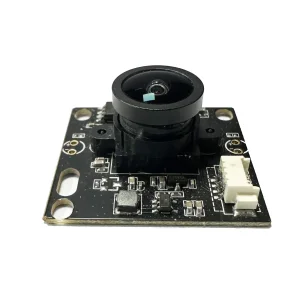
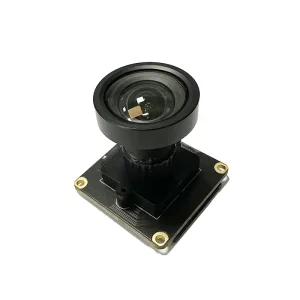
Submit your optical specifications, custom focal length requirements, or camera module target parameters directly to our senior optoelectronic engineering team.
Factory Address: Shen Zhen You Xiang Da Technology Co., Ltd., Shenzhen, Guangdong, China
Engineering Inquiry: [email protected] | [email protected]
Telephone / Direct Line: +86-755-23008936 | +86-159-8936-9206