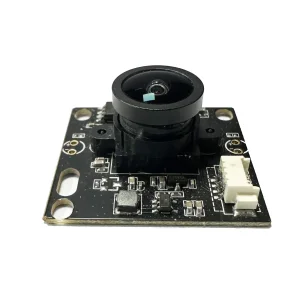
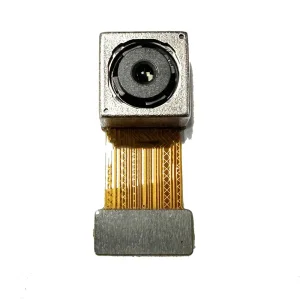
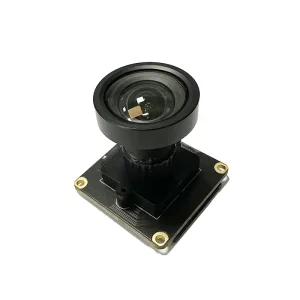
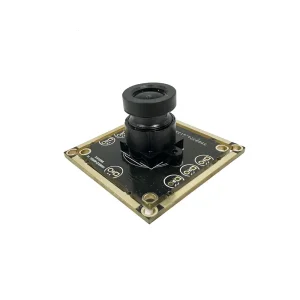
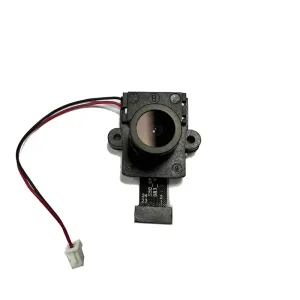
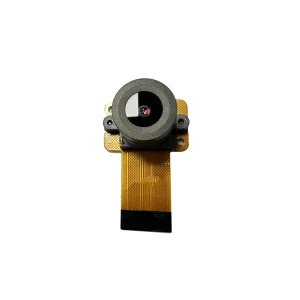
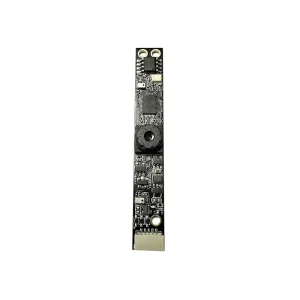
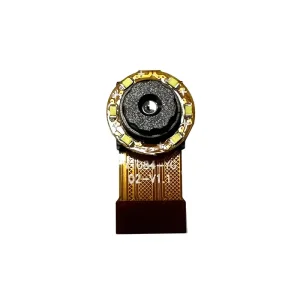
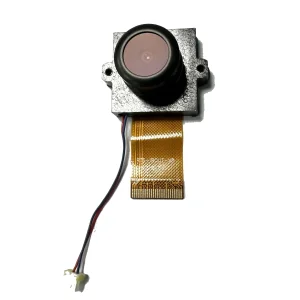
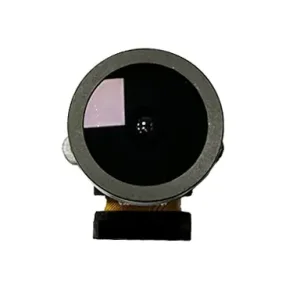
Field-proven, low-distortion, and high-dynamic-range camera modules manufactured by Shenzhen You Xiang Da Technology Co., Ltd. (YXD). Designed for immediate turnkey integration and custom ODM mass production.
In modern industrial and enterprise procurement, an "inexpensive security camera" no longer denotes compromised reliability or poor optical acuity. Instead, it reflects aggressive structural efficiencies across silicon wafer scale, system-on-chip integration, and automated optical lens manufacturing.
Traditional corporate video surveillance was characterized by prohibitive licensing, proprietary NVR infrastructure, and exorbitant per-camera device costs. Modern low-power CMOS image sensors paired with highly integrated micro-ISPs enable SMBs, smart farms, and micro-mobility operators to deploy high-density visual networks at a fraction of capital expenditure.
By shifting processing from expensive centralized compute servers to onboard edge-AI microcontrollers, bandwidth requirements decrease by over 60%, drastically cutting ongoing cellular and cloud storage overhead.
The commoditization of sub-micron CMOS fabrication processes from leading semiconductor foundries (including Sony, Omnivision, and SmartSens) has dramatically reduced image sensor BOM cost while accelerating sensitivity improvements like Back-Illuminated (BSI) pixel architectures.
Concurrently, open RISC-V microprocessors and specialized neural processing units (NPUs) delivering 0.5 to 2.0 TOPS can now be packaged into budget SoCs, executing on-device human-vehicle classification without enterprise license fees.
Commercial operations are transitioning from monolithic closed-circuit architectures to distributed, modular visual nodes. Whether integrated into self-checkout kiosks, automated parcel lockers, or building intercom systems, modular camera boards provide custom form factors that standard bullet or dome cameras cannot accommodate.
This structural change unlocks scalable deployments across thousands of distributed municipal and commercial touchpoints globally.
Shenzhen's Greater Bay Area industrial ecosystem offers unmatched advantages in component sourcing, rapid tooling prototyping, and cleanroom automation. Discover how YXD builds resilient, cost-effective vision modules that Fortune 500 customers rely upon.
YXD’s production facilities reside at the epicenter of global electronics manufacturing. Within a 30-mile radius, our supply chain captures raw optical resin, German Schott glass blanks, multi-layer rigid/flex printed circuit boards (FPC), infrared cut-off filters, and passive components.
This hyper-localized density eliminates international freight bottlenecks during sub-assembly, compressing prototype turnarounds from months to 7-10 business days.
Traditional low-cost camera makers rely on threaded manual focusing, resulting in corner defocusing, optical tilt, and high RMA failure rates. YXD utilizes advanced 6-axis robotic Active Alignment (AA) machinery in Class 1,000 cleanrooms.
By collimating the lens barrel while continuously sampling the live sensor feed against calibrated reticle targets, our automated assembly guarantees sub-micron planar accuracy and uniform optical resolution across the entire Field of View (FOV).
To qualify as a trusted supplier to Fortune 500 corporations, low cost must never supersede field stability. Every YXD production batch undergoes 100% burn-in cycles in dedicated environmental chambers.
Modules endure -30°C to +75°C temperature cycling, 95% relative humidity testing, electrostatic discharge (ESD) testing, and 3-axis vibration stresses, ensuring zero optical drift and stable solder integrity across 24/7 continuous operation.
Vision engineering is evolving rapidly beyond standard video capture. Explore the hardware and firmware innovations YXD is architecting into next-generation inexpensive security camera modules.
By coupling compact MIPI CSI-2 and USB UVC interfaces with sub-watt neural processing accelerators, our modules execute hardware-based tinyML models directly on the sensor board. This roadmap includes:
Traditional night vision relies on power-hungry 850nm IR arrays that yield flat, monochrome images. Our optical engineering roadmap shifts toward full-color night vision under 0.001 Lux illumination:
The explosive demand for wireless solar and battery-powered cameras mandates radical power conservation. YXD’s R&D addresses power dissipation through specialized hardware design:
High image resolution is useless if networking costs exhaust the deployment budget. Our embedded video modules incorporate modern hardware codecs directly on-chip:
Across diverse operating environments—from vibrating truck cabs to sub-zero smart orchards—YXD camera modules provide tailored lens fields of view, low distortion, and robust ingress protection.
Visual doorbells and multi-tenant intercom stations demand broad coverage without extreme barrel distortion that warps human proportions. Our visual doorbell modules offer 140° to 160° diagonal fields of view paired with custom IR-cut filters.
Integrated Wide Dynamic Range (WDR > 105dB) prevents facial silhouetting when visitors stand in direct, intense afternoon backlighting.
In-vehicle cameras must survive extreme solar windshield heating and constant engine vibration. YXD manufactures specialized 1080P starlight automotive-grade modules with wide-temperature FPC substrates and automotive glass optics.
These units power ADAS lane-departure algorithms, driver drowsiness facial tracking, and dual-recording dashcams with low latency.
Self-checkout counters, airport ticketing turnstiles, and banking file scanners require absolute optical clarity at macro distances. Distortion-free USB camera modules ensure rapid 1D/2D QR code decoding and ID badge OCR scanning.
Plug-and-play UVC protocol support guarantees native compatibility across Ubuntu, Windows IoT, and Android kiosk boards without manual driver compilation.
Protecting rural infrastructure, remote reservoirs, and large livestock farms requires cameras deployed off-grid over 4G/5G cellular nodes. Cost per unit is paramount to justify dense spatial coverage.
YXD’s low-power Wi-Fi and network camera module assemblies support wide operating voltage tolerance, moisture-proof conformal coatings, and automated day/night IR switching.
Autonomous mobile warehouse robots and commercial lawnmowers require dual or triple vision inputs for visual odometry, collision avoidance, and downward cliff detection.
Our compact 9mm miniature 1080P modules and MIPI CSI-2 Raspberry Pi-compatible boards fit inside tight bumpers and robotic joints, delivering rock-solid 60fps feeds with minimal power consumption.
Monitoring construction zones, PPE helmet compliance, and crane clearance mandates ruggedized 2K and 4MP imaging. Camera modules must maintain thermal equilibrium when sealed in IP67 outdoor enclosures.
YXD’s optical engineers design customized heat-dissipating aluminum carrier plates and select low-leakage bypass capacitors to prevent thermal noise buildup during long continuous exposures.
A low unit purchase price must never expose enterprise buyers to legal non-compliance, import blockages, or data breaches. YXD designs all hardware and firmware to satisfy rigorous international standards.
| Regulatory Domain | Standard / Regulation | Technical Implementation & Safeguards | Target Export Markets |
|---|---|---|---|
| Supply Chain Geopolitics | NDAA Section 889 Compliant Architectures | Integration of non-blacklisted SoCs and microcontrollers (e.g., Novatek, Ambarella, Sigmastar, or open European/Taiwanese fabless silicon options) ensuring seamless deployment in US enterprise, education, and municipal projects. | United States, Canada, Australasia |
| Privacy & Data Protection | EU GDPR Chapter 4 & ISO/IEC 27001 | Firmware-level hardware secure element (HSE), true random number generation (TRNG), unique per-device cryptographic key storage, and end-to-end TLS 1.3 encrypted data tunneling. Zero hardcoded manufacturer backdoors. | European Union, United Kingdom, Switzerland |
| Cybersecurity Hygiene | ETSI EN 303 645 & California SB-327 | Mandatory password changes upon first boot, disablement of insecure telnet/FTP daemons, signed firmware image verification to block unauthorized OTA flashes, and secure bootloader authentication. | Global Tier-1 Commercial Enterprise |
| Electromagnetic & Physical | FCC Part 15 Class B, CE-RED, RoHS, REACH | Multilayer ground-plane PCB isolation minimizing RF emissions, lead-free SMT soldering lines, and comprehensive chemical component testing verifying elimination of hazardous substances. | Global Distribution Channels |
| Interoperability | ONVIF (Profile S, G, T) & UVC Compliance | Adherence to open ONVIF network video protocols for drag-and-drop inclusion into Milestone, Genetec, Synology, or commercial NVR stacks; driverless USB Video Class for rapid host operating system connection. | Global System Integrators |
Analyze the fundamental technical differences between legacy monolithic surveillance units and modern, customized embedded camera modules.
| Evaluation Parameter | Legacy Commercial CCTV Units | YXD ODM Inexpensive Security Camera Modules |
|---|---|---|
| Form Factor Flexibility | Bulky, rigid die-cast aluminum enclosures; fixed mounting dimensions that cannot fit smart kiosks, doorbells, or mobile devices. | Fully custom PCB outlines (down to 9mm diameter), flexible FPC cable lengths, and customizable lens barrel holders. |
| Optical Alignment Accuracy | Often uses manual threaded focus with adhesive rings, leading to focal drift under thermal cycling. | 6-Axis automated Active Alignment (AA) ensures sub-micron sensor-to-lens alignment and edge-to-edge optical sharpness. |
| Host Interface Diversity | Restricted to proprietary RJ45 PoE or analog BNC video connectors. | MIPI CSI-2, USB 2.0/3.0 UVC, DVP parallel, and Wi-Fi / IP streaming matching diverse host processors. |
| Unit Acquisition & BOM Cost | High retail markup ($150 - $450+) with mandatory software subscriptions and vendor lock-in. | Direct factory BOM pricing ($5 - $35 depending on sensor/optics configuration), no recurring licensing fees. |
| Platform Portability | Tied to proprietary NVR brands or cloud subscriptions. | Native support for Raspberry Pi, NVIDIA Jetson, Android, Linux, RTOS, and Windows host platforms. |
Explore our active catalog of camera modules ready for sample evaluation and volume OEM/ODM batch production with consistent quality assurance.
In-depth engineering answers covering sensor matching, ISP tuning, thermal dissipation, compliance, and MOQ requirements for volume ODM security camera projects.
Our pricing advantage is achieved through structural vertical integration and lean manufacturing rather than component degradation. By conducting optical lens design, injection molding, SMT board placement, and 6-axis automated Active Alignment (AA) internally at our Shenzhen facilities, we remove 3rd-party tier markups. Furthermore, automated optical inspection (AOI) and batch environmental aging reduce defect rates to under 0.05%, significantly eliminating RMA overhead for our international clients.
Yes. As a specialized OEM/ODM factory, complete physical customization is our core competency. We can tailor the lens Field of View (from narrow 45° telephoto lenses to 160° ultra-wide low-distortion optics), adjust IR-cut filter transitions (650nm / 850nm / 940nm dual pass), modify FPC flexible ribbon lengths, and engineer rigid PCB layouts to accommodate unconventional device housings such as doorbells, tablets, inspection wands, or compact domes.
YXD manufactures modules across four primary interface protocols: MIPI CSI-2, USB 2.0/3.0 UVC, DVP parallel, and Wi-Fi / IP streaming. Our MIPI modules can be mapped directly to Raspberry Pi 3/4 (15-pin FPC) and Raspberry Pi 5 / Zero (22-pin FPC) connectors with customized device tree overlays. Our USB UVC modules are 100% plug-and-play across Linux, Android, Windows, and macOS without compiling external device drivers.
Yes. For clients distributing into the North American and European enterprise markets where NDAA Section 889 compliance is mandatory, YXD engineers modules utilizing compliant image processors from non-prohibited semiconductor vendors (such as Novatek, Ambarella, or custom RISC-V architectures). We provide full supply chain provenance and Bill-of-Materials (BOM) declaration documentation.
For standard catalog configurations and minor lens matching, engineering evaluation samples can be delivered in 3 to 5 business days. For full custom ODM designs requiring bespoke PCB Gerber layout and optical tooling, prototype samples are completed in 15 to 20 business days. Standard production MOQ begins at 1,000 units, while low-volume pilot runs are supported for enterprise engineering validation.
Thermal stability is built into our hardware architecture. We select high-efficiency low-dropout regulators (LDOs) and configure dynamic clock scaling within the ISP firmware to minimize self-heating. During qualification, boards undergo cyclic thermal chamber stress tests (-30°C to +75°C) while measuring signal-to-noise ratio (SNR) degradation and dark current leakage, guaranteeing consistent image fidelity in extreme climates.
Connect directly with YXD’s optical and firmware engineers in Shenzhen. From sensor selection and ISP optimization to high-yield mass production, we bring proven reliability to your inexpensive security camera applications.