Precision Optics & Vision Sub-Systems Whitepaper

ODM Concave Lens Convex Lens Manufacturers & Exporters

Pioneering high-precision plano-convex, biconcave, meniscus, and achromatic optical component assemblies. Tailored custom focal geometries, multi-layer anti-reflective (AR) coatings, and embedded vision module integrations for global tier-one OEMs.

Featured Optics & Assemblies

Integrated Optical & Lens Module Products

Explore precision-machined camera and lens assemblies optimized with proprietary concave and convex spherical elements, low distortion, and industrial-grade MTF performance.

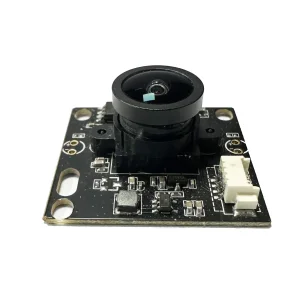
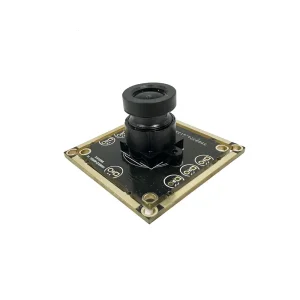
1080P Distortion Free USB Camera Standard Module
Explore Specifications
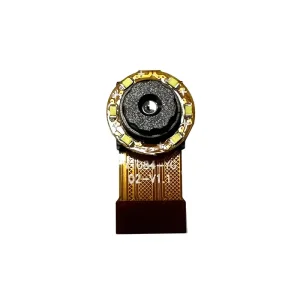
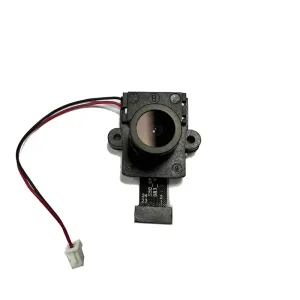
9mm High-Definition 1080P Miniature Camera Module
Explore Specifications
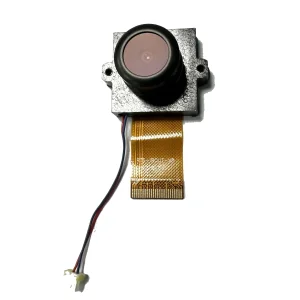
Wholesale 1080P Driving Recorder Camera Module
Explore Specifications
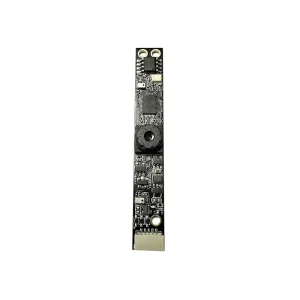
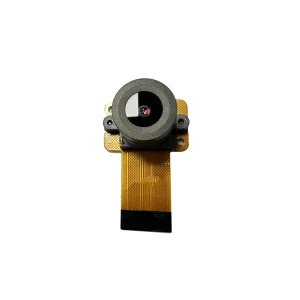
Custom 720P High-Definition Laptop Camera Module
Explore Specifications
ODM Visual Doorbell Video Intercom Camera Module
ODM Visual Doorbell Intercom Access Camera Module
Explore Specifications
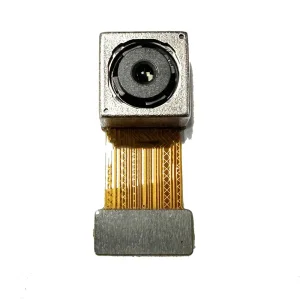
Custom Tablet Computer Autofocus Camera Module
Explore Specifications
Wholesale 2K Wide-Angle Intelligent Monitoring Camera
Wholesale 2K Wide-Angle Monitoring Camera Module
Explore Specifications
Wholesale 1080P HD Dash Cam Camera Module
Explore Specifications
10+
Years Engineering Experience
2015
Founded in Shenzhen Hub
F500
Approved Tier-1 Supplier
λ/10
Interferometric Accuracy
Theoretical Foundations & Whitepaper Review

Engineering Physics: Convex & Concave Lens Architectures

In modern optoelectronics and vision engineering, refracting light with micron-level precision requires deep mastery over spherical geometry, chromatic dispersions, and wavefront aberrations.

Convex Lenses (Converging Systems)

Convex lenses, encompassing Biconvex (DCX) and Plano-Convex (PCX) designs, possess positive focal lengths. They gather collimated incident light beams and focus them into a real focal spot. In optical assemblies, convex elements serve as the prime imaging engine, dictating numerical aperture (NA), optical magnification, and overall luminous flux transmission across visible and infrared spectra.

Concave Lenses (Diverging Systems)

Characterized by negative focal lengths, Biconcave (DCV) and Plano-Concave (PCV) elements diverge incident light rays. When paired with high-power convex groups, concave elements are fundamentally indispensable for Petzval field curvature correction, beam expansion, and optical ray-bending to neutralize inward barrel distortions in wide-angle imaging arrays.

Achromatic Doublet Integration

Monolithic lenses inevitably exhibit chromatic aberration due to material refractive index variations across wavelengths. By cementing a low-index crown glass convex lens with a high-dispersion flint glass concave lens, our ODM optical trains cancel primary chromatic shifts, achieving diffraction-limited MTF performance across broad 400nm–1000nm bands.

Optical Design Authority Insight: Neutralizing Seidel Aberrations

In high-speed, compact vision modules, managing spherical aberration, coma, astigmatism, field curvature, and chromatic dispersion dictates edge-to-edge sharpness. As an experienced ODM manufacturer based in Shenzhen, Shen Zhen You Xiang Da Technology Co., Ltd. (YXD Technology) pairs Zemax-simulated aspherical convex profiles with meniscus concave null-correctors, sustaining MTF values above 0.35 at 120 lp/mm up to the 0.9 field periphery.

Macro Economic Analysis

Global Commercial & Industrial Optics Landscape

The global precision optics market is undergoing a seismic paradigm shift driven by autonomous transport, automated manufacturing (Industry 4.0), and embedded edge computing.

Structural Transition: From Passive to Intelligent Refractive Optics

Historically, industrial procurement for optical lenses treated concave and convex singlets as purely passive mechanical parts. Today, the explosive adoption of edge-AI processors (such as Ambarella, Rockchip, and Raspberry Pi Compute Modules) requires lenses to interface directly with active pixel arrays. The optical assembly is now considered the primary analog computing layer of the AI vision stack. If the refractive surface introduces phase lag, vignetting, or excessive flare, algorithmic neural networks experience degraded object classification confidence.

Material Supply Chain Resilience: Glass vs. Optical Polymers

Global original equipment manufacturers navigate rigorous cost-performance trade-offs between precision molded glass (N-BK7, Fused Silica, LaSF35) and cyclic olefin copolymers (COP, PMMA, OKP). While polymers provide lightweight, cost-effective high-volume geometry for handheld electronics, industrial and automotive applications demand high-thermal-stability glass with zero focal shift from -40°C to +105°C. YXD Technology maintains direct upstream sourcing contracts with premium optical raw glass producers, safeguarding stable production schedules and predictable bill-of-materials pricing against geopolitical turbulence.

Metrology & Manufacturing Tolerances

Precision ODM Optical Lens Manufacturing Standards

Optical fabrication adheres to stringent international tolerances validated through Zygo Phase-Shifting Interferometers and Trioptics ImageMaster MTF test benches.

Optical Parameter Commercial Grade Precision OEM Grade (Standard) High-Precision Defense / Metrology Grade
Diameter Tolerance +0.0 / -0.10 mm +0.0 / -0.02 mm +0.000 / -0.005 mm
Center Thickness Tolerance ± 0.10 mm ± 0.025 mm ± 0.010 mm
Surface Quality (MIL-PRF-13830B) 80-50 Scratch-Dig 40-20 Scratch-Dig 10-5 Scratch-Dig
Surface Irregularity (λ) λ / 2 (Peak-to-Valley) λ / 4 @ 632.8 nm λ / 10 to λ / 20 @ 632.8 nm
Centration & Wedge Angle ≤ 5 arcmin ≤ 1 arcmin ≤ 30 arcsec
Broadband AR Coating (BBAR) R_avg < 1.5% (Visible) R_avg < 0.5% (400-700nm / 850-940nm) R_abs < 0.2% Customized Bandpass
Operating Temperature Envelope -10°C to +60°C -30°C to +85°C -40°C to +105°C (Athermalized Design)
Application Engineering

Real-World Deployment: Lens Combinations Across Key Verticals

Refractive concave-convex assemblies serve specific functional optoelectronic missions in industrial automation, intelligent surveillance, and edge systems.

Automotive ADAS & In-Cabin Sensing

Driver monitoring systems (DMS) and lane-departure dash cameras deploy hybrid glass-plastic lens clusters. Front plano-convex elements with diamond-like carbon (DLC) protective layers resist stone impact and environmental abrasion, while internal negative meniscus elements cancel optical field distortion for reliable computer vision inference.

Industrial Machine Vision & Telecentricity

Automated optical inspection (AOI) for high-density SMT lines relies on telecentric objective groups. By pairing large-diameter plano-convex field lenses with precision concave corrector elements, entrance pupils are projected to infinity, eliminating perspective error and object magnification shifts during dimensional gauging.

Biometric Scanners & Document Digitizers

Handheld document cameras and identity scanners require flat focal fields with negligible distortion (< 0.5%). Custom symmetric Cooke triplet and double-Gauss arrangements utilize cemented concave-convex combinations to preserve micro-text readability, barcode contrast, and color fidelity under variable fluorescent and LED lighting.

Quality Assurance & Global Compliance

End-to-End Compliance, Traceability & Local Support

Shenzhen-engineered manufacturing backed by certified western quality systems ensures frictionless cross-border customs clearance and zero-defect assembly lines.

Environmental Compliance

All raw optical glasses, cements (Norland NOA68/61), optical barrels (anodized aluminum and brass), and surface coatings undergo rigorous third-party SGS testing. Our full inventory strictly complies with EU RoHS Directive 2011/65/EU and REACH (EC 1907/2006) SVHC standards, eliminating heavy metal contamination risks.

ISO 9001 & Class 1,000 Cleanrooms

Optical fabrication is vulnerable to particulate contamination. YXD Technology operates Class 1,000 cleanroom assembly lines with localized Class 100 laminar flow hoods for active optical alignment (AA). Every component undergoes automated ultrasonic cleaning followed by nitrogen de-ionization before hermetic sealing.

Direct Engineering Field Support

We bridge the time-zone divide for overseas Tier-1 clients across North America, Europe, and Asia-Pacific. Our bilingual optical and optomechanical engineers provide direct DFM (Design for Manufacturability) analysis, step-file integration, lens barrel thread customization, and driver adaptation within 24 hours.

Innovation Horizon

Optics 2025–2030: Roadmap & Future Trends

Anticipating next-generation optical evolutions from precision glass molding to wafer-level nanophotonics.

Phase I: Current Benchmark

Molded Glass Aspheres (PGM)

Replacing traditional multi-element spherical stacks with single high-index molded glass aspheres, drastically shortening total track length (TTL) while reducing weight.

Phase II: In Production

Hybrid 1G+3P / 2G+4P Assemblies

Merging the thermal stability and scratch resistance of front glass elements with the complex aspheric freedom and cost advantages of internal injection-molded polymers.

Phase III: Engineering Sampling

Wafer-Level Optics (WLO)

Etching micro-lens arrays directly onto semiconductor quartz wafers, producing micro-optics down to sub-millimeter footprints for endoscopic and wearable micro-cameras.

Phase IV: Frontier R&D

Planar Metalenses (Flat Optics)

Employing sub-wavelength dielectric silicon nanostructures to manipulate optical phase, promising flat vision modules with near-zero chromatic dispersion across visible light.

Technical Inquiries & Knowledge Base

Concave & Convex Optics Engineering FAQ

Comprehensive answers addressing optical tolerancing, focal calibrations, coatings, and custom ODM integration challenges.

How do you determine whether a system requires spherical or aspherical concave/convex lenses?
Spherical lenses (such as standard plano-convex or biconcave elements) represent the most cost-effective and dependable choice for moderate numerical apertures and standard fields of view. However, when an optical design demands a large aperture (e.g., f/1.8 or lower) within an ultra-compact total track length (TTL), a purely spherical design requires multiple elements (5 to 7 pieces) to counteract spherical aberration. Introducing one or two precision-molded aspherical surfaces allows an ODM designer to consolidate several spherical lenses into a single optic, significantly enhancing light transmission and resolving peripheral MTF degradation.
What are the primary differences between Biconvex (DCX) and Plano-Convex (PCX) lenses during optical design?
The choice depends on the conjugate ratio (the ratio of object distance to image distance). A Plano-Convex lens minimizes spherical aberration when the conjugate ratio is high—such as focusing collimated light down to a point, or collimating a point source located at its focal point (oriented with the curved surface facing the infinite conjugate). A Biconvex lens, possessing symmetrical radii of curvature on both faces, performs optimally when the conjugate ratio is close to 1:1, meaning the object and image planes are equidistant from the lens element.
How does YXD Technology control chromatic aberration across wide optical spectra (e.g., Visible to NIR)?
We employ two primary engineering methods: First, by designing custom Achromatic Doublets that cement an optical crown glass convex element (low refractive index, high Abbe number $V_d > 55$) with a flint glass concave element (high refractive index, low Abbe number $V_d < 35$). Second, for dual-band day/night security modules, we apply custom dual-bandpass thin-film coatings (transmitting at 400–650nm and 850nm/940nm) paired with low-dispersion optical substrates to ensure the focal plane does not drift between daylight illumination and infrared night illumination.
Can YXD provide custom lens barrel designs, mechanical mounts, and active sensor alignment?
Yes. Beyond supplying individual polished optical lenses, our core capability lies in full ODM turnkey assembly. We design and CNC-machine customized lens barrels (M12, M8, M7, C/CS-mount, and customized FPC modules) utilizing low-expansion aluminum alloys or brass. Furthermore, our Shenzhen facility utilizes automated 6-axis Active Alignment (AA) systems to align the optical axis of the lens group to the CMOS sensor plane with sub-micron precision prior to UV glue curing.
What testing procedures and documentation are provided with production shipments?
Every shipment is accompanied by a comprehensive Certificate of Analysis (CoA) including: Zygo surface interferometry reports (Peak-to-Valley irregularity and RMS power), spectrophotometer transmission curves across 380–1100nm, non-contact dimensional inspection data, and batch MTF frequency test charts. Environmental reliability reports (thermal shock from -40°C to +85°C, salt spray, and vibration resistance) are provided during the DVT/PVT stages.
What is the typical prototyping and production lead time for custom concave and convex lenses?
For rapid optical prototyping utilizing stock tooling, samples are delivered in 10 to 14 business days. For entirely customized optical geometries requiring dedicated diamond tooling, grinding laps, and custom coating fixtures, prototype delivery spans 3 to 4 weeks. Once samples receive customer sign-off (golden sample approval), mass production ramping typically achieves 50,000 to 200,000 units within a 4-week delivery window.
Factory Direct Catalog

Turnkey Vision Modules & Optical Assemblies

Integrate our precision convex-concave lens solutions directly into your production lines with ready-to-deploy imaging modules.

1080P Distortion Free USB Camera Standard Module
Explore Specifications
9mm High-Definition 1080P Miniature Camera Module
Explore Specifications
Wholesale 1080P Driving Recorder Camera Module
Explore Specifications
Custom 720P High-Definition Laptop Camera Module
Explore Specifications
ODM Visual Doorbell Video Intercom Camera Module
ODM Visual Doorbell Intercom Access Camera Module
Explore Specifications
Custom Tablet Computer Autofocus Camera Module
Explore Specifications
Wholesale 2K Wide-Angle Intelligent Monitoring Camera
Wholesale 2K Wide-Angle Monitoring Camera Module
Explore Specifications
Wholesale 1080P HD Dash Cam Camera Module
Explore Specifications

Initiate Your Custom Optical & Module ODM Project

Whether you require precision Plano-Convex, Biconcave, Doublet lenses or a completely assembled camera module sub-system, our Shenzhen engineering facility provides direct design support, custom optical coatings, and rapid prototype turnarounds.

Request Engineering Review Download 2025 Optical Catalog