Explore our tier-1 engineered optical modules, digital magnifying cameras, and custom SMT inspection solutions manufactured to global ISO and CE benchmarks.
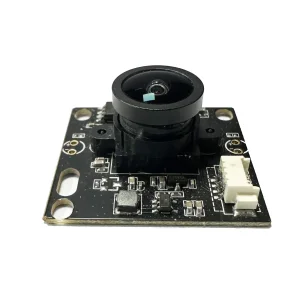
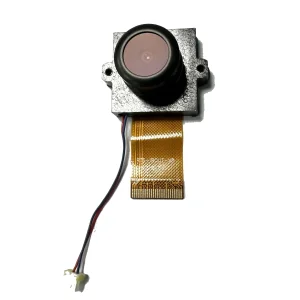
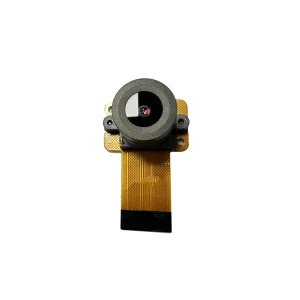
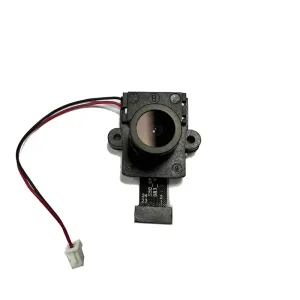
Analysis of global high-precision optical magnification technology, optoelectronic transformation, and industrial quality inspection trends (2025–2030).
The global demand for high-grade optical magnification instruments—historically referred to across international trade networks under terms like Kaliteli Büyüteç (high-quality magnifying devices)—has undergone a radical paradigm shift over the last decade. What once centered on simple optical glass doublets and passive handheld lenses has transformed into a dynamic, highly integrated market for optoelectronic micro-magnification systems, digital microscopic inspection cameras, and high-definition vision modules.
Key Industry Shift: The transition from physical optical inspection to AI-assisted, high-frame-rate digital micro-magnification has reduced component defect escape rates by up to 68% in semiconductor and SMT manufacturing lines globally.
Industrial manufacturing, advanced electronics assembly (SMT), biomedical research, gemstone certification, and high-security access verification now demand resolution capabilities far surpassing traditional optical limits. Modern B2B procurement teams prioritize high Modulation Transfer Function (MTF) performance, zero distortion optics, and integrated image signal processors (ISP) that output uncompressed real-time video directly to machine vision algorithms or automated inspection screens.
Integrating high-grade optical glass lenses with high-resolution CMOS/CCD sensors to achieve hybrid optical-digital magnification up to 1000x without digital pixelation.
Direct integration of low-distortion digital magnifier modules into robotic assembly arms and inline PCB quality validation systems.
Ruggedized, dustproof (IP67), and anti-reflective lens housings designed for extreme industrial temperatures, humidity, and vibration environments.
How tier-1 OEM/ODM buyers evaluate optical magnification hardware, sensor parameters, supplier manufacturing depth, and Total Cost of Ownership (TCO).
When enterprise procurement managers search for verified suppliers of high-magnification optical systems and camera modules, technical evaluation extends far beyond price per unit. A systematic engineering audit focuses on four critical dimensions:
High MTF values at spatial frequencies exceeding 100 line pairs per millimeter (lp/mm) ensure that micro-structures, micro-cracks on silicon wafers, and tiny solder joints remain crisp without chromatic aberration or edge vignetting.
For precision measurement and document scanning, optical distortion must be restricted to under 0.1%. Advanced multi-element lens designs utilize optical-grade glass aspheric elements to correct optical curvature across the entire field of view.
Industrial environments often feature uneven specular reflections or low-ambient lighting. Integrating starlight-grade sensor back-illuminated (BSI) architecture guarantees exceptional contrast and minimal noise under low light conditions.
Support for standard USB 2.0 / USB 3.0 UVC protocols ensures plug-and-play capability across Linux, Windows, macOS, and Android platforms, while MIPI CSI-2 interface offerings serve embedded ARM and Raspberry Pi systems.
Technical comparison of digital magnifier interfaces, optical focal configurations, and host system compatibility for global B2B projects.
| Optical / Camera Architecture | Primary Industrial Use Case | Magnification / Resolution | Host System Interface | Key Engineering Advantage |
|---|---|---|---|---|
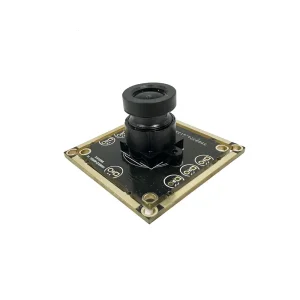
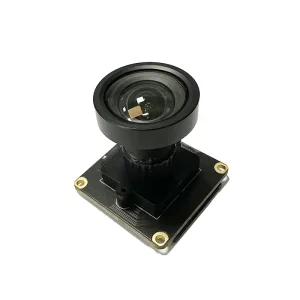
| Distortion-Free USB Vision Module | Document Scanners, POS, PCB SMT Inspection | Full HD 1080P / 60 FPS | USB 2.0 / USB 3.0 UVC | Zero focal distortion (<0.05%), plug-and-play driverless integration |
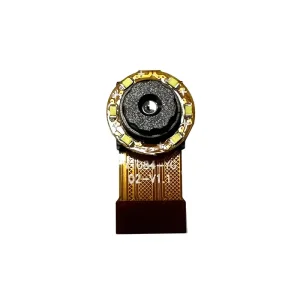
| Miniature 9mm Endoscopic Magnifier | Medical Inspection, Tight Cavity NDT | 1080P Micro CMOS | Flexible FPC / USB UVC | Ultra-compact form factor, integrated LED ring light support |
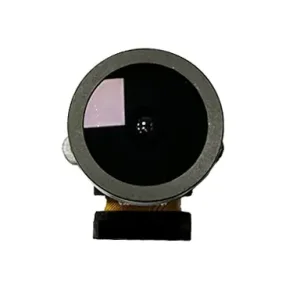
| 2K Wide-Angle Starlight Night-Vision | Security Access Control, Doorbell Intercom | 2K (2560x1440) Wide Angle | MIPI CSI-2 / Network IP | Starlight sensor, HDR dynamic range, continuous outdoor reliability |
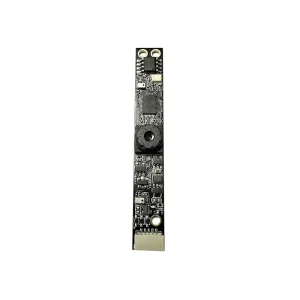
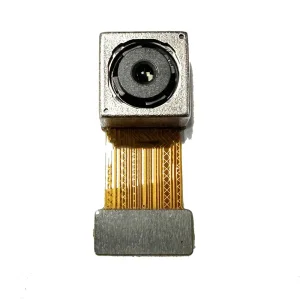
| Autofocus Multi-Application Module | Tablet PC, Microfilm Readers, Smart Kiosks | 4MP / 8MP High Pixel | USB / MIPI Interface | Fast Voice Coil Motor (VCM) autofocus, sharp macro-to-infinity focus |
| High-Speed Industrial Vision Camera | Robotic Inspection, Conveyor Defect Tracking | 4 Million HD / High Frame Rate | USB 3.0 / MIPI CSI-2 | Global shutter / High frame stability, zero motion blur |
Whether deploying high-magnification optical inspection units on semi-automated production lines or engineering visual doorbell panels for smart building infrastructure, optical hardware must be precisely matched to environmental parameters:
Requires starlight low-light sensitivity, wide operational temperature ranges (-40°C to +85°C), and vibration-proof glass-plastic hybrid lens barrels to capture legible license plate micro-details day and night.
Demands miniaturized camera modules (such as sub-10mm outer diameter units) with biocompatible outer sheathing, liquid-tight sealing, and crisp macro magnification for endoscopic illumination.
Combines wide-angle optics with IR cut filter toggles and high dynamic range (HDR) sensors to prevent backlighting washout while keeping facial micro-features distinct for biometric algorithms.
Ensuring flawless component consistency through Class 10,000 dust-free cleanroom manufacturing, automated active alignment, and worldwide regulatory adherence.
For international buyers sourcing optical magnifier components and digital camera modules from Shenzhen factories, manufacturing control and regulatory compliance are essential prerequisites for long-term supply chain resilience. High-precision optical assembly requires ultra-clean environments to eliminate microscopic dust particles that could obscure pixels or impair magnification clarity.
Our complete line of optical modules adheres strictly to international environmental and electromagnetic standards including CE, FCC, RoHS, REACH, and WEEE directives. This guarantees seamless customs clearance and retail compliance across Europe, North America, and the Asia-Pacific region.
To eliminate optical tilt and corner blurriness in high-resolution magnifying cameras, manufacturing utilizes six-axis computer-controlled Active Alignment (AA) equipment. Lens-to-sensor focus is dynamically optimized live during assembly before UV curing.
Emerging developments in liquid lens integration, edge-AI micro-inspection, multi-spectral magnification, and chip-on-board (COB) packaging.
Replacing mechanical motor focus with electrowetting liquid lenses, enabling millisecond-level focus speed across extreme depth-of-field variations without mechanical lens wear.
Integrating micro-NPU neural processing units directly onto camera ISP boards, allowing micro-magnifier modules to perform real-time optical anomaly detection without host CPU processing.
Expanding optical magnification beyond the visible spectrum into short-wave infrared (SWIR) for non-destructive inspection of sub-surface silicon micro-defects.
Select from our benchmark vision modules and optical products for immediate OEM evaluation and mass-production customization.
Direct answers to crucial technical questions asked by optical procurement managers, design engineers, and global distributors.