Explore our standardized OEM/ODM embedded camera modules engineered with precision optical distortion control, high-speed interface connectivity, and wide dynamic range capabilities.
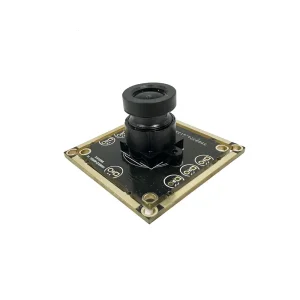
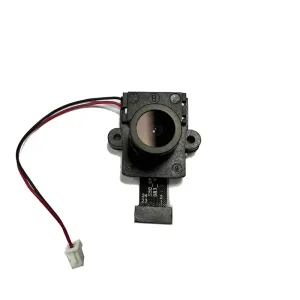
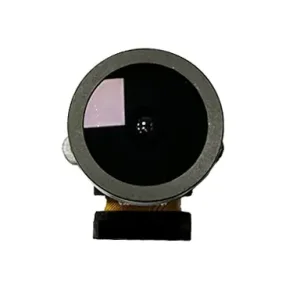
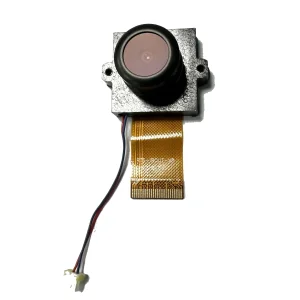
Analyzing the evolution from passive network cameras to Edge AI intelligent optical modules in industrial, commercial, and automotive ecosystems.
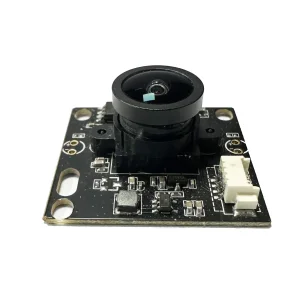
In modern industrial and consumer IoT architectures, the term "Internetkamera" (network camera / IP vision module) has transcended traditional video recording. Today’s high-performance Internetkamera products serve as the critical perceptual layer for machine vision algorithms, biometric access control systems, autonomous robotics, and edge analytics engines. For hardware engineers, system integrators, and global buyers, selecting a reliable Internetkamera supplier requires deep evaluation of sensor dynamics, optical distortion parameters, interface bandwidth capabilities, and long-term thermal stability.
Our camera modules feature hardware-level ISP tuning, providing hardware-accelerated WDR, 3D Noise Reduction (3DNR), dynamic lens shading correction, and auto-exposure algorithms calibrated for dynamic outdoor ambient lighting.
Utilizing state-of-the-art Active Alignment (AA) technology during SMT assembly ensures sub-micron optical lens alignment, delivering uniform corner-to-corner sharp focus without focal plane tilt.
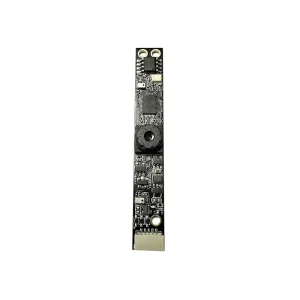
Supporting MIPI CSI-2, USB 2.0/3.0 UVC driverless, DVP parallel, and Wi-Fi/IP streaming protocols, enabling rapid integration across Linux, Android, Windows, and RTOS host processors.
Determining the correct interface architecture is vital to preventing system bottlenecks and reducing total bill-of-materials (BOM) cost. The table below outlines technical metrics across our primary Internetkamera product lines:
| Interface Standard | Max Bandwidth | Typical Resolution / FPS | Host Cable Length | Primary Industrial Use Cases |
|---|---|---|---|---|
| MIPI CSI-2 (2/4 Lane) | Up to 2.5 Gbps / Lane | 4K @ 60fps / 1080P @ 120fps | < 30 cm (FPC) | Edge AI SOCs, Autonomous Mobile Robots (AMR), Drones |
| USB 2.0 UVC (Standard) | 480 Mbps | 1080P @ 30fps (MJPEG/H.264) | Up to 5 meters | Interactive Kiosks, Medical Scanners, Video Conference |
| USB 3.0 SuperSpeed | 5.0 Gbps | 4K Uncompressed YUV @ 30fps | Up to 3 meters | High-Speed Machine Vision, Automated Optical Inspection |
| Wi-Fi / Ethernet IP | 100 Mbps / Wireless | 2K / 4MP @ 25fps (H.265) | 100m+ / Global Network | Smart Building Access Control, Outdoor Monitoring |
Quantitative analysis of sensor adoption, resolution growth, and reliability demands across smart city infrastructure, transportation, and industrial inspection.
The global embedded vision market is experiencing exponential growth driven by the convergence of low-power Edge AI chips and high-sensitivity image sensors. Industrial enterprises and smart building developers no longer purchase off-the-shelf consumer webcams; they require customized board-level Internetkamera products that survive broad thermal ranges, intense vibrational environments, and continuous 24/7 operation.
Our long-term development strategy focuses on deep physical optimization, multispectral sensing, and hardware-accelerated AI perception.
Integrating Back-Illuminated (BSI) pixel architectures (Sony STARVIS 2 series) delivering ultra-high sensitivity under sub-0.001 Lux environmental illumination.
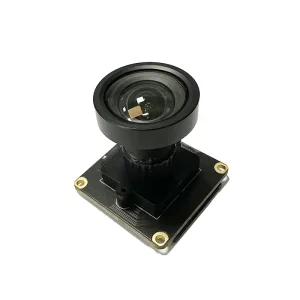
Engineering multi-element glass-plastic hybrid lenses (1G3P / 2G2P) featuring <0.5% optical distortion for document processing and precision OCR barcode reading.
Embedding low-power AI inferencing microcontrollers directly onto the camera PCB to process object detection, face recognition vectorization, and motion tracking at zero network latency.
Combining RGB color sensing with Time-of-Flight (ToF) depth mapping and Near-Infrared (NIR) illumination for spoof-proof anti-fraud biometric verification.
Our research and engineering initiatives center on solving real-world physical and digital imaging challenges faced by tier-1 original equipment manufacturers:
How our Shenzhen-based optical production base provides global buyers with unmatched flexibility, cost efficiency, and end-to-end quality control.
Sourcing high-volume Internetkamera products demands a manufacturing partner with a resilient supply chain, sophisticated quality systems, and rapid prototyping capabilities. Situated in Shenzhen, Guangdong—the world’s premiere hub for optical engineering and microelectronics—our facility offers end-to-end integration from raw optical glass grinding and SMT chip placement to cleanroom module assembly and rigorous automated testing.
Immediate access to leading CMOS image sensor foundries (Sony, OmniVision, SmartSens, GalaxyCore) and precision optical element factories guarantees rapid component sourcing and competitive BOM pricing.
Our dedicated engineering sample line allows rapid customized PCB layout design, FPC tooling, and optical lens matching within 7 to 14 days, accelerating your time-to-market.
Every camera sensor bonding process and lens mounting procedure takes place inside dust-free cleanrooms equipped with automated high-temperature thermal burn-in aging chambers.
In-depth technical analysis of how specialized camera modules empower modern vertical industries.
Modern visual doorbells and multi-tenant intercom access control panels face challenging backlighting conditions (such as bright sunlight behind a visitor) and dark night surroundings.
In-vehicle recorders, driver monitoring systems (DMS), and dash cams operate under constant vibration and broad operational temperatures (-30°C to +80°C).
Handheld barcode terminals, tablet document scanners, and automated optical inspection equipment require edge-to-edge optical clarity.
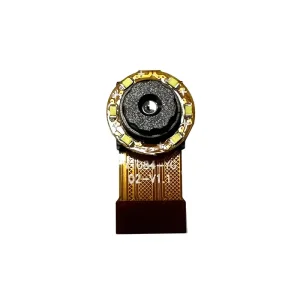
Space-constrained diagnostic devices, industrial pipe endoscopes, and dental tools require extremely small outer diameters.
Ensuring seamlessly compliant hardware supply and direct Field Application Engineering (FAE) support worldwide.
To support global supply chains across North America, Europe, East Asia, and Latin America, our entire product catalog complies strictly with international technical and environmental directives. We maintain comprehensive documentation packages to simplify your product certification cycle.
All camera modules pass rigorous Electromagnetic Compatibility (EMC) tests, avoiding interference with wireless antennas, and meet RoHS and REACH environmental material safety standards.
Implemented barcode serial tracking on every optical module board, allowing full manufacturing history, raw lot material tracing, and individual automated optical inspection (AOI) records.
Our Field Application Engineers offer direct support for Linux Video4Linux2 (V4L2) driver integration, Android HAL layer adaptation, Windows UVC setup, and Custom ISP tuning profile delivery.
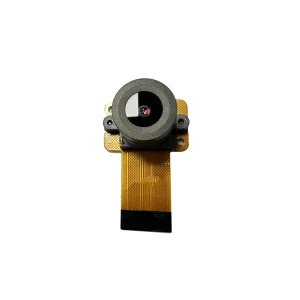
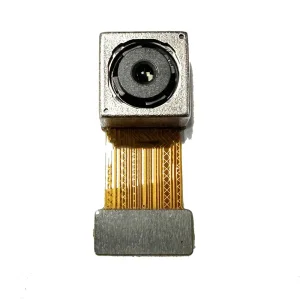
Explore additional high-demand embedded camera modules available for fast sampling, custom optical fitting, and enterprise volume production.
Get answers to engineering, customization, driver support, and logistics queries directly from our technical team.
