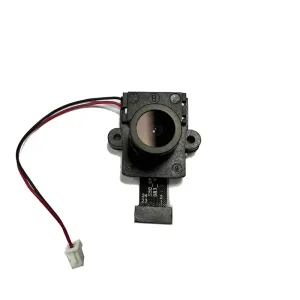
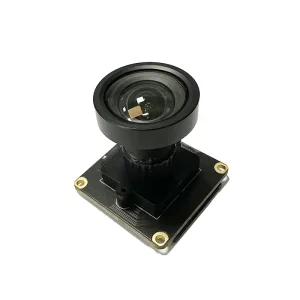
Direct-from-factory optical assemblies engineered by Shen Zhen You Xiang Da Technology Co., Ltd. (YXD). Fully certified, customizable form factors with MIPI CSI-2, USB UVC, and wireless telemetry ready for prototype sampling and volume production.
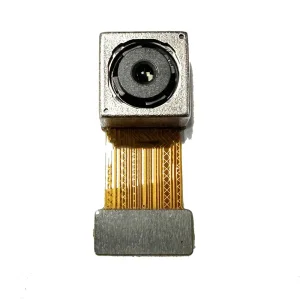
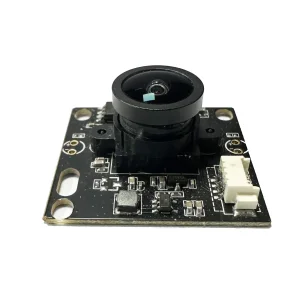
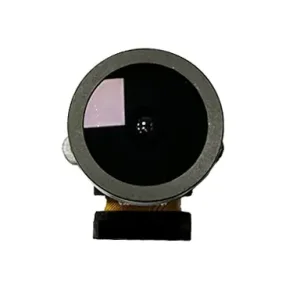
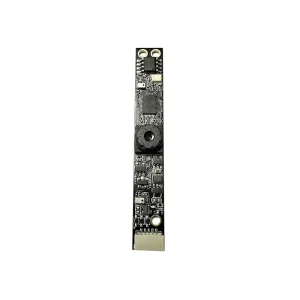
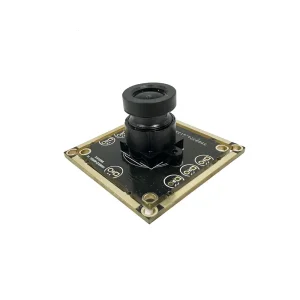
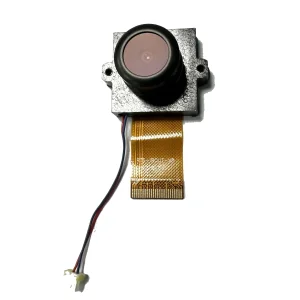
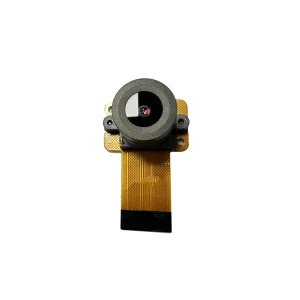
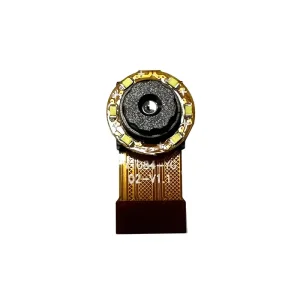
In modern covert surveillance, industrial asset protection, and compact IoT edge sensing, mechanical miniaturization cannot come at the expense of optical resolving power, dynamic range, or wireless data integrity. Shen Zhen You Xiang Da Technology Co., Ltd. (YXD) leverages over a decade of embedded optical design, cleanroom SMT fabrication, and advanced ISP tuning to deliver covert wireless camera solutions that satisfy demanding international requirements.
Traditional pinhole optics suffer from severe chromatic aberration, vignette decay, and peripheral softness. YXD integrates multi-layer coated (AR/NIR) high-index optical glass with cone-shaped mechanical barrels as compact as 0.8mm–2.0mm aperture diameters. This ensures crisp MTF performance across the sensor plane while maintaining complete visual invisibility inside wall fixtures, consumer electronics, or industrial machinery.
Deploying wireless covert cameras in dense RF enterprise settings demands resilient packet transmission. Our proprietary wireless transceiver modules support 2.4GHz / 5.8GHz dual-band Wi-Fi (IEEE 802.11a/b/g/n/ac) and low-latency P2P mesh architectures. Embedded hardware H.264/H.265 compression engines maximize frame rate and resolution over constrained bandwidth without packet dropouts.
For autonomous covert installations where external wiring is impossible, battery runtime is critical. YXD incorporates dedicated Power Management ICs (PMIC) coupled with sub-millisecond hardware wake-up routines. Working alongside passive infrared (PIR) sensors or on-die micro-power motion detection, our sub-modules operate at <45µA in standby mode, extending field endurance up to several months on miniature cells.
The global market for covert wireless camera modules has evolved beyond consumer novelty gadgets into highly sophisticated, enterprise-grade tools utilized in retail loss prevention, automated building security, intellectual property monitoring, industrial automation diagnostics, and sensitive evidence acquisition.
The industry is transitioning from passive video streaming to local, on-die Neural Processing Units (NPUs) capable of running INT8 quantized deep-learning models. Traditional motion detection produced high false-alarm rates triggered by lighting shifts or insects. Contemporary OEM covert systems process localized Human Body Detection (HBD), facial presence recognition, and perimeter tripwires directly on the camera DSP, transmitting alert streams only when verified security events occur.
Historically, night surveillance relied on visible or faint red 850nm IR illuminators, immediately compromising covert deployments. Modern architectures pair Back-Illuminated (BSI) and Stacked CMOS sensors (such as Sony STARVIS™ and high-performance SmartSens architectures) with large apertures. Combined with 940nm black-light LEDs that emit zero visible red glow, these systems produce clear monochrome or low-light full-color streams in sub-0.001 Lux environments.
Regulatory scrutiny regarding IoT network penetration has made hardware security a primary procurement metric. Modern wireless spy modules must incorporate secure boot cryptoprocessors, TLS 1.3 encrypted data conduits, and hardcoded private keys. Enterprise buyers no longer accept unencrypted RTSP video streams susceptible to packet interception across corporate wireless infrastructures.
| Performance Dimension | Legacy Consumer Spy Cameras | Industrial YXD OEM/ODM Wireless Modules | System Architecture Benefit |
|---|---|---|---|
| Optical Assembly | Single plastic lens (1P), high distortion (>15%) | Multi-element all-glass (3G2P/4G) pinhole, <0.5% distortion | Preserves facial geometric ratios for automated algorithmic identification. |
| Thermal Dissipation | Unmanaged, sensor thermal noise buildup (>65°C) | Thermally decoupled PCB, ceramic substrates, heat sinks | Eliminates thermal blooming, sensor hot pixels, and frame degradation. |
| Transmission Architecture | Unsecured 2.4GHz Wi-Fi, fixed P2P cloud servers | Dual-band Wi-Fi, custom RTOS, AES-256 local encrypted transport | Prevents jamming, RF packet sniffing, and unauthorized network penetration. |
| Firmware & SDK | Closed proprietary app, unpatched vulnerabilities | Comprehensive Linux/Android SDK, ONVIF compliance, MIPI/UVC drivers | Allows seamless integration into enterprise VMS (Milestone, Genetec, QNAP). |
Procurement directors, systems integrators, and OEM product managers evaluate wireless covert camera modules through strict technical and operational criteria. Sourcing goes beyond unit pricing to balance reliability, lifecycle management, and software support.
Enterprise buyers require distinct mechanical separation between the optical head (pinhole lens and sensor board) and the backend processor/RF mainboard. YXD delivers ultra-flexible FPC ribbon cable connections (ranging from 50mm up to 300mm), allowing the 9mm lens head to fit into miniature housings while the processor and Wi-Fi antenna are positioned away from thermal-sensitive areas.
A frequent challenge with standard supplier modules is optical inconsistency across production lots. YXD employs automated Active Alignment (AA) assembly systems. By adjusting the lens barrel along six degrees of freedom (6-DOF) while the CMOS sensor is powered and capturing test targets, we guarantee uniform edge-to-edge optical sharpness and focus across every mass-manufactured unit.
Industrial product development cycles require stable component roadmaps. YXD builds its OEM modules around long-life automotive and industrial-grade sensor families and SoCs. We offer product availability roadmaps spanning 5 to 7 years, providing PCN (Product Change Notification) and EOL (End of Life) transitions to protect client engineering investments.
Covert wireless imaging requires tailored hardware configurations across different operational environments. Below are proven integration methodologies developed by YXD engineers for global field deployments.
ATM fascias and unattended self-service terminals require continuous anti-skimming and user security monitoring within thin metallic enclosures. Our 1080P/4MP low-distortion USB and MIPI modules feature wide-dynamic-range (WDR > 120dB) capabilities. They handle direct sunlight and glare while remaining completely hidden behind anti-reflective 1mm pinhole apertures.
Logistics operators require discreet interior driver-safety and cargo surveillance to prevent tampering and monitor fatigue without bulky cameras. YXD's miniature in-vehicle modules feature 940nm infrared illumination with wide-angle FOV up to 140°. They operate under extreme automotive temperature ranges (-30°C to +85°C) and resist continuous vibration.
Modern luxury residential and corporate headquarters require discrete biometric capture integrated into flush wall surfaces. YXD manufactures specialized visual doorbell and access control modules supporting dual-sensor configurations: one RGB sensor for human viewing and one dedicated NIR sensor for anti-spoofing facial recognition.
Exporting optical surveillance hardware requires strict adherence to international legal frameworks, radio-frequency spectrum standards, and data privacy regulations. YXD maintains testing protocols to streamline certification for our global B2B clients.
Wireless transmitters must strictly conform to regional electromagnetic emission thresholds. YXD's Wi-Fi sub-assemblies undergo rigorous pre-compliance testing in anechoic chambers to guarantee FCC Part 15 Class B (North America), CE Radio Equipment Directive (Europe), and TELEC/MIC (Japan) compliance. Shielded RF cans prevent interference with adjacent sensitive circuitry.
Deploying covert monitoring systems in the European Union and other regulated jurisdictions requires technical adherence to GDPR Article 25 (Data Protection by Design and by Default). YXD modules support hardware-level local cryptographic signing, privacy masking zones configured in firmware, and encrypted flash memories, preventing unauthorized video interception.
For US government, military, and infrastructure subcontractors, Section 889 of the National Defense Authorization Act (NDAA) prohibits specific telecommunications and video surveillance equipment. YXD delivers custom NDAA-compliant BOM architectures utilizing SoC silicon from non-restricted fabrication partners, complete with Certificate of Origin documentation.
Our Shenzhen R&D engineering center continues to push the boundaries of optical miniaturization, thermal efficiency, and edge intelligence. Here is our technical roadmap for next-generation vision solutions.
Integrating high-efficiency Wi-Fi 6 (802.11ax) chipsets into covert modules to provide robust throughput in high-density environments, coupled with true 4K UHD micro-optics and low-power 12nm ISP silicon.
Adopting Wafer-Level Optics (WLO) fabrication to compress lens stack thickness below 1.5mm. Integrating neuromorphic event-based vision sensors that capture changes in pixel luminance with microsecond latency.
Engineering miniature Short-Wave Infrared (SWIR) modules capable of imaging through smoke, fog, and specialized plastics. Combining ambient RF energy harvesting with microscopic solar arrays for maintenance-free operation.
Detailed answers to the technical, operational, and commercial questions most frequently asked by system integrators, design engineers, and corporate buyers.
Expand your imaging architecture with YXD's full engineering catalog. Low-distortion, wide-angle, and high-frame-rate modules for commercial, medical, industrial, and embedded smart devices.