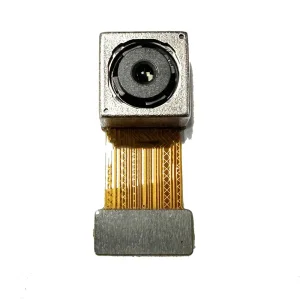
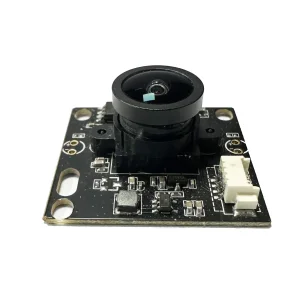
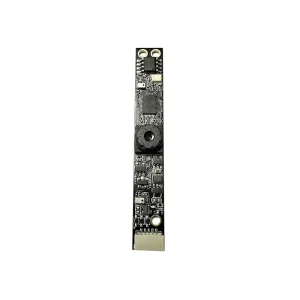
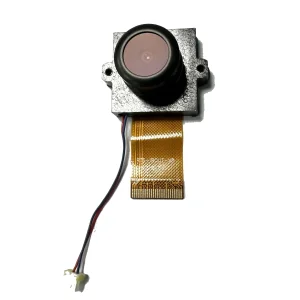
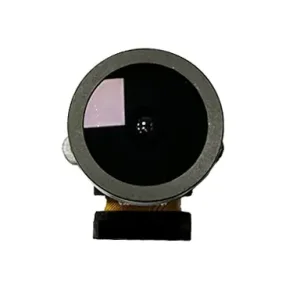
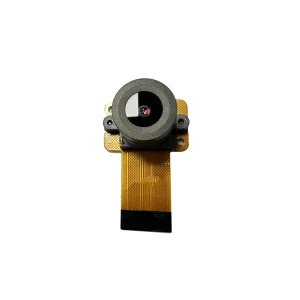
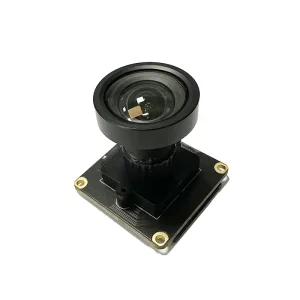
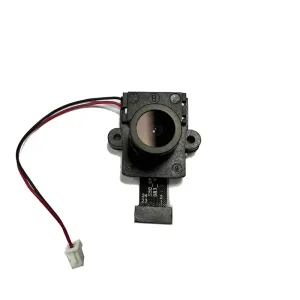
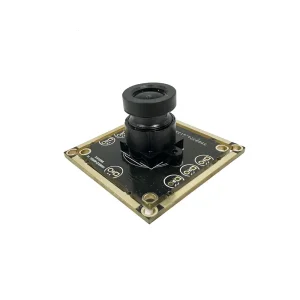
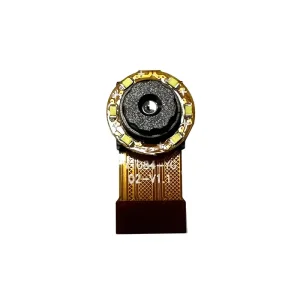
Direct from our Shenzhen ISO-certified fabrication center: factory-calibrated panoramic, low-distortion, and high-dynamic-range camera modules tailored for system integrators.
Transitioning beyond legacy PTZ mechanical limitations: the convergence of multi-sensor stitching, high-resolution starlight CMOS, and localized neural dewarping engines.
Traditional pan-tilt-zoom (PTZ) units leave vulnerable spatial lapses during transit. Our 360 surveillance modules leverage dual-fisheye or quad-sensor circular topologies powered by on-chip GPU/NPU algorithmic dewarping, rendering real-time rectilinear streams without mechanical latencies.
Variable illumination undermines surveillance integrity. By leveraging Sony STARVIS 2 back-illuminated sensors coupled with quad-exposure Digital Overlap (DOL-HDR), our modules preserve micro-contrast and color rendition across intense dynamic ranges up to 120dB.
Equipped with 2.0 to 4.0 TOPS embedded edge intelligence, 360 surveillance camera engines perform localized human/vehicle classification, perimeter tripwires, and dynamic heat mapping natively—substantially lowering upstream NVR bandwidth demands and storage footprints.
Shenzhen's end-to-end electro-optical ecosystem provides structural cost-performance, proprietary active alignment (AA) automation, and unparalleled velocity from prototype to production scale.
Continuous innovation in sub-micron lens tuning since 2015.
Audited standard operating procedures meeting global enterprise QA.
Expedited custom FPC design, lens mount sampling, and tuning.
Automated MTF, optical flare, and high-temp operational testing.
From injection molding of low-thermal-expansion optical barrels to high-speed surface-mount technology (SMT) and class-100 cleanroom packaging, China's Greater Bay Area consolidates component availability, mitigating external raw-material bottlenecks.
Wide-angle and panoramic lenses require hyper-precise spatial centering. We deploy automated 6-axis robotic Active Alignment machines that collimate optics against the sensor focal plane in real time, delivering edge-to-edge modular sharpness.
By streamlining component procurement and vertically integrating custom ISP firmware programming, our factory lowers overall BOM costs by 28-35% compared to European or North American manufacturing lines while exceeding CE, FCC, RoHS, and NDAA criteria.
Modern commercial infrastructure demands unified coverage. Explore how panoramic 360 imaging redefines visibility across critical civic and corporate infrastructures.
Replacing clusters of directional bullet cameras with a centralized 360-degree dome in railway concourses, metro intersections, and airport terminals reduces fiber cabling runs and infrastructure energy budgets while sustaining full situational recording.
Automated guided vehicles (AGVs), forklifts, and vast racking corridors present continuous collision and inventory risks. Ceiling-mounted 360 surveillance combined with fleet telematics enables seamless pallet tracking and blind-spot mitigation across vast cubic areas.
Modern commercial retail requires spatial insight beyond mere loss prevention. Dewarped 360 panoramic sensors provide granular footfall heatmaps, dwell-time analytics, and checkout queue optimization—simultaneously monitoring inventory shelves without invasive cabling.
Choosing the correct sensor-optics bus configuration is foundational to hardware lifecycle stability and streaming throughput efficiency.
| Architecture Model | Primary Interface | ISP & Dewarping Location | Ideal Deployment Scenario | System Level Advantage |
|---|---|---|---|---|
| Single-Sensor Fisheye | MIPI CSI-2 / USB 3.0 UVC | Client software / Host SoC | Retail, indoor classrooms, elevator cabins | Lowest BOM footprint, unified thermal dissipation |
| Dual-Sensor Stitched 360 | Dual MIPI / Gigabit IP | Embedded On-Board DSP | Fleet dashcams, law enforcement bodycams | Zero horizon distortion, ultra-flat aspect ratio |
| Quad-Sensor Multi-Directional | Gigabit PoE / Optical SFP | Dedicated Edge FPGA / NPU | Highway junctions, stadiums, public arenas | Configurable angles per sensor, true 4K resolution |
| Pan-Tilt-Panoramic Hybrid | Industrial IP / ONVIF Profile T | Embedded AI Hybrid Processor | Border surveillance, critical infrastructure | Panoramic contextual overview with auto-tracking PTZ |
Comprehensive engineering insights clarifying sensor integration, environmental hardening, protocols, and factory customization.
Engineered for automotive recorders, industrial inspection tools, smart access control, and specialized visual interfaces.
Accelerate your design cycle. Submit your field of view parameters, interface requirements (MIPI, USB, DVP, IP), and sensor preferences for sample evaluation.