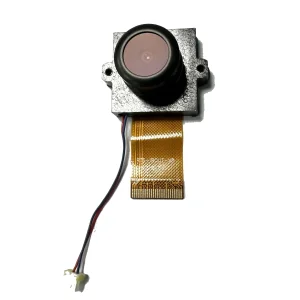
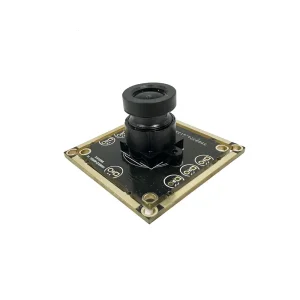
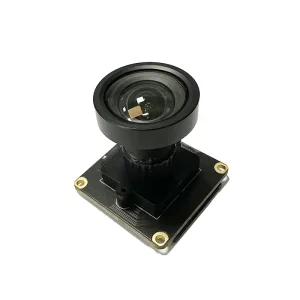
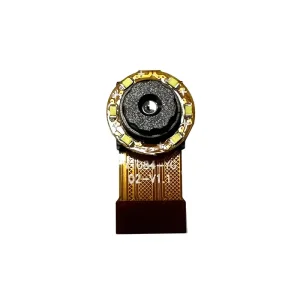
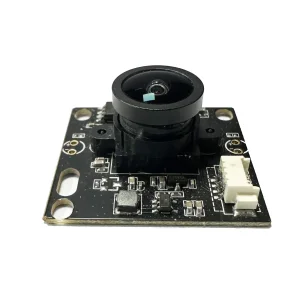
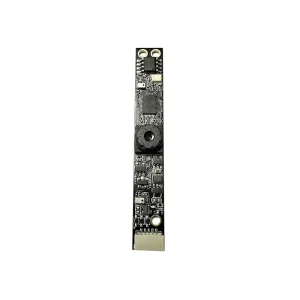
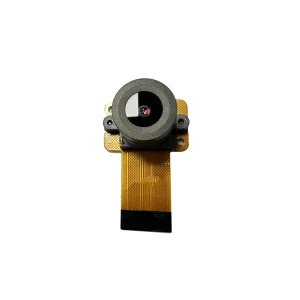
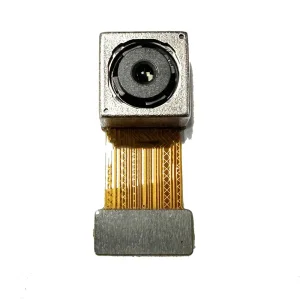
Explore high-performance camera modules engineered for seamless compatibility with Ycc365 and YCC365 Plus cloud video infrastructure.
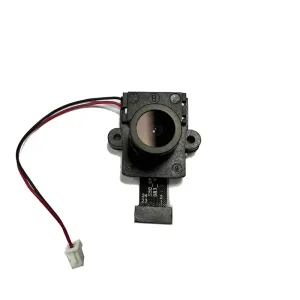
In the era of AIoT (Artificial Intelligence of Things) and edge-to-cloud security systems, the phrase "Custom Ycc365 Manufacturers & Products" encompasses a complex hardware-firmware-cloud ecosystem. Ycc365 (and its updated enterprise counterpart, YCC365 Plus) represents one of the world's most widely deployed P2P (Peer-to-Peer) cloud surveillance IoT frameworks. To engineer vision solutions that seamlessly integrate with Ycc365, original equipment manufacturers (OEMs) and design manufacturers (ODMs) must master co-designing hardware camera modules with low-level SOC (System on Chip) firmware integration.
Custom Ycc365 hardware development extends far beyond selecting off-the-shelf camera parts. It requires precise synchronization between optical sensor modules (such as CMOS starlight sensors), lens distortion parameters, ISP (Image Signal Processor) pipelines, and board-level hardware components. System architects must calibrate Linux/RTOS kernel drivers, integrate proprietary P2P SDKs, and enforce cryptographic device key bindings. This ensures low-latency live streaming, dual-way audio codecs (G.711 / AAC), motion tracking algorithms, and AWS/Azure cloud storage routing without compromising user security or data bandwidth.
Firmware tuning for HiSilicon, Anyka, Fullhan, and Xiongmai chipsets, optimizing H.264/H.265+ compression streams directly from the CMOS optical sensor.
Custom SDK integration enabling dynamic NAT traversal, encryption key handshake, and sub-300ms latency video routing across worldwide regional nodes.
Automated cloud backup pipelines supporting event-driven recording, loop buffer storage, AI clip indexing, and encrypted OTA firmware updating.
Shenzhen and the wider Pearl River Delta region in Guangdong, China represent the undeniable epicenter of advanced electro-optical manufacturing. Producing high-yield, stable Ycc365-compatible camera modules requires ultra-clean production environments, state-of-the-art SMT (Surface Mount Technology) assembly lines, and AA (Active Alignment) optical lens bonding equipment.
Microscopic dust particles landing on a CMOS optical sensor during lens mounting create permanent dark spots and blur pixels. Leading Chinese factories deploy Class 10,000 cleanrooms with localized Class 1,000 optical hoods. Automated robotic arms pick, align, and seal the optical lens barrel to the sensor substrate using UV-cured structural adhesives.
Unlike traditional mechanical thread screwing, AA technology dynamically powers the camera sensor, analyzes MTF (Modulation Transfer Function) charts in real-time across six degrees of freedom (X, Y, Z, θx, θy, θz), and bonds the lens at the precise point of maximum edge-to-edge optical sharpness.
Global brands, systems integrators, and security equipment distributors face distinct engineering constraints when sourcing custom Ycc365 camera hardware. Standard off-the-shelf cameras often fail to meet specific enclosure physical dimensions, power distribution budgets, thermal dissipation limits, or field-of-view (FOV) requirements. OEM custom manufacturing solves these structural friction points.
Custom modules can be tailored across standard output interfaces: MIPI CSI-2 for direct embedded SoC connection, USB UVC (Plug & Play), DVP parallel interfaces for cost-sensitive MCUs, or integrated Wi-Fi / Ethernet board assemblies.
Whether designing an ultranarrow 9mm inspection tube, a circular doorbell enclosure, or a dual-lens pan-tilt housing, physical FPC lengths, flex-rigid board layers, and connector pinouts are built to order.
Engineers select between ultra-wide 140° wide-angle lenses, 0% distortion flat optical glass, or specialized dual ICR (IR-Cut Filter Remover) switches that toggle automatically between daytime color and nighttime IR illumination.
Mass production orders undergo rigorous environmental testing: 72-hour high-temperature continuous aging, ESD static discharge testing, vibration drop tests, and thermal cycle testing from -30°C to +70°C.
Deploying connected smart vision hardware globally demands full compliance with international privacy laws, hardware safety standards, and cybersecurity directives. Sourcing custom Ycc365 devices involves multi-layered localization to guarantee seamless market access in North America, Europe, Asia-Pacific, and Latin America.
For European Union markets, Ycc365-compatible devices must adhere to GDPR (General Data Protection Regulation) principles. Firmware is configured to use end-to-end AES-128/256 encryption for media streams, disable default hardcoded root passwords, enforce user token authentication, and route stream traffic strictly through EU-based AWS/Azure servers (e.g., Frankfurt or Dublin datacenters).
Compliance with the EU Radio Equipment Directive (RED) cybersecurity requirements (EN 18031) and US FCC Part 15 regulations ensures electromagnetic compatibility (EMC) and resilience against network brute-force attacks. Secure Boot hardware execution blocks unauthorized unsigned firmware flashing.
All physical camera components—including CMOS sensor substrates, glass/plastic lens elements, copper PCBs, lead-free solder pastes, and plastic barrels—are certified fully compliant with RoHS 2.0 (Restriction of Hazardous Substances) and REACH (Registration, Evaluation, Authorisation and Restriction of Chemicals). This eliminates heavy metals like lead, cadmium, and mercury, ensuring hassle-free enterprise customs clearance worldwide.
The video surveillance and embedded optical inspection sectors are experiencing a massive paradigm shift. The market is transitioning away from standard passive recording modules toward active, intelligent visual sensors capable of local edge inference and real-time scene understanding.
Modern custom Ycc365 camera modules integrate micro NPUs (0.5 TOPS to 2.0 TOPS) directly on the main processor. This allows local execution of human detection, vehicle shape recognition, sound anomaly alerts, and pet tracking without incurring expensive cloud compute latency.
Replacing traditional black-and-white infrared night vision, starlight sensors featuring ultra-large aperture optical lenses (F1.0 to F1.4) and back-illuminated (BSI) sensor pixels capture vivid full-color video footage in ambient light environments as low as 0.001 Lux.
Integrating 2.4GHz / 5.8GHz dual-band Wi-Fi 6 modules eliminates wireless channel congestion in crowded urban environments. Combined with H.265+ smart encoding, video bandwidth and cloud storage costs are reduced by up to 70% compared to legacy H.264.
Custom Ycc365 camera hardware is deployed across a broad matrix of consumer, commercial, and industrial operational environments.
Equipped with wide-angle distortion-free lenses and PIR (Passive Infrared) motion wake-up triggers, custom Ycc365 camera modules power battery-operated smart doorbells, outdoor floodlight cameras, and indoor baby monitors with instant cloud notification capability.
In-vehicle camera modules must withstand severe engine vibration and extreme temperature fluctuations (-20°C to +70°C). Custom 1080P/2K modules engineered with high dynamic range (HDR) sensors capture high-speed vehicle license plates under harsh headlights and dark night conditions.
Integrated inside apartment intercom panels, office turnstiles, and biometric access control hardware. Custom modules feature WDR (Wide Dynamic Range) optics to preserve clear facial details even when installed against heavy glass background sunlight.
Ultracompact 9mm miniature optical camera heads and high-definition autofocus USB camera modules serve precision medical endoscopes, automated document OCR scanners, and industrial robot arm vision inspection lines.
Technical and procurement answers regarding custom Ycc365 camera manufacturing, ordering, and platform setup.
Select from our industry-proven camera module configurations or request a custom turnkey design.