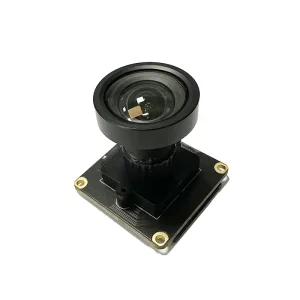
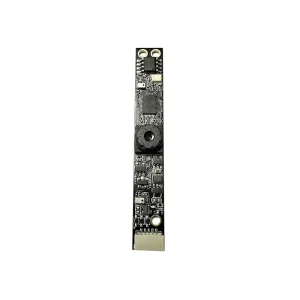
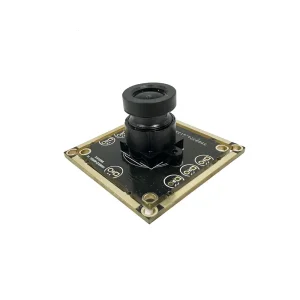
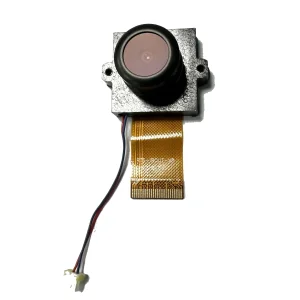
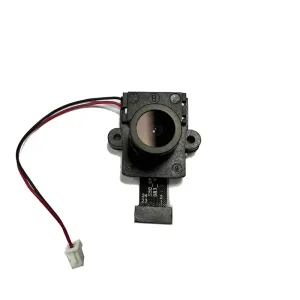
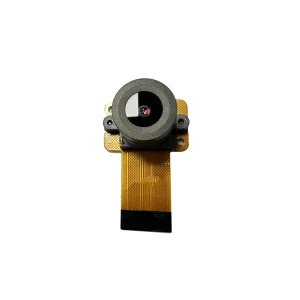
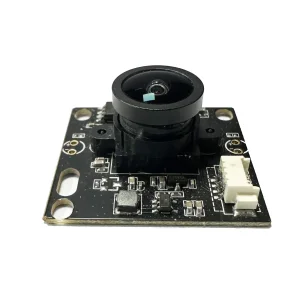
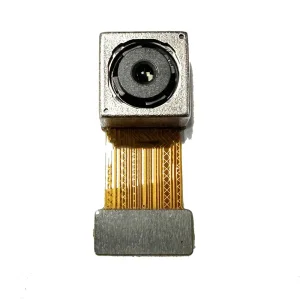
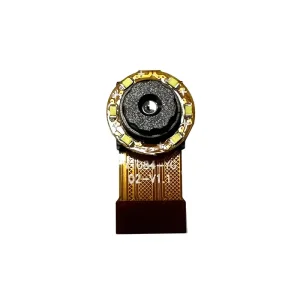
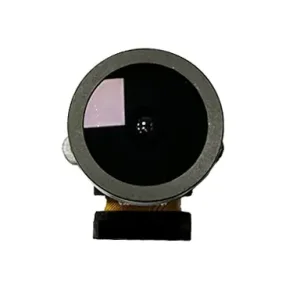
High-precision optical components engineered for automotive dash cams, intelligent telematics, and multi-scenario vision systems.
An authoritative deep-dive into the macroeconomic forces, regulatory mandates, and technological shifts reshaping the automotive vision industry worldwide.
The global automotive camera market is experiencing an unprecedented evolution. Driven by stringent global safety mandates (such as the European Union’s General Safety Regulation GSR II and Euro NCAP 2026 standards), the integration of sophisticated optical vision hardware inside passenger and commercial vehicles has transitioned from a luxury add-on to a critical regulatory imperative. As global automotive Original Equipment Manufacturers (OEMs) and commercial fleet managers scale up autonomous driving capabilities from Level 2+ to Level 3/4 ADAS (Advanced Driver Assistance Systems), the demand for high-reliability, custom in-car camera modules continues to surge exponentially.
Modern in-car cameras serve diverse operational vectors: forward-facing ADAS perception, electronic rearview mirrors (CMS), Driver Monitoring Systems (DMS), Occupant Monitoring Systems (OMS), 360-degree surround-view parking assist (AVM), and continuous commercial telematics dash cams. Each application demands unique sensor architectures, optical glass formulations, high dynamic range (HDR) capabilities exceeding 120dB, and LED Flicker Mitigation (LFM) technologies to handle harsh real-world automotive environments.
Global buyers—ranging from Tier-1 automotive system integrators and telematics service providers (TSPs) to fleet operators—face complex sourcing decisions. Selecting the right custom in car camera market exporter is no longer just about procuring hardware; it involves establishing an agile, technical partnership capable of navigating rapid sensor updates, complex lens design, hardware-level cybersecurity compliance (ISO/SAE 21434), and rigorous thermal dissipation parameters (-40°C to +105°C ambient operating ranges).
How Shenzhen and Guangdong’s optical clusters deliver unparalleled cost efficiency, rapid engineering iteration, and institutional quality control.
From raw optical glass molding and SMT (Surface Mount Technology) cleanroom assembly to active alignment (AA) bonding and ISP (Image Signal Processor) firmware tuning, Chinese exporters maintain an end-to-end ecosystem within a 50-kilometer industrial radius.
Time-to-market is drastically reduced. Chinese camera module exporters deliver fully customized functional samples (covering specific FPC shapes, FAKRA/GMSL2 connectors, and custom lens barrel dimensions) in as little as 10 to 14 business days.
Operating under strict IATF 16949 quality management systems, leading Chinese factories employ automated optical inspection (AOI), 100% MTF (Modulation Transfer Function) testing, and automated burn-in aging chambers to eliminate defect rates.
Information Gain Insight: The competitive edge of Chinese camera module exporters lies in Active Alignment (AA) technology. Unlike traditional manual threaded lens assembly, automated AA machines align the lens to the image sensor along 6 degrees of freedom (X, Y, Z, Pitch, Yaw, Roll) simultaneously while capturing real-time image data. This eliminates edge blurriness caused by thermal expansion or minor mechanical tolerances, ensuring sub-micron precision for automotive optical systems.
A technical comparison designed to guide hardware procurement engineers in selecting optimal transmission protocols for automotive environments.
| Interface Protocol | Max Cable Length | Latency | Primary Automotive Application | EMI / EMC Resilience | Cost Impact |
|---|---|---|---|---|---|
| GMSL2 / FPD-Link III (SerDes) | Up to 15 Meters | < 1 ms (Ultra-low) | Exterior Surround View, Forward ADAS, Electronic Mirrors | Highest (Automotive Shielded Coax) | High (Tier-1 Standard) |
| MIPI CSI-2 | < 30 cm (Direct Board) | Zero-latency | Integrated In-Cabin DMS/OMS, Embedded Dash Cams | Moderate (Requires Board Shielding) | Optimal (Best BOM Value) |
| USB 2.0 / USB 3.0 (UVC) | Up to 5 Meters | 30 - 80 ms | Fleet Telematics, Aftermarket Dash Cams, Kiosks | Standard Shielded Cable | Economical (Plug & Play) |
| Ethernet (AVB/TSN) | Up to 100 Meters | 10 - 20 ms | Commercial Truck Trailer Vision, Distributed IP Cameras | High (Twisted Pair) | Moderate to High |
How custom in-car camera modules solve operational challenges across diverse automotive segments.
Commercial trucking fleets demand uninterrupted cabin monitoring to detect driver fatigue, distraction, phone usage, and seatbelt compliance. Exporters deliver custom indoor IR camera modules equipped with 850nm or 940nm VCSEL infrared illumination bands. These modules operate effortlessly in pitch-black driving conditions, filtering out ambient sunlight glares through specialized narrow bandpass optical filters (850nm/940nm single-band IR pass).
For ride-hailing services (Uber, Lyft, taxi networks), dual-channel wide-angle camera modules capture both front road footage and panoramic interior cabin views simultaneously. Modules utilize 140° to 180° ultra-wide low-distortion lenses paired with Sony STARVIS 2 backside-illuminated (BSI) CMOS sensors, guaranteeing crisp facial recording even under rapidly shifting street lighting.
Forward-facing cameras require high megapixel resolution (4MP to 8MP) combined with precise dynamic range (up to 140dB) to detect pedestrians, traffic signals, and lane markings under extreme high-contrast conditions—such as exiting a dark tunnel into blinding sunlight. Custom housings are engineered with IP69K ingress protection to withstand high-pressure hot-water washdowns and heavy dust environments.
Monitoring valuable cargo or temperature-sensitive goods demands ultra-compact, low-power camera modules equipped with anti-fog glass coating and wide operational temperature specs (-40°C to +85°C). Exporters supply lightweight USB or Ethernet-based modules that easily interface with local vehicle telematics control units (TCU).
Key technological paradigms defining the next decade of in-car camera hardware development.
Modern camera modules are integrating lightweight Neural Processing Units (NPUs) directly onto the camera PCB. By executing object detection, face recognition, and lane departure algorithms directly on the camera board (Edge Computing), host vehicle processors are freed from heavy computational loads.
As digital LED traffic signals and headlight clusters become ubiquitous globally, standard cameras suffer from severe flickering image artifacts. Next-generation automotive CMOS sensors incorporate pixel-level LFM circuits that match LED pulse frequencies, delivering uninterrupted video feeds to ADAS systems.
Eliminating the need for two separate physical cameras inside the cabin, single RGB-IR sensors utilize a customized color filter array (CFA) containing both visible RGB pixels and dedicated Near-Infrared (NIR) pixels. A single camera module now captures vibrant full-color daytime video and high-contrast night IR footage simultaneously.
Essential technical evaluation criteria for enterprise procurement managers and engineering teams when selecting a Chinese camera exporter.
When evaluating potential custom in car camera exporters, strategic buyers must look beyond initial unit pricing. The long-term reliability of an automotive camera module directly impacts end-user safety, brand reputation, and warranty claim costs. Here is the recommended 5-stage qualification framework:
Verify whether the exporter uses automotive-grade glass-plastic hybrid (G+P) or all-glass (6G/7G) lens designs. All-glass optics are imperative for automotive applications because plastic lenses deform under heat (high thermal drift), causing focus shift and blurred imagery over time.
Demand validated lab test reports for ISO 16750 automotive environmental testing standards. This includes High-Temperature High-Humidity operational tests (85°C / 85% RH for 1,000 hours), Thermal Shock testing (-40°C to +105°C rapid transitions), and 3-axis Sinusoidal Vibration testing.
An elite exporter must maintain a dedicated optical laboratory equipped with Image Engineering charts, color temperature boxes, and collimators. Request sample ISP tuning files for Auto White Balance (AWB), Auto Exposure (AE), dynamic range contrast curve mapping, and distortion correction.
Ensure the supplier guarantees component availability (sensor EOL management) for 5 to 7 years. Additionally, confirm their capability to produce custom flexible printed circuits (FPC), custom metal bracketry, and specialized connector terminations (e.g., Molex, Hirose, FAKRA).
Expert technical answers addressing common queries from global automotive buyers and engineering teams.
Explore our extended range of high-definition, miniature, wide-angle, and custom vision camera solutions.