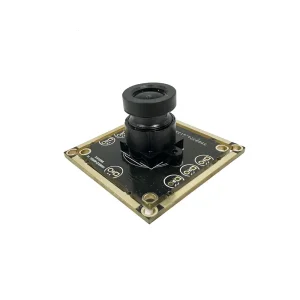
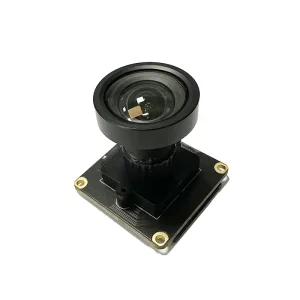
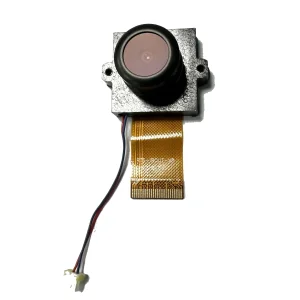
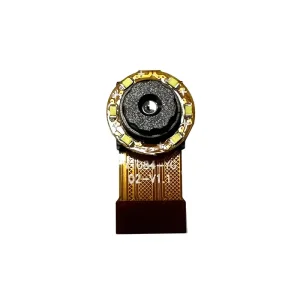
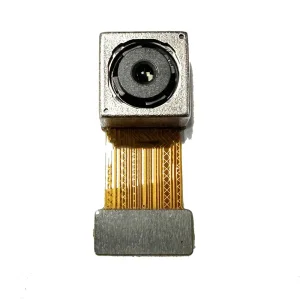
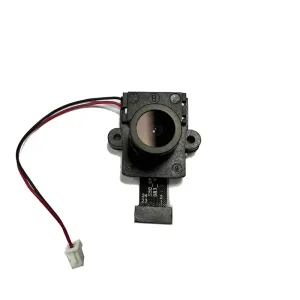
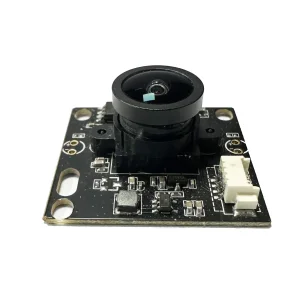
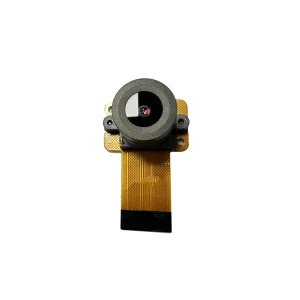
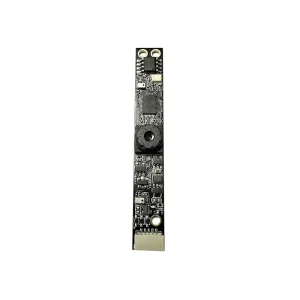
In the rapidly evolving landscape of biometric authentication, the Custom Face Recognition From Photo product segment has transitioned from simple snapshot capture to high-fidelity edge processing. As an industry-leading manufacturer, we bridge the gap between optical excellence and neural network compatibility. Modern facial recognition relies heavily on the "Information Gain" provided by high-dynamic-range (HDR) imaging, allowing AI algorithms to distinguish features even in suboptimal lighting conditions.
Globally, the integration of facial recognition into smart buildings, automated retail, and industrial access control has surged. Unlike consumer-grade webcams, industrial facial recognition modules require specialized ISP (Image Signal Processor) tuning to minimize motion blur and spectral noise. Manufacturers are currently focusing on "Liveness Detection"—a crucial layer that prevents spoofing attacks using 2D images or masks.
Our roadmap emphasizes the move toward Global Shutter technology and IR-cut switching. By controlling the spectral response of the sensor, we provide cleaner input data for facial feature point extraction (landmark detection). Future-proofing these modules involves incorporating dedicated AI NPUs (Neural Processing Units) directly on the PCB, reducing latency and reliance on cloud-based processing.
Data privacy is the cornerstone of trust. We adhere to rigorous GDPR and regional data protection standards, ensuring our hardware supports encrypted firmware updates and local storage security. We provide localized support for international clients, ensuring our modules integrate seamlessly with regional network standards and power requirements (from 3.3V MIPI configurations to standard 5V USB protocols).
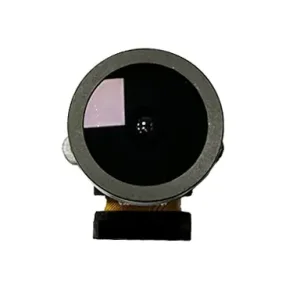
Lens distortion creates geometric warping at the frame edges. For accurate face recognition, we employ low-distortion, aspherical lens designs to ensure that the facial geometry remains mathematically accurate for AI processing.
Absolutely. Our modules support standard MIPI CSI-2, DVP, and USB UVC protocols, making them compatible with Raspberry Pi, NVIDIA Jetson, and Rockchip platforms.
Hardware-level anti-spoofing is achieved through multi-spectral imaging—using combined visible and NIR (Near-Infrared) sensors to detect real skin texture and depth, rather than relying solely on image contrast.