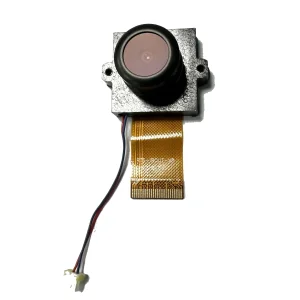
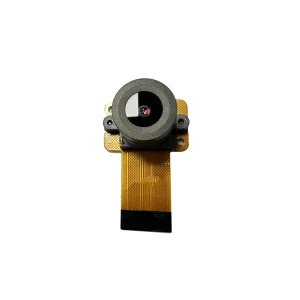
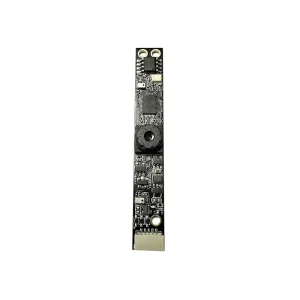
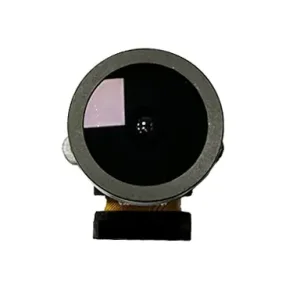
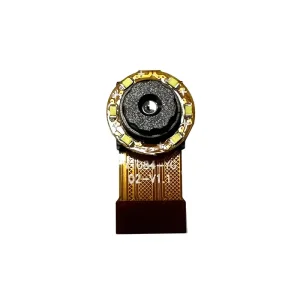
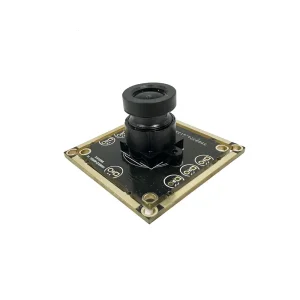
Explore our industrial-grade optical components and high-resolution camera modules optimized for custom spherical lens integration across demanding commercial applications.
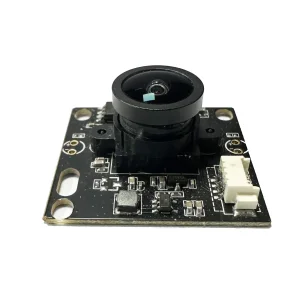
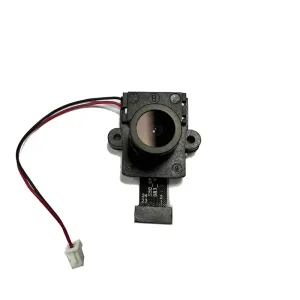
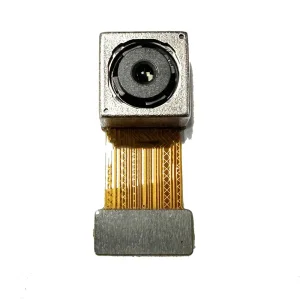
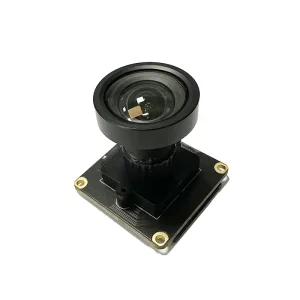
In the rapidly expanding sectors of optoelectronics, autonomous machine vision, biomedical diagnostics, and advanced laser processing, the demand for precision optical components has reached an unprecedented scale. As a premier Custom Fabrik Sphärische Linsen Company & Exporter, our manufacturing infrastructure combines decades of optical glass fabrication experience with cutting-edge German and Asian sub-nanometer polishing technology. Spherical optical lenses—known as Sphärische Linsen across European industrial centers—remain the fundamental building block of sophisticated optical trains, light-gathering systems, beam expanders, and micro-imaging systems.
Understanding the core mechanics of spherical surface geometries, substrate refractions, wavefront aberrations, and environmental resilience is paramount for systems engineers and procurement directors. This comprehensive whitepaper serves as an authoritative guide for B2B decision-makers, detailing optical design paradigms, material science selections, sub-micron quality control, and streamlined global export channels that guarantee seamless component integration.
The international market for spherical optics is undergoing a profound structural evolution driven by the integration of AI-powered vision systems, LiDAR sensor arrays, smart IoT terminals, and automated medical endoscopy. While aspheric lenses have gained traction in compact consumer cameras, custom spherical lenses retain a dominant presence due to their superior manufacturability, cost efficiency at scale, and unparalleled surface figure stability under extreme thermal variations.
High-speed factory automation relies on telecentric lenses and spherical singlet/doublet stacks to achieve zero-distortion barcode reading, PCB inspection, and robotic bin-picking with uniform resolution across the entire image field.
Micro-spherical lenses ranging from 0.5mm to 3mm in diameter enable ultra-miniaturized endoscopes, providing minimally invasive surgical imaging with high chromatic correction and bio-compatible sealing.
Severe thermal operating ranges (-40°C to +125°C) demand thermal-stable optical glass spherical elements (e.g., Fused Silica, N-BK7) paired with hard diamond-like carbon (DLC) protective anti-reflective coatings.
Selecting the appropriate substrate material is the critical first phase of custom spherical lens fabrication. Material selection directly influences Abbe number (dispersion), refractive index $n_d$, thermal expansion coefficient ($\alpha$), and spectral transmission range. Our factory maintains extensive raw glass inventories from premier global glassmakers including SCHOTT, OHARA, and HOYA.
| Substrate Material | Refractive Index ($n_d$) | Abbe Number ($V_d$) | Spectral Range | Primary Commercial Application |
|---|---|---|---|---|
| N-BK7 (SCHOTT) / K9 | 1.5168 | 64.17 | 350 nm - 2.0 µm | Standard visible imaging, industrial vision, alignment lasers |
| UV Synthetic Fused Silica | 1.4585 | 67.80 | 185 nm - 2.5 µm | UV laser processing, high-power optics, medical excimer systems |
| N-SF11 / High-Index Flint | 1.7847 | 25.68 | 420 nm - 2.3 µm | Achromatic doublets, compact optical zoom assemblies, high bending |
| Calcium Fluoride ($\text{CaF}_2$) | 1.4338 | 95.23 | 180 nm - 8.0 µm | Apochromatic color correction, deep UV lithography, IR sensors |
| Germanium / Zinc Selenide ($\text{ZnSe}$) | 4.0032 / 2.403 | N/A | 2.0 µm - 16 µm | Thermal imaging (LWIR/MWIR), CO2 industrial laser optics |
Custom Tolerances Capabilities: Beyond material selection, our factory custom-polishes spherical lenses to strict ISO 10110 standards. Standard commercial limits versus high-precision custom limits are detailed below:
Spherical lenses feature surfaces with a constant radius of curvature. The exact geometric layout determines light convergence, divergence, magnification, and monochromatic spherical aberration ($\text{W}_{040}$). As a custom B2B Fabrik manufacturer, we engineer six primary spherical geometries:
Featuring a flat surface and a positively curved spherical surface, PCX lenses possess a positive focal length. They are ideal for light collimation and focusing applications where the conjugate ratio exceeds 5:1 to minimize spherical aberration.
Designed with a flat surface and an inward-curved spherical surface, PCN lenses have a negative focal length. They diverge incident light and are utilized as beam expanders, virtual image generators, and focal length extenders in optical stacks.
Symmetrical or asymmetrical dual-curved elements. DCX lenses are favored for 1:1 imaging optics and relay systems, whereas DCN lenses provide high negative refraction for image dispersion and secondary aberration correction.
Combining one convex and one concave surface, meniscus lenses modify focal lengths without introducing significant spherical aberration. They are frequently integrated into wide-angle camera modules to maintain edge sharpness.
Cemented or air-spaced spherical lenses combining low-dispersion crown glass (e.g., N-BK7) with high-dispersion flint glass (e.g., N-SF11). These assemblies eliminate primary chromatic aberration and dramatically lower spherical wavefront errors.
Fully spherical optical elements engineered for fiber-optic coupling, endoscope tip lenses, laser diode collimation, and barcode scanner optical heads requiring short focal length and high numerical aperture (NA).
Achieving superior optical clarity requires a highly controlled, step-by-step manufacturing workflow. Our automated optical fabrication facility operates under cleanroom environments (ISO Class 5/7) to guarantee zero particulate contamination during surface grinding, polishing, thin-film deposition, and packaging.
High-speed diamond-impregnated core drills and multi-axis CNC curve generators shape high-purity glass blocks into approximate spherical blanks with tight thickness margins.
Utilizing cerium oxide slurry and pitch-polishing laps or Magnetorheological Finishing (MRF), surface roughness is reduced below $0.5 \text{ nm Ra}$, removing sub-surface micro-fractures.
Advanced electron-beam coaters apply dielectric or metallic coatings including Single-Layer $\text{MgF}_2$, Broadband Anti-Reflective (BBAR 350–700nm, 700–1100nm), High-Reflective (HR), and DLC coatings.
Every export shipment from our factory undergoes 100% rigorous optical inspection backed by certified metrology reports. Our quality control lab contains:
As a global exporter supplying tier-1 OEM manufacturers across North America, Europe (Germany, France, UK), and the Asia-Pacific region, we eliminate trade friction through comprehensive regulatory compliance and regional engineering support.
All optical glass formulations, adhesives, and coatings fully adhere to EU Directive 2011/65/EU (RoHS 3) and REACH Regulation (EC) No 1907/2006. Our facility is ISO 9001:2015 certified for optical design and manufacturing quality management.
To prevent surface oxidation, moisture fogging, or static accumulation during transoceanic shipping, custom spherical lenses are packed in ESD-safe cleanroom blister trays, nitrogen-purged vacuum sealed barrier bags, and shock-resistant export containers.
We provide full HS Code classification (e.g., HS 9001.90 Optical Elements), Certificates of Origin (Form E, CO), custom brokerage documentation, DDP/DAP incoterms, and strict ITAR/EAR export control compliance for dual-use components.
The future of spherical optics lies in the synergy between conventional sub-micron mechanical polishing and next-generation hybrid optical manufacturing. Key R&D vectors driving our optical manufacturing investments include:
Combining precision spherical glass surfaces with nano-patterned diffractive microstructure layers to create ultra-compact achromatic lenses, drastically reducing lens group element counts in space-constrained drone cameras.
Integrating deep-learning neural vision networks into automated polishing lines to detect micro-pits, subsurface damage, and coating pinholes in real time at processing speeds exceeding 1,000 units per hour.
Developing ultra-durable sol-gel optical coatings that combine broadband antireflection with super-hydrophobic ($> 110^\circ$ water contact angle) and oleophobic properties for outdoor automotive vision and marine camera modules.
In-depth technical answers curated by our senior optical engineers to streamline your engineering prototyping and B2B procurement workflow.
For standard optical glass substrates (such as N-BK7, Fused Silica, or K9) with available tooling radii, prototype fabrication (1 to 10 pieces) typically requires 2 to 3 weeks. If custom diamond grinding tools or specialized high-index glass melt runs are required, lead times range from 4 to 5 weeks, including full Zygo interferometric report validation and AR coating runs.
Spherical lenses feature a constant radius of curvature, making them significantly more economical and faster to produce in high volumes ($30\% \text{ to } 60\%$ lower tooling and polishing costs compared to glass molded or diamond-turned aspheres). While aspheric lenses eliminate spherical aberration in a single element, multi-element spherical stacks (or achromatic doublets) routinely achieve identical or superior optical resolution (MTF) across broad spectral bands with higher thermal stability and lower surface scatter.
We provide thin-film coating designs tailored to your operational spectrum:
• UV Spectrum (193–355 nm): High-damage-threshold Fluoride or Oxide dielectric AR coatings ($\text{R}_{avg} < 0.5\%$).
• Visible Spectrum (400–700 nm): Multi-layer BBAR broadband antireflection ($\text{R}_{avg} < 0.25\%$).
• NIR/SWIR Spectrum (750–1550 nm): Telecom and LiDAR AR coatings optimized for 905nm or 1550nm diode lasers.
• LWIR Thermal Spectrum (8–14 µm): Hard Carbon (DLC) or Germanium anti-reflective coatings compliant with severe environmental abrasion tests.
We utilize bell-clamp optical edging and laser-guided centering lathes. Lens centration errors generate beam deviation and coma aberration. Our precision edging process aligns the optical axis with the mechanical diameter axis down to $< 30 \text{ arcseconds}$. For multi-element optical assemblies, lenses are glued or laser-welded inside custom CNC machined aluminum housings using optical-grade UV adhesives under real-time alignment monitoring.
To provide a definitive quotation, please supply:
1. Substrate material or preferred glass type (e.g., N-BK7, Corning Fused Silica).
2. Geometric dimensions: Outer diameter, center thickness, edge thickness, radius of curvature $R_1$ and $R_2$ (or effective focal length EFL).
3. Optical tolerances: Surface figure (PV), scratch-dig specification, centration tolerance.
4. Coating requirements: Spectral band, target reflectivity percentage, damage threshold.
5. Order quantities: Initial prototype quantity and projected annual production run (EAU).
Every B2B export package includes a full Quality Assurance Approval Folder containing: Certificate of Conformance (CoC), Material Test Report (glass melt sheet), Zygo Surface Interferometry Wavefront Maps, Spectrophotometer Transmittance/Reflectance Curves, 2D Dimension Inspection Data Sheet, and RoHS/REACH compliance declarations.
Explore additional precision imaging solutions optimized for industrial automation, automotive recording, medical diagnostic tools, and custom lens integrations.