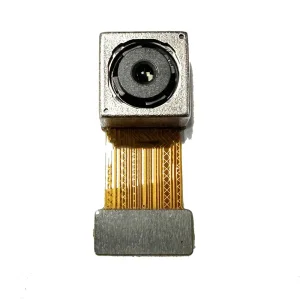
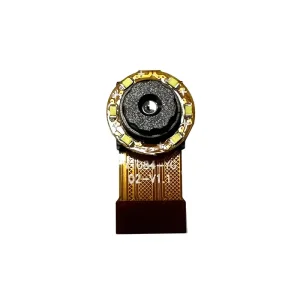
Select from our field-tested camera hardware configurations, engineered with low-distortion lenses, high dynamic range (HDR), and plug-and-play USB/MIPI embedded interfaces.
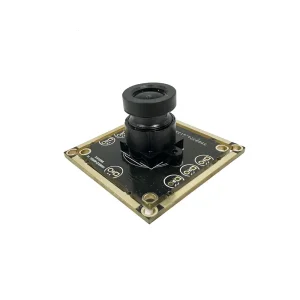
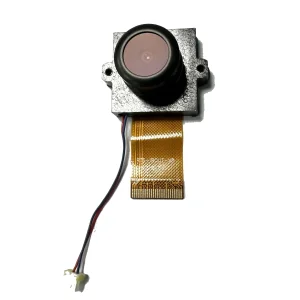
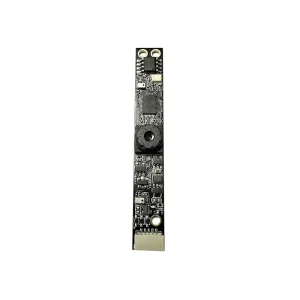
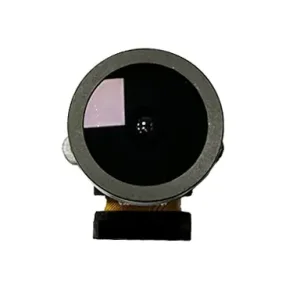
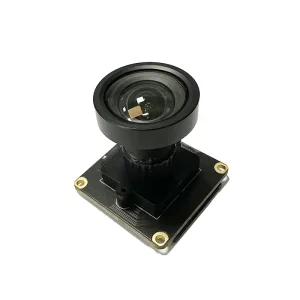
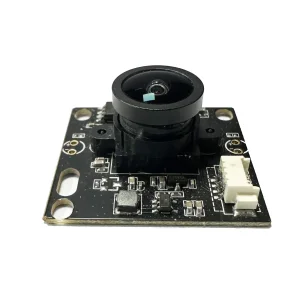
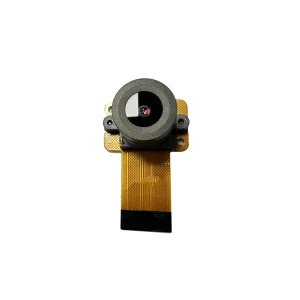
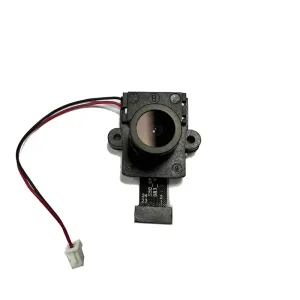
Shen Zhen You Xiang Da Technology Co., Ltd. (YXD Optics), founded in Shenzhen in 2015, bridges high-precision optical design with industrial embedded vision. Here is how modern biometric edge sensors solve critical spoofing, latency, and environmental lighting challenges.
Traditional single-sensor RGB cameras fail when confronted with printed photos or high-resolution tablet screens. Our biometric imaging modules deploy synchronized dual-sensor streams: a high-fidelity visible light RGB sensor paired with an 850nm/940nm Near-Infrared (NIR) sensor. This hardware-synchronized optical architecture enables active liveness detection (PAD) conforming to ISO/IEC 30107-3 Level 2 standards without adding host-side computational overhead.
Biometric access control terminals and smart building intercoms frequently operate in challenging outdoor environments with harsh sun glare, deep shadows, and direct backlighting. YXD incorporates multi-exposure Starlight HDR/WDR image signal processors (ISP) directly onto the module PCB. This ensures accurate facial vector extraction, balanced skin illumination, and reliable recognition under extreme illumination conditions ranging from 0.001 Lux to 100,000 Lux.
Facial landmark alignment algorithms (e.g., dlib, MTCNN, RetinaFace) require geometric precision. High optical distortion (common in budget wide-angle lenses) alters facial anthropometric ratios, leading to elevated False Rejection Rates (FRR). YXD designs custom multi-element all-glass (6G/7G) optical stacks maintaining optical barrel distortion under 0.5% across a wide 85° to 140° Field of View (FOV).
Biometric physical identity verification is undergoing a structural transformation from centralized cloud verification to decentralized on-edge matching. Global hardware procurement teams must navigate these changes to ensure regulatory compliance and operational security.
| Architecture Vector | Legacy Cloud Biometric System | Modern Edge-AI Embedded Module (YXD Standard) | Engineering Impact & ROI |
|---|---|---|---|
| Inference Latency | 800ms – 2500ms (dependent on network jitter & upload speed) | < 120ms (instant local feature vector extraction) | Zero-queue throughput for airport turnstiles, border e-gates, and industrial turnstiles. |
| Data Privacy & GDPR | Raw image transmission over WAN; major exposure to data interception | Local On-Sensor Processing; zero raw imagery transmitted to cloud | Conforms natively to EU GDPR Article 9, CCPA, and Illinois BIPA compliance mandates. |
| Anti-Spoofing (PAD) | Single-frame 2D algorithmic analysis (susceptible to 3D latex masks) | Hardware-Fused RGB + NIR + ToF/Structured Light | Eliminates presentation attack vectors: silicone masks, 4K screen replay, printed cutouts. |
| Operational Stability | Subject to broadband outage, server downtime, and subscription fees | 100% Offline Autonomy with integrated flash template caching | Critical infrastructure operates uninterrupted during remote field connectivity outages. |
Direct low-latency coupling with edge SoCs (NXP i.MX8, Rockchip RK3588, Raspberry Pi CM4/5, NVIDIA Jetson). Direct RAW data flow with minimal CPU consumption.
Driverless integration for Windows, Linux, Android, and macOS kiosks. Hardware MJPEG/H.264/H.265 compression engine reduces host bus congestion.
Ideal for cost-sensitive, low-power microcontrollers (STM32, ESP32-S3) in battery-backed residential locks, smart padlocks, and handheld scanners.
Autonomous wireless video streaming for visual intercoms, perimeter security cameras, and distributed IoT access checkpoints without running data cables.
Biometric imaging products face stringent regional regulatory frameworks. YXD engineers optical modules with privacy-by-design hardware architectures, supporting international certifications and frictionless OEM deployment.
Under the European Union General Data Protection Regulation (GDPR, Article 9) and the Illinois Biometric Information Privacy Act (BIPA), capturing and transmitting unencrypted raw biometric faces across third-party networks creates massive liability. YXD supports client implementations with hardware-encrypted sensor pathways, enabling edge SoCs to generate mathematical feature vectors (hash templates) directly at the edge, ensuring raw facial images are never stored or transmitted over public networks.
For municipal, government, and enterprise critical infrastructure projects in North America and allied jurisdictions, compliance with Section 889 of the National Defense Authorization Act (NDAA) is non-negotiable. YXD provides component sourcing tracing, utilizing NDAA-compliant CMOS image sensor chipsets and DSPs (such as Sony, Omnivision, and Onsemi) to ensure frictionless eligibility for municipal and federal contracts.
Reliability in biometric access terminals demands rigorous thermal and environmental endurance. Every production lot produced at YXD undergoes standardized 100% burn-in and environmental aging tests (operating from -30°C to +75°C, humidity cycles up to 95%). Our automated active alignment (AA) systems calibrate focal depth and optical centering at the micron scale, preventing image soft-focus over years of continuous outdoor operation.
From smart aviation corridors to autonomous vehicle cockpits, YXD custom camera modules deliver uncompromised optical clarity tailored to environmental operating constraints.
International airports and automated border control e-gates demand instant passenger matching conforming to ICAO 9303 standards. Modules integrated with Sony Starvis sensors provide rapid optical autofocus, zero-lag 60fps video capture, and high dynamic range to identify travelers under severe glass-canopy sun reflections.
Target Specs: 1080P/4K • 60 FPS • HDR >120dB • AutofocusUnattended payment terminals, ATM upgrades, and self-checkout systems rely on binocular RGB + NIR vision modules. The NIR stream works in tandem with an auxiliary 940nm pulsed illuminator to calculate optical depth and verify human pulse photoplethysmography (rPPG), thwarting photographic and 3D mask spoofing.
Target Specs: Dual RGB+NIR • Narrow FOV • Anti-Spoofing Level 2Euro NCAP and global automotive functional safety regulations require Driver Monitoring Systems (DMS) for drowsiness and distraction detection. Our automotive-grade modules utilize 940nm narrow-band optical bandpass filters to isolate driver facial features, gaze angle, and eyelid closure through polarized sunglasses and darkness.
Target Specs: Global Shutter • 940nm Pass Filter • AEC-Q100 ComponentsCommercial entrance turnstiles, video doorbells, and multi-tenant intercoms require ultra-compact footprint designs with wide vertical coverage (so both children and tall adults are captured). YXD's custom FPC boards fit restricted profiles as narrow as 9mm while maintaining 140° ultra-wide low-distortion viewing.
Target Specs: 9mm Ultra-Slim • 140° Distortion-Free • IP67 Sealed LensRugged tablet PCs used by field officers, warehouse operators, and border inspectors integrate YXD autofocus multi-application camera modules. A single module rapidly switches between macro barcode/document scanning and multi-target facial recognition without focus hunting.
Target Specs: High-Speed Voice Coil Motor (VCM) • MIPI / USB 3.0Healthcare assistant robots and autonomous commercial delivery units deploy YXD wide-angle vision modules for simultaneous localization (vSLAM), obstacle detection, and friendly guest recognition, enabling seamless user authorization.
Target Specs: Synchronized Shutter • Low CPU Overhead • Embedded LinuxAs artificial intelligence algorithms advance into multimodal neural processing, optical sensor hardware is evolving to deliver richer physical data with lower power consumption and sub-micron form factors.
Traditional frame-based CMOS cameras transmit 30 or 60 complete frames every second, wasting bandwidth when scenes are static. YXD's engineering lab is testing bio-inspired event-based vision sensors (EVS) that only record pixel-level luminance changes. This architecture achieves microsecond-level temporal resolution, infinite dynamic range (>140dB), and sub-milliwatt power draw for battery-powered biometric door entry devices.
While NIR (850nm/940nm) addresses basic liveness verification, Short-Wave Infrared (SWIR, 1050nm–1550nm) penetrates atmospheric haze, smoke, tint, and deep skin tissue structures. YXD is developing hybrid multi-spectral optics that allow industrial biometric terminals to verify sub-dermal vein structures alongside facial geometry, setting new benchmarks in anti-spoofing reliability.
Modern terminal design trends favor borderless, edge-to-edge glass aesthetics. Our optical engineering team creates micro-aperture pinhole optics (lens front element diameter <1.2mm) and specialized anti-diffraction coatings, allowing biometric cameras to sit discreetly behind semi-transparent panels and digital signage displays without degrading image contrast.
Clear, technically rigorous answers to the critical hardware, interface, and customization questions asked by system integrators and embedded hardware engineers.
Explore our full spectrum of specialized camera modules engineered for high-throughput scanning, automotive recording, notebook integration, and intelligent perimeter surveillance.