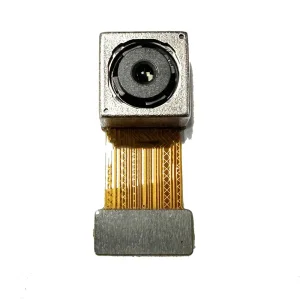
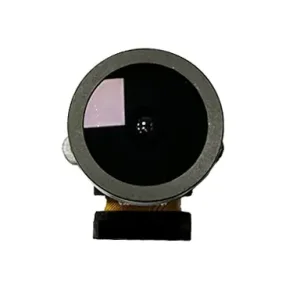
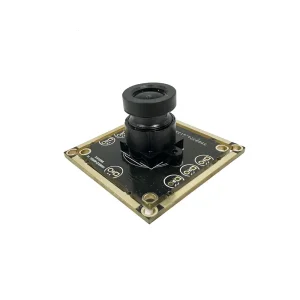
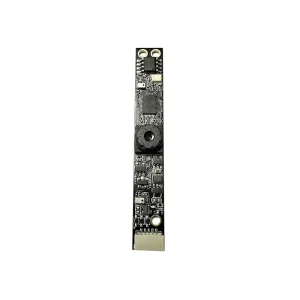
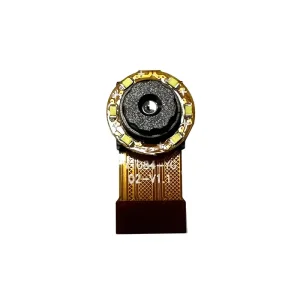
Explore our flagship OEM/ODM module lineup designed for high frame rate, low distortion, night vision, and compact form factor integration.
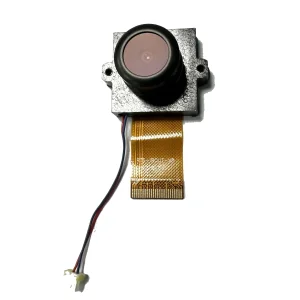
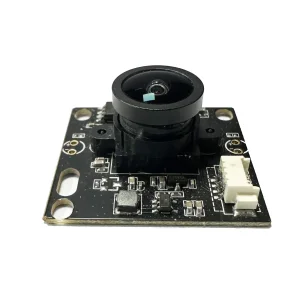
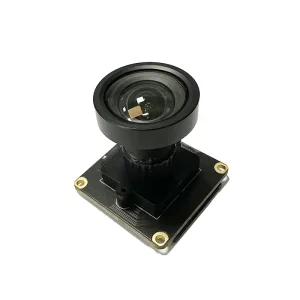
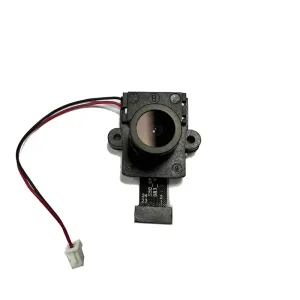
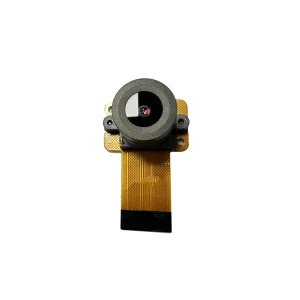
Why 1080p Full HD (1920x1080) remains the sweet spot for bandwidth, compute efficiency, and high-fidelity edge AI vision applications.
In the rapidly evolving landscape of computer vision and optical engineering, the demand for Custom 1080p Camera Modules has reached an unprecedented high. While 4K and higher-resolution sensors dominate consumer marketing narratives, global original equipment manufacturers (OEMs) and original design manufacturers (ODMs) recognize that Full HD 1080p resolution represents the optimal balance of image detail, data throughput, power consumption, and processing latency for edge AI workloads.
1080p video streams produce roughly 2.07 million pixels per frame. Compared to 4K (8.29 MP), this drastically reduces NPU compute overhead and thermal throttling while preserving spatial features essential for object detection, facial recognition, and OCR.
Industrial applications such as driver monitoring systems (DMS), high-speed inspection, and motion tracking demand 60fps to 120fps capture speeds. 1080p modules deliver uncompressed high-fps streams without bottlenecking host bus architectures.
By using larger individual pixel sites (typically 2.8µm to 3.0µm) on standard optical format CMOS dies, 1080p sensors achieve superior Signal-to-Noise Ratio (SNR) and Wide Dynamic Range (WDR > 120dB) under challenging lighting conditions.
A common mistake in OEM procurement is over-specifying resolution. A 1080p sensor with a 1/2.7" optical format offers significantly larger pixel areas than a 4K sensor of the same size. This larger pixel aperture collects more photons per second, dramatically decreasing read noise and enabling clean night-vision imagery without relying on aggressive, detail-smearing temporal noise reduction filters.
Evaluating standard vs. highly customized camera modules across optical, electrical, mechanical, and environmental dimensions.
When global hardware engineers and procurement teams evaluate a 1080p Camera Module Manufacturer, technical validation extends beyond simple pixel counts. B2B buyers require complete control over the imaging pipeline to ensure seamlessly integrated host compatibility, long-term operational stability, and low field failure rates.
| Evaluation Parameter | Standard Off-the-Shelf Module | Custom Engineered OEM/ODM Module | Impact on Enterprise Performance |
|---|---|---|---|
| Generic spherical lenses (>5% barrel distortion) | Custom Aspherical 2G4P / 6G Optics (<0.5% distortion) | Prevents image distortion; critical for barcode scanners, document imaging, and industrial machine vision. | |
| Fixed USB 2.0 (UVC) standard cable | MIPI CSI-2 (2-lane/4-lane), USB 3.0, DVP, or Wi-Fi Network | Optimizes latency, bandwidth, pin count, and system board integration. | |
| Fixed focus, plastic barrel, glued thread | VCM Autofocus, Liquid Lens, or Precision Threaded M12/M8/M6 | Ensures thermal focus stability from -40°C to +85°C in harsh industrial or automotive environments. | |
| Default sensor AGC / AEC matrix | Custom Tuned Color Reproduction, WDR, De-warping, Night-Vision | Matches optical output directly to specific host software algorithms and artificial intelligence models. | |
| Rigid rectangular PCB (Standard sizes) | Custom Flexible FPC, Ultra-Miniature Round/Square Outline | Fits strict mechanical envelopes such as miniature medical endoscopes or thin laptop display bezels. |
From sensor silicon selection to custom lens coating and ISP tuning—how we turn complex optical requirements into mass-producible solutions.
We partner with world-leading semiconductor foundries including Sony (STARVIS & Pregius series), OmniVision, and Onsemi. Depending on your operational requirements, we specify sensor architectures designed for high dynamic range (HDR), global shutter for zero-motion-blur capture, or ultra-low-power standby monitoring.
Our in-house optical design team crafts custom lens assemblies using premium glass and optical-grade polymers. We tailor key optical attributes to your mechanical enclosure constraints:
Connecting the camera module to your host processor (Raspberry Pi, NVIDIA Jetson, Rockchip, Qualcomm, NXP, or x86 architecture) requires proper signal routing:
Hardware is only half the battle. Our image signal processor (ISP) engineers perform rigorous tuning across target color temperatures, light levels, and scenes:
Field-proven camera module configurations tailored to the strict demands of automotive, IoT, industrial, medical, and consumer devices.
Wide temperature tolerance (-40°C to +85°C), WDR sensors for high contrast scenes, and vibration-proof lens mounts make our 1080p modules ideal for dashcams, Cabin Monitoring Systems (CMS), and Driver Fatigue Monitoring (DMS).
Integrated with 140° to 180° ultra-wide-angle lenses, IR LEDs, and dual ICR cut filters. Designed for outdoor building doorbells, biometrics kiosks, and smart locks needing clear facial details day and night.
Ultra-miniature 9mm and sub-centimeter camera modules engineered for medical inspection tools, document scanners, and portable laboratory diagnostics requiring precise color rendering and high resolution.
Ultra-thin, low-power USB UVC modules fitted with distortion-free optical elements. Delivers clear video conferencing output for remote working and online education peripherals.
High-frame-rate global shutter and fixed-focus modules designed for pick-and-place robotic arms, autonomous mobile robots (AMR), and automatic optical inspection (AOI) lines.
Autofocus camera modules built on high-sensitivity CMOS sensors to capture sharp text, 1D/2D barcodes, and identification cards under inconsistent ambient light.
Stringent manufacturing controls, international regulatory compliance, and transparent NPI engineering workflows.
To deliver flawless camera performance across entire production batches, our ISO9001 and IATF16949-certified cleanroom facilities execute automated optical testing at every production stage:
We streamline market entry for international original equipment manufacturers by ensuring full adherence to global electrical and environmental regulatory mandates:
How emerging sensor advancements, neuromorphic processing, and multi-sensor fusion will reshape 1080p camera module designs.
As embedded systems become more intelligent, the traditional role of a camera module as a simple image-capture peripheral is evolving into an integrated smart sensor node. Looking toward 2025 and beyond, several technical innovations are reshaping 1080p camera engineering:
Integrating ultra-low-power micro-NPUs directly into the sensor ISP substrate allows edge devices to handle background subtraction, motion detection, and wake-on-event functions before transmitting data to the host CPU, drastically extending battery life.
Combining 1080p spatial RGB imaging with Time-of-Flight (ToF) depth sensing on a single miniature PCB platform enables high-precision 3D mapping, gesture recognition, and accurate anti-spoofing facial identification.
Transitioning high-bandwidth multi-camera arrays in industrial and automotive environments toward next-generation high-speed differential bus standards for real-time edge processing with sub-millisecond latencies.
Answers to common questions from hardware design engineers, systems integrators, and procurement directors.
Discover our extended portfolio of high-definition, miniature, wide-angle, and autofocus imaging solutions built for global exporters and suppliers.