Engineered for outdoor durability, high dynamic range, and seamless wireless edge integration. Direct factory supply from Shenzhen, China.
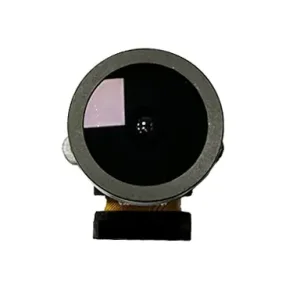
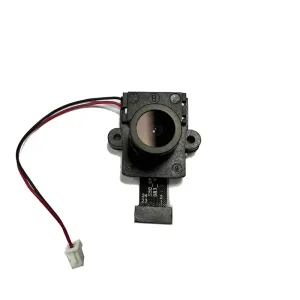
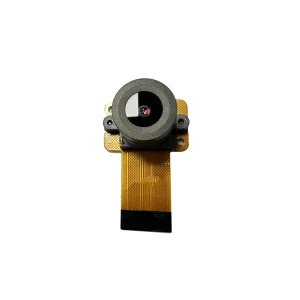
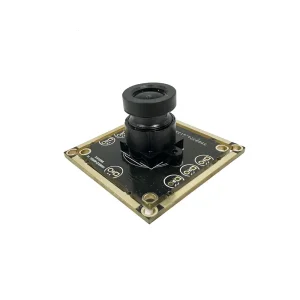
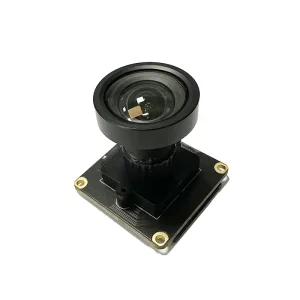
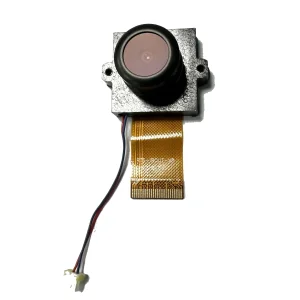
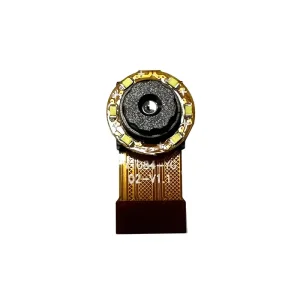
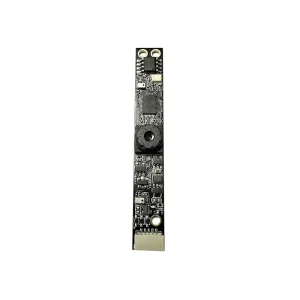
Examining how high-efficiency ISP silicon, edge AI neural engines, and multi-band wireless communications are transforming commercial physical security.
The global security landscape has transitioned definitively from passive, centralized wired closed-circuit television (CCTV) systems toward autonomous, untethered wireless outdoor security cameras. Driven by breakthroughs in battery chemistry, high-efficiency solar harvesting, sub-watt System-on-Chips (SoCs), and edge neural network acceleration, modern perimeter surveillance no longer demands invasive trenching or complex cabling. Today, enterprise operators require distributed wireless endpoints capable of autonomous motion categorization, starlight-grade color rendering, and real-time video stream encryption directly at the network edge.
As the primary manufacturing base for global imaging hardware, China’s industrial ecosystem has evolved far beyond raw board assembly. Leading manufacturers like Shen Zhen You Xiang Da Technology Co., Ltd. (YXD Technology, established 2015) lead the development of specialized camera modules that unify low-power Wi-Fi (Wi-Fi 6 / 802.11ax Target Wake Time), 4G/5G cellular failover, MIPI CSI-2/USB interfaces, and custom optical train assemblies. In modern outdoor deployments, thermal fluctuations, optical flare, extreme low-light photon starvation, and radio frequency interference present critical operational bottlenecks. Solving these challenges requires an architectural approach combining custom glass-plastic hybrid optics with hardware-level image signal processor (ISP) optimization.
Legacy passive infrared (PIR) triggers generate unacceptable false positive rates when triggered by windblown foliage or small wildlife. Contemporary wireless outdoor camera architectures integrate localized Convolutional Neural Networks (CNNs) directly inside the edge ISP, distinguishing human silhouettes and vehicle profiles with sub-100 millisecond inference latency before energizing full radio pipelines.
By implementing asynchronous deep-sleep modes consuming under 200 microamps (µA), coupled with quick-boot real-time operating systems (RTOS), wireless camera systems achieve 180+ days of standalone operation on compact lithium-ion cell packs, or uninterrupted year-round reliability when tethered to miniature 3W–5W monocrystalline solar panels.
Through back-illuminated (BSI) pixel architectures and wide-aperture lenses (F1.4–F1.0), modern camera modules absorb high photon volumes under moonlight conditions (0.001 Lux). Advanced chromatic noise reduction algorithms reconstruct crisp 1080P/4K video streams without depending exclusively on active, visible light illuminators.
Evaluating commercial outdoor camera hardware requires rigorous verification of optical physics, mechanical ingress sealing, and regulatory compliance.
Outdoor surveillance hardware must endure continuous thermal cycling (-30°C to +70°C), driven rain, high ambient humidity, and ultraviolet degradation. B2B procurement specifications demand:
Optical performance is quantified under the international EN 62676-4 standard for Detection, Observation, Recognition, and Identification (DORI):
Security integrators across North America and Western Europe require end-to-end cryptographic integrity across edge hardware and cloud transports:
How the Pearl River Delta industrial cluster unifies high-yield lens grinding, SMT robotics, and automated testing to optimize commercial cost-to-performance ratios.
The manufacturing ecosystem anchored in Shenzhen, Guangdong, delivers unmatched integration across the entire camera module lifecycle. Unlike fragmented global manufacturing models, China’s vision industry brings together optical lens fabrication, precision surface-mount technology (SMT), cleanroom wafer bonding, and specialized firmware development within an interconnected 50-kilometer radius. This geographic and operational density drastically accelerates the rapid prototyping cycle (NPI—New Product Introduction) from concept validation to full-scale mass production.
At YXD Technology, production lines implement state-of-the-art Industry 4.0 automated manufacturing workflows. The deployment of high-speed Active Alignment (AA) assembly systems ensures that the optical lens axis aligns perfectly with the CMOS sensor plane down to sub-micron tolerances, eliminating corner softness and field tilt that plague manual lens-mounting processes. Furthermore, every batch of camera modules undergoes automated modulation transfer function (MTF) testing, high-temperature dynamic burn-in testing, drop testing, and electrostatic discharge (ESD) screening. This standardized manufacturing discipline allows tier-one international brands and enterprise buyers to secure tier-one quality while reducing overall hardware bill of materials (BOM) overhead by 30% to 45%.
FOV, low-light thresholds, sensor selection (Sony/OmniVision/SmartSens), and interface mapping.
Zemax ray-tracing analysis, distortion compensation (<1%), and IR-cut filter spectrum tuning.
6-axis robotic optical center positioning for uniform sharpness across the entire frame.
Thermal chamber aging (-30°C to +70°C), waterproof testing, and optical MTF verification.
High-volume cleanroom output with automated packing, serialized tracking, and global logistics dispatch.
A reference architecture guide for hardware systems engineers designing enterprise wireless vision endpoints.
| Interface / Topology | Bandwidth & Throughput | Transmission Distance | Power Profile | Typical Industrial / Commercial Use Case |
|---|---|---|---|---|
| Wi-Fi 6 (802.11ax / TWT) | Up to 1.2 Gbps (2.4GHz & 5GHz) | 50 – 120m (Line of Sight) | Ultra-Low via Target Wake Time | Residential perimeter, smart campus security, commercial retail entry points. |
| 4G LTE Cat-1 / Cat-4 Cellular | 10 Mbps – 150 Mbps downlink | Nationwide cellular coverage | Moderate (requires smart sleep cycling) | Off-grid construction monitoring, agriculture, solar parks, critical pipeline corridors. |
| MIPI CSI-2 Embedded | Up to 2.5 Gbps per lane (4 lanes) | Board-level (< 20 cm) | Sub-watt ultra-low power | Embedded AI vision systems, smart drones, autonomous mobile robots (AMR). |
| USB 2.0 / USB 3.0 UVC | 480 Mbps to 5 Gbps | Up to 3m – 5m cable link | Standard USB 5V rail | Outdoor industrial kiosks, automated ticketing gates, access control panels. |
| Hybrid Wi-Fi + LoRaWAN Telemetry | Dual-band: Video burst + telemetry | LoRaWAN up to 10km; Wi-Fi local | Asynchronous low-drain mode | Forest fire early detection, remote environmental asset protection, wildlife tracking. |
From extreme climate construction yards to smart city infrastructures, explore how custom optical assemblies perform in the field.
Unwired jobsites present harsh operational environments characterized by airborne dust, diesel particulate matter, heavy mechanical vibrations, and zero fixed wired data infrastructure. Autonomous cellular 4G solar camera units deliver continuous visual progress tracking, occupational hazard verification, and perimeter intrusion deterrence without requiring temporary on-site trenching.
Sprawling photovoltaic installations and oil/gas distribution facilities require reliable perimeter surveillance across tens of square kilometers. Equipping optical modules with wide-angle, low-distortion lenses and pan-tilt-zoom (PTZ) wireless synchronization ensures high optical clarity at property boundaries, instantly alerting central security teams to breach attempts.
Rural agricultural assets require robust vision systems capable of operating during extended stretches of overcast or rainy weather. Utilizing sub-milliamp sleep cycles, advanced battery state-of-health algorithms, and starlight nighttime illumination, these cameras track herd patterns, detect equipment tampering, and verify automated feeder operation without constant maintenance visits.
In-depth responses covering optical design, power optimization, ISP calibration, and OEM customization.
Review our specialized camera modules engineered for high optical stability, ultra-compact enclosures, and demanding outdoor conditions.
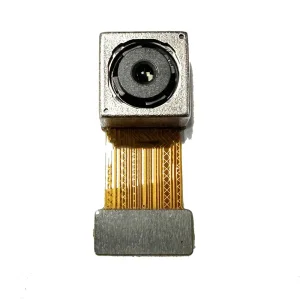
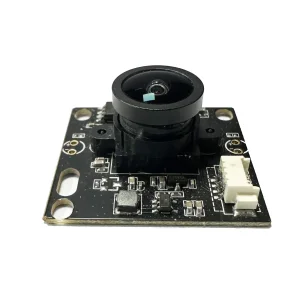
Collaborate with our senior optical and firmware engineering teams to customize high-reliability wireless outdoor security camera modules tailored to your project requirements.