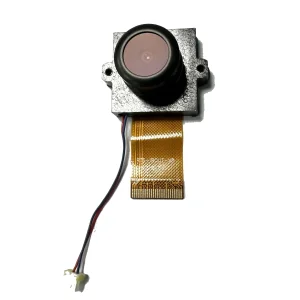
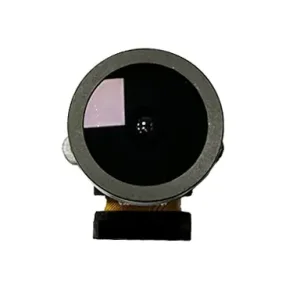
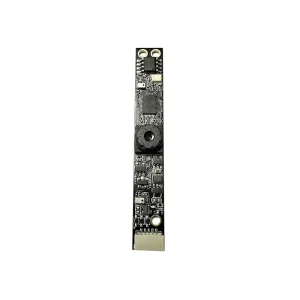
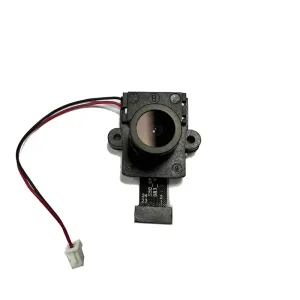
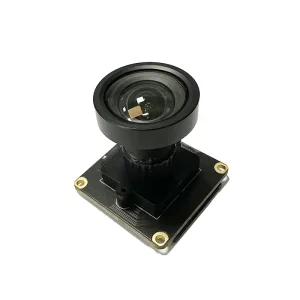
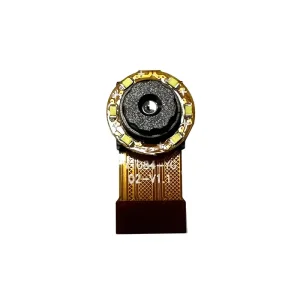
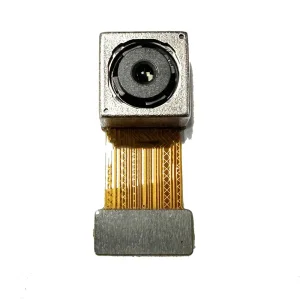
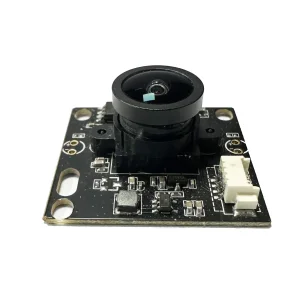
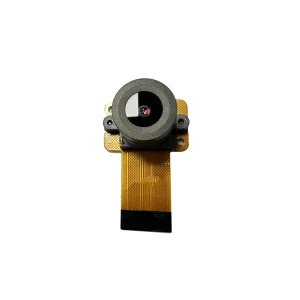
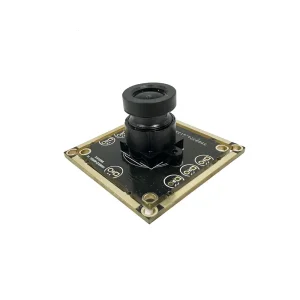
High-definition, low-distortion, and high-frame-rate vision modules specifically engineered for target lock, visual follow-me algorithms, and obstacle avoidance systems.
Analyzing the paradigm shift from GPS-tethered tracking to edge-AI visual target re-identification and low-distortion optical systems in commercial UAV manufacturing.
In the rapidly maturing unmanned aerial vehicle (UAV) sector, the keyword phrase "China Drones Following Me Products & Exporter" represents far more than consumer leisure gadgets. It signifies a profound technological shift towards embedded computer vision, high-speed optical tracking modules, and AI-driven autonomous navigation systems. Traditional "follow-me" drones relied almost exclusively on GPS signal tethering between the drone flight controller and a smartphone or beacon held by the subject. However, modern commercial, industrial, and high-end consumer UAV applications demand fully autonomous visual target lock, active obstacle avoidance, and real-time motion trajectory prediction.
As a leading Shenzhen-based camera module manufacturer established in 2015, Shen Zhen You Xiang Da Technology Co., Ltd. (YXD) stands at the forefront of this technological transformation. We specialize in engineering and manufacturing high-performance CMOS camera modules—spanning MIPI CSI-2, USB 2.0/3.0 UVC, DVP parallel, and Wi-Fi network interfaces—engineered specifically to interface with onboard AI Neural Processing Units (NPUs), SoC processors (such as Rockchip, Qualcomm, Ambarella, and Raspberry Pi platforms), and Visual SLAM (Simultaneous Localization and Mapping) flight controllers.
How hardware-level optical design, sensor selection, and interface optimization eliminate visual drag and tracking drift.
For high-speed tracking (such as following cyclists, motor sports, or high-velocity industrial assets), standard rolling shutter sensors introduce rolling shutter artifacts and spatial geometric skew. YXD integrates high-sensitivity Sony STARVIS and global shutter CMOS image sensors capable of capturing 60fps to 120fps at 1080P/4K resolution. This ensures pristine, unwarped frame inputs for neural network bounding box estimation.
Autonomous drone tracking requires an expanded peripheral Field of View (FOV) to maintain target lock during sudden angular maneuvers. Traditional ultra-wide lenses suffer from heavy fisheye distortion that skews distance estimation algorithms. Our proprietary low-distortion lens assemblies (Optical Distortion < 0.5%) preserve rectilinear geometry, allowing AI algorithms to calculate accurate depth maps without heavy GPU dewarping overhead.
Latency is the single greatest enemy of autonomous flight. YXD camera modules utilize multi-lane MIPI CSI-2 interfaces to transfer raw YUV or RAW10 image streams directly to the host SoC ISP with latency under 15 milliseconds. For modular desktop ground stations and secondary payload controls, our driverless USB 2.0/3.0 UVC modules offer zero-driver plug-and-play capability across Linux, ROS 2, Android, and Windows platforms.
Anticipating engineering milestones in drone computer vision, multi-spectral target lock, and decentralized swarm telemetry.
As an authoritative exporter and ODM/OEM manufacturing partner in China, YXD continually invests in R&D to stay ahead of global UAV technology trends. Below is our strategic technology roadmap driving the next generation of "Drones Following Me" camera modules:
Migration from centralized SoC processing to micro camera modules embedded with dedicated 0.5 to 2.0 TOPS NPUs. The camera module directly executes lightweight target detection algorithms (e.g., YOLO-NAS / MobileNet-SSD) directly on the lens board, sending pre-calculated bounding box vectors (X, Y, Z coordinates) directly to the flight controller over UART/CAN bus, freeing 80% of the main flight computer’s processing power.
Overcoming occlusion and night-time limitations through hardware-synchronized dual-sensor modules. Combining 4K visible light CMOS sensors with long-wave infrared (LWIR) or Short-Wave Infrared (SWIR) micro-bolometers. This enables flawless "follow-me" capability through dense forest foliage, fog, smoke, and total darkness for military, search and rescue, and commercial security operations.
Multi-agent tracking protocols where multiple autonomous drones equipped with YXD vision modules share target feature vectors across mesh Wi-Fi / 5G networks. If one drone loses line-of-sight due to an obstacle, secondary drones automatically assume tracking priority without target re-acquisition delay.
How global B2B buyers integrate YXD follow-me vision modules into specialized commercial applications.
High-speed motion requires continuous autofocus and rapid exposure compensation. Our 140° motion camera modules combine Starlight low-light sensitivity with HDR processing, allowing consumer sports drones to follow athletes across variable canopy shading and high-glare environments without loss of target contrast.
Autonomous tetherless inspection drones utilize YXD MIPI camera modules to automatically follow pipeline corridors, power lines, and railway lines. Precise optical flow and distortion-free optics provide sub-centimeter positioning accuracy near high-voltage structures.
Custom camera modules integrated with wide-angle night-vision capabilities allow farm management drones to automatically follow livestock herds, monitor grazing patterns, and track autonomous tractors during automated field plowing operations.
Building intercoms, visual doorbells, and perimeter patrolling drones demand 24/7 continuous operational stability. YXD’s miniature 9mm and 2K wide-angle modules provide dual-use versatility for both stationary access control panels and mobile escort UAV pods.
Inside YXD Technology’s state-of-the-art optical manufacturing facility: quality control, Active Alignment, and scale.
Selecting a reliable exporter from China requires absolute transparency regarding manufacturing standards, optical calibration equipment, and batch-to-batch consistency. Operating out of Shenzhen—the world's capital for hardware innovation and UAV supply chains—Shen Zhen You Xiang Da Technology Co., Ltd. operates cleanroom facilities engineered to Class 10,000 and Class 100 specifications.
Our manufacturing workflow incorporates Active Alignment (AA) technology during lens-to-sensor bonding. Unlike manual thread-screwing methods, automated Active Alignment powered by machine vision collimators adjusts the lens along 6 degrees of freedom (X, Y, Z, Pitch, Yaw, Roll) while the sensor is powered and capturing live resolution charts. This guarantees uniform center-to-corner modulation transfer function (MTF) sharpness across every single module shipped to global clients.
Every Surface Mount Technology (SMT) PCB line is equipped with inline 3D AOI and X-ray inspection systems to ensure zero solder bridge defects or missing components on high-density camera circuits.
All Follow-Me drone camera batches undergo strict thermal cycling tests ranging from -40°C to +85°C inside climate chambers, ensuring operational reliability under extreme high-altitude and desert flight environments.
Drone payloads experience intense high-frequency motor vibration. YXD lens barrels feature reinforced mechanical thread-locking compounds and custom aluminum lens holders engineered to withstand severe flight shock.
Full OEM/ODM customization options tailored to overseas engineering requirements and international regulatory standards.
To support enterprise purchasers across North America, Europe, East Asia, and the Middle East, YXD provides end-to-end custom design services (ODM/OEM). We bridge the gap between initial mechanical drawings and full-scale mass production through comprehensive engineering support:
Select the optimal camera interface and sensor configuration for your specific follow-me UAV architecture.
| Interface Type | Sensor Options | Max Frame Rate | Latency | Typical Cable Length | Ideal Drone Application |
|---|---|---|---|---|---|
| MIPI CSI-2 (2/4-Lane) | Sony STARVIS / OmniVision CMOS | 1080P @ 120fps / 4K @ 60fps | < 10 ms | 50mm – 300mm (FPC) | Primary visual SLAM, real-time target re-identification, edge AI follow-me |
| USB 2.0 / 3.0 UVC | Starlight Low-Light / High-Res CMOS | 1080P @ 60fps / 2K @ 30fps | 25 - 40 ms | 0.5m – 5m (Shielded Cable) | Ground station pods, secondary payload cameras, modular inspection pods |
| DVP Parallel | Compact 2MP / 4MP CMOS | 720P/1080P @ 30fps | < 20 ms | < 100mm | Cost-sensitive micro-drones, simple obstacle detection sensors |
| Wi-Fi / IP Network | 2K / 4K Smart Monitoring CMOS | 1080P @ 30fps H.265 | 120 - 200 ms | Wireless Link | Long-range streaming, remote agricultural monitoring, tetherless security |
Direct answers from YXD senior optical engineers regarding tracking latency, sample procurement, and visual algorithms.
High-reliability optical components engineered in Shenzhen, trusted by global device makers and Fortune 500 innovators.