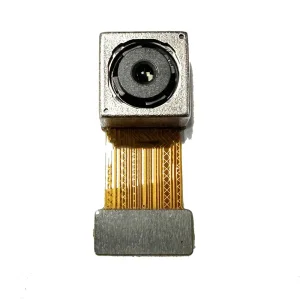
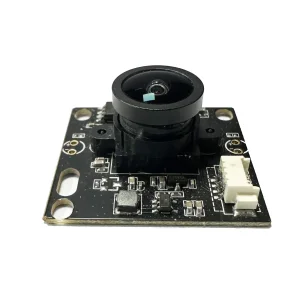
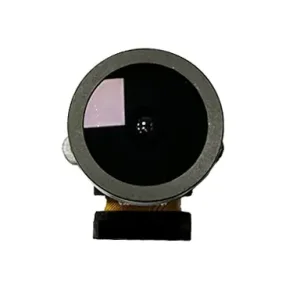
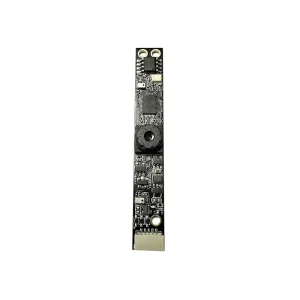
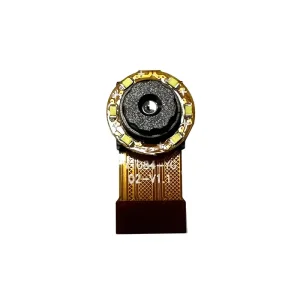
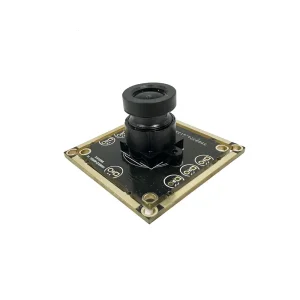
High-reliability optical camera modules engineered for driving recorders, fleet management telematics, and wide-angle intelligent monitoring.
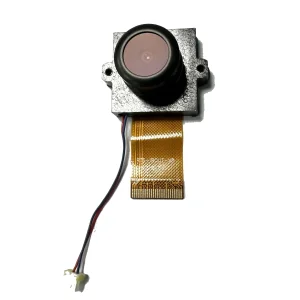
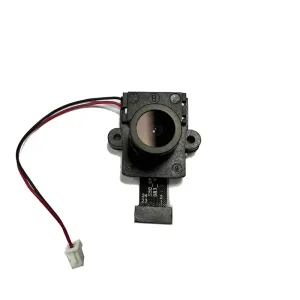
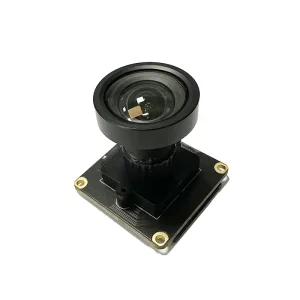
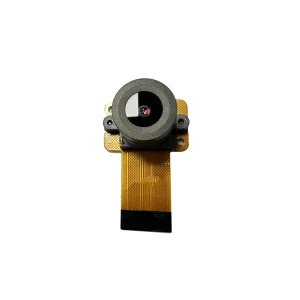
China's automotive dashcam and driving recorder industry has transitioned from low-cost aftermarket accessories into a global hub for high-precision, AI-integrated automotive vision architecture.
With the surge of New Energy Vehicles (NEVs) in China, OEM car camcorders are no longer standalone windshield attachments. They are natively integrated into CAN-bus architectures, serving multi-channel streaming, Sentry Mode recording, and direct input for Level 2+ ADAS algorithms.
The benchmark standard has rapidly shifted from traditional 1080P Full HD to 2K (1440P) and 4K Ultra HD powered by advanced CMOS sensors (such as Sony STARVIS 2 and Omnivision HDR series). Wide dynamic range (WDR) exceeding 120dB guarantees crisp license plate capture even under direct headlight glare.
Concentrated primarily in Shenzhen, Dongguan, and Huizhou, the China automotive vision supply chain offers unmatchable speed-to-market. Sourcing managers benefit from immediate access to optical lens foundries, Chip-on-Board (COB) packaging facilities, and automated SMT production lines under one roof.
As artificial intelligence merges with vehicle hardware, the next five years will redefine what a car camcorder accomplishes. Here is the technical trajectory established by premier Chinese optical manufacturers.
The global car camcorder (dashcam) market is experiencing a profound paradigm shift. Simple loop-recording video hardware is rapidly morphing into an intelligent edge-computing node within the Connected Autonomous Vehicle (CAV) ecosystem. Engineers and purchasing managers evaluating Chinese suppliers must align their product specifications with five foundational engineering developments:
Micro-NPUs (Neural Processing Units) operating at 1.0 to 4.0 TOPS are becoming embedded directly onto the camera module PCB or primary System-on-Chip (SoC). This empowers car camcorders to perform real-time Advanced Driver Assistance Systems (ADAS) calculations, such as Forward Collision Warning (FCW), Lane Departure Warning (LDW), and Pedestrian Detection (PD), without relying on external cloud processing.
In-cabin camcorders are shifting toward dual-band 940nm Infrared (IR) illumination combined with distortion-free lenses. This enables simultaneous Driver Monitoring Systems (DMS) to detect drowsiness or distraction and Occupant Monitoring Systems (OMS) to ensure child safety, operating flawlessly in complete darkness without producing visible glare.
Overcoming the challenge of high-contrast lighting—such as exiting a dark tunnel into bright sunlight—requires Staggered High Dynamic Range (DOL-HDR) technology. Next-generation car camcorders leverage custom Image Signal Processors (ISP) capable of capturing 3 exposures per frame simultaneously, achieving >130dB dynamic range with zero LED flicker artifacts (LFM) from modern traffic lights.
As multi-camera dashcam systems expand (front, rear, interior, side-view), traditional USB or Wi-Fi bandwidth bottlenecks become restrictive. Automotive-grade gigabit serial links (GMSL2 and FPD-Link III) over coaxial cables are becoming standardized, enabling uncompressed 4K video streams with sub-millisecond latency directly to central domain controllers.
Behind China’s global dominance in car camcorder manufacturing lies automated optical assembly, stringent cleanroom protocols, and end-to-end supply chain integration.
Traditional manual lens screwing introduces tilt and defocusing across wide-angle automotive lenses. Advanced Chinese factories utilize 6-axis automated Active Alignment (AA) equipment. By powering on the CMOS sensor during assembly and analyzing Modulation Transfer Function (MTF) values in real time, AA machinery aligns the optical lens to the sensor surface with sub-micron precision, ensuring edge-to-edge sharpness across the entire field of view (FOV).
Automotive optical modules tolerate zero dust contamination on the sensor glass or optical elements. Leading Shenzhen optical manufacturers conduct COB (Chip-on-Board) die bonding and lens mounting inside certified ISO 5 / Class 100 cleanroom environments. Automated optical inspection (AOI) inspects 100% of production runs for particle anomalies, solder joints, and wire bonding integrity.
From commercial truck fleets to personal rideshare vehicles, custom automotive camera solutions are configured to distinct operational challenges.
Multi-channel Mobile DVR systems combining exterior road-facing 4K recording with interior driver monitoring. Integrated RS232/RS485 and Ethernet interfaces stream telemetry, GPS, and G-sensor data directly to fleet management servers via 4G/5G LTE modules.
Dual-lens single-body camcorders equipped with IR night vision for cabin safety and high-dynamic range front recording. Audio mute buttons, emergency SOS triggers, and encrypted local storage protect both passenger privacy and driver security.
Full-display streaming rearview mirrors utilizing ultra-low latency rear camera modules. Replacing traditional optical mirrors with high-brightness IPS displays eliminates cabin blind spots, rear pillar obstructions, and weather glare during night driving.
Deploying car camcorders globally requires adhering to strict international automotive standards, electromagnetic compatibility, and regional data privacy laws.
Enterprise buyers sourcing from China must ensure their suppliers deliver complete compliance documentation. Premier optical manufacturers support global brands with certified testing protocols designed for North America, the European Union, and Asia-Pacific markets:
Car camcorders operate in harsh environments, exposed to windshield heat reaching >85°C and sub-zero winter cold down to -40°C. OEM modules undergo rigorous qualification based on AEC-Q100 component standards, high-humidity bias testing (HAST), thermal shock cycling (-40°C to +105°C), and 3-axis vibration resistance testing.
Vehicle electronics must not interfere with wireless key fobs, GPS navigation, or DAB radio reception. Full-system camcorders and embedded modules pass strict electromagnetic compatibility (EMC) standards including CISPR 25 Class 5, CE, FCC Part 15 Class B, and E-mark (E13/E8) automotive homologation.
A structured technical evaluation framework for B2B buyers, OEM product managers, and supply chain executives shortlisting Chinese camera module suppliers.
When issuing a Request for Quotation (RFQ) for car camcorders or custom camera modules, evaluating suppliers solely on unit price often leads to costly field failures. Procurement teams should mandate the following technical criteria during supplier audits:
In-vehicle dashcams must maintain thermal focus stability. Pure plastic lens solutions (4P/5P) deform under intense dashboard thermal build-up, causing severe image defocusing. Qualified suppliers recommend All-Glass (6G/7G) or Glass-Plastic Hybrid (2G4P / 1G5P) optical elements featuring low thermal expansion coefficients and hydrophobic AR coatings.
Evaluate image sensor options based on pixel pitch and low-light sensitivity performance metrics (such as Sony SNR1s rating). For automotive recording, select sensors providing native Staggered HDR, high sensitivity in the 850nm/940nm spectrum, and minimum 120dB dynamic range to handle night scenes effectively.
Ensure the manufacturer has in-house PCB/FPC design capabilities to tailor Flexible Printed Circuit routing, connector types (B-to-B, FPC latch, Fakra, Rosenberger), and communication protocols (MIPI CSI-2, USB 2.0/3.0 UVC, DVP, AHD, GMSL) to fit your mechanical enclosure without signal integrity loss.
Expert technical responses to standard engineering and procurement inquiries regarding car camcorder manufacturing in China.
Select from our benchmarked product line of industrial-grade, miniature, high-definition, and wide-angle optical camera modules.