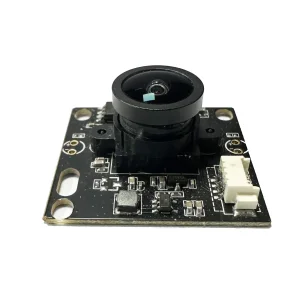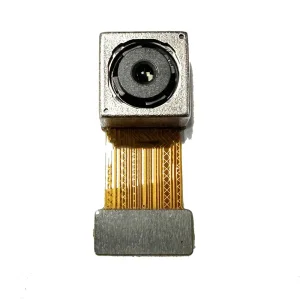
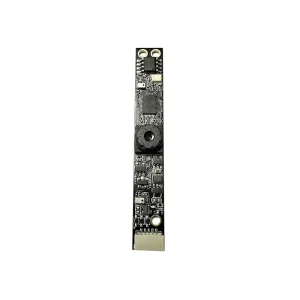
Field-proven optical camera modules designed for outdoor surveillance, intelligent automotive recording, access control, and machine vision systems.
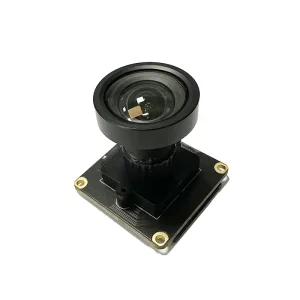
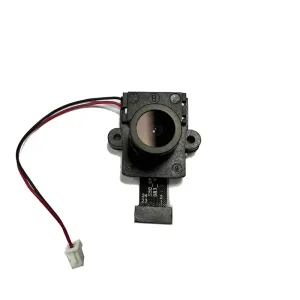
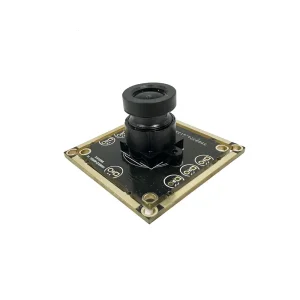
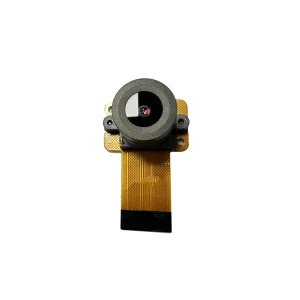
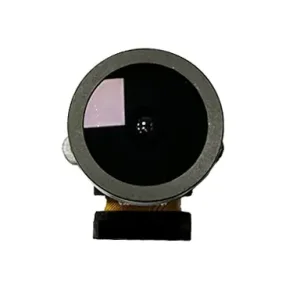
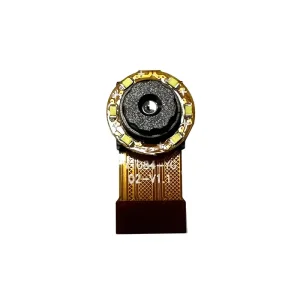
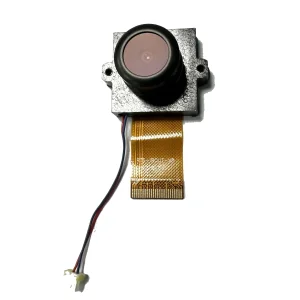
A strategic analysis of edge-AI acceleration, optical evolution, and resilience imperatives governing global infrastructure safety.
The global market for outdoor security cameras and optoelectronic monitoring systems has expanded far beyond conventional video surveillance. Today, security cameras operate as intelligent sensory edge nodes within enterprise physical security, smart municipal infrastructure, automated border control, transportation analytics, and industrial environmental monitoring. Driven by escalating corporate safety mandates, asset loss prevention protocols, and the integration of neural processing units (NPUs) directly into imaging sensor boards, the commercial outdoor camera ecosystem is experiencing an unprecedented structural transformation.
Unlike indoor surveillance, outdoor vision products are subjected to unrelenting physical and atmospheric stressors: solar ultraviolet degradation, condensation cycles, sub-zero winters, monsoonal moisture ingress, electrostatic strikes, and abrasive particulate contamination. Consequently, modern outdoor camera procurement is no longer evaluated merely on raw pixel count, but on integrated optoelectronic reliability—specifically the balance between sensor quantum efficiency, optical low-pass filtration, ISP dynamic range (WDR), and mechanical hermetic sealing.
Shift from passive recording to active heuristic threat detection. Deep-learning algorithms run directly on the camera's image signal processor (ISP), categorizing vehicles, human silhouettes, and spatial anomalies with ultra-low false alarm rates.
Combining high-quantum-efficiency Sony and OmniVision CMOS sensors with large-aperture F1.0–F1.4 lenses ensures true color reproduction down to 0.001 Lux, drastically reducing reliance on noisy, high-power infrared illuminators.
Demands for IK10 mechanical impact survivability, IP67/IP68 ingress protection against fluid submersion, and sustained thermal operation from -40°C to +85°C across all internal electronic components.
Exploring the Pearl River Delta optoelectronic industrial cluster, cleanroom assembly standards, and agile OEM/ODM lifecycle methodologies.
Shenzhen and the broader Guangdong optoelectronics cluster serve as the nucleus of the global surveillance manufacturing apparatus. Operating at the intersection of precision optical glass tooling, high-density SMT manufacturing, CMOS wafer packaging, and firmware engineering, Chinese manufacturers like Shen Zhen You Xiang Da Technology Co., Ltd. (YXD) provide global procurement officers with unmatched supply-chain elasticity and engineering responsiveness.
Established in 2015, YXD embodies the structural benefits of this ecosystem. Rather than relying on fragmented third-party subcontractors, contemporary Chinese manufacturing hubs consolidate cleanroom lens barrel assembly, SMT pick-and-place lines, automated active alignment (AA) collimators, and high-temperature environmental burn-in testing chambers within centralized, audit-ready facilities. This consolidation slashes prototype turnaround cycles from months to days, allowing B2B buyers to iterate custom PCB outlines, FPC ribbon geometries, and ISP color-tuning matrices with exceptional speed.
Six-axis automated optical alignment aligns the lens assembly to the micron level relative to the CMOS sensor plane. This eliminates optical defocus, uneven corner blur, and planar tilt across wide-angle lenses.
Sensors, optical glass blanks, injection-molded chassis, passive passives, and discrete heatsinks are sourced within a 50km radius. This mitigates global component shortages and lowers total landed unit costs.
Tier-1 manufacturing plants enforce strict ISO 9001, RoHS, and CE protocols. 100% burn-in aging tests, optical modulation transfer function (MTF) testing, and thermal soak validation are applied across all batches.
A technical guide to matching optical apertures, sensor surface area, dynamic range, and digital interface protocols.
| Interface Standard | Bandwidth Limit | Max Transmission Distance | Host Architecture | Ideal Outdoor Security Application |
|---|---|---|---|---|
| MIPI CSI-2 (4-Lane D-PHY) | Up to 10.0 Gbps (2.5 Gbps/lane) | < 20 cm (FPC Ribbon) | Embedded NPU / SoC (Rockchip, Jetson, Raspberry Pi) | Compact edge-AI smart cameras, UAV perimeter drones, smart access panels. |
| USB 2.0 / 3.0 UVC | 480 Mbps / 5.0 Gbps | 3m to 5m (Passive Copper) | Industrial IPC, Windows / Linux x86 Box PC | Outdoor automated kiosks, perimeter tolling booths, mobile law enforcement rigs. |
| DVP Parallel | Sub-100 Mbps | < 10 cm (Board-to-Board) | Low-power RTOS Microcontrollers (STM32, ESP32) | Battery/solar IoT sensors, remote wildlife trackers, ultra-low-power tripwires. |
| Wi-Fi 6 / IP RTSP | Over-the-Air Wireless | Up to 150m (Line of Sight) | Cloud VMS, Network Video Recorder (NVR), Mobile App | Remote residential yards, construction site observation, solar farm perimeters. |
Outdoor wide-angle cameras (120°–140° FOV) frequently generate barrel distortion. YXD utilizes precision multi-element aspherical glass (6G/7G) optical designs to maintain edge-to-edge MTF sharpness while suppressing distortion below 1.5% for accurate license plate reading and face recognition.
Outdoor scenes present severe contrast challenges: blinding direct solar illumination juxtaposed with deep building shadows. Advanced BSI sensors incorporate DCG and Staggered HDR (>120dB) to avoid blown-out highlights and clipping in high-contrast zones.
Day/night performance relies on an electro-mechanical switch (ICR). During bright daylight, an infrared cut-off filter blocks near-IR wavelengths to preserve human skin tones and foliage color balance; at night, the filter retracts to let IR light flood the sensor.
Analyzing physical deployment constraints, optical adaptations, and hardware configurations across diverse mission profiles.
Deployments on utility poles, substation perimeters, and municipal highways require robust 2K to 4K resolutions with integrated H.265 compression, long-range IR arrays (up to 80m), and optical surge suppression against direct lightning-induced transients.
In-vehicle dash cameras, delivery fleet side-view vision systems, and public transit recorders experience persistent mechanical shock and vibrational harmonics. Ruggedized 1080P/2K modules with locked-thread M12 lenses provide continuous evidence collection.
Building entrances require wide vertical FOV optics (>140°) to capture visitors at point-blank range, combined with fast-boot RTOS processors and hardware acoustic echo cancellation (AEC) for seamless dual-way audio communication.
Oil pipelines, forestry reserves, and agricultural telemetry rely on ultra-low-power standby modes (<15mW). Modules wake within 150ms upon PIR or micro-radar detection, capture high-resolution imagery, and transmit over LTE/5G cellular channels.
Autonomous security ground rovers and perimeter inspection quadcopters require global-shutter or high-frame-rate (60–120 fps) MIPI camera modules to eliminate rolling-shutter jelly distortions during continuous high-speed movement.
Smelting plants, chemical tanks, and electrical substations deploy dual-spectrum cameras combining high-resolution visual spectrum lenses with uncooled VOx microbolometers, providing thermal heat-signature alerts alongside optical surveillance.
The next decade of security imaging: Neural image processing, multi-spectral sensor fusion, and zero-trust hardware attestation.
Replacing standard heuristic image pipelines with deep learning convolutional models trained directly on raw Bayer sensor data. Delivers true-to-life full-color video under extreme 0.0001 Lux darkness without motion smear or chromatic speckling.
Merging long-wave infrared (LWIR) thermal data with high-definition visible light video at the hardware register level. Outlines human bodies through dense fog, foliage, and zero-light conditions, while retaining facial and clothing color identifiers.
Hardware Secure Elements (SE) integrated into camera PCB designs. Every video frame is signed with an immutable cryptographic watermark to prevent deepfake injection, man-in-the-middle stream manipulation, and forensic evidence tampering.
A structured auditing framework for technical sourcing managers, optical engineers, and global B2B procurement professionals.
Procuring outdoor security cameras or integrated camera modules at commercial scale requires an exhaustive qualification protocol. Discrepancies between sample bench tests and mass production field reliability often arise from unmonitored thermal expansion coefficients (CTE mismatches between plastic lens holders and glass optics), inadequate soldering flux removal in humid operating conditions, and poorly configured auto-exposure algorithms under rapid illumination transients.
Detailed technical answers addressing core design challenges, customization variables, and manufacturing protocols.
Explore our comprehensive portfolio of miniature, low-distortion, access intercom, and high-dynamic-range camera modules.