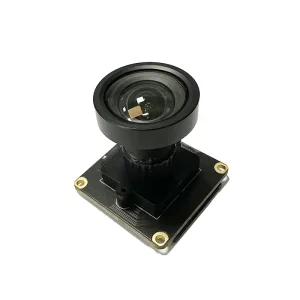
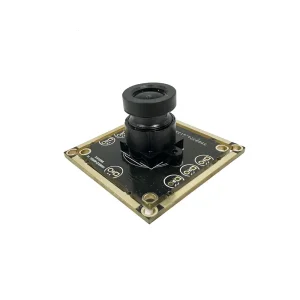
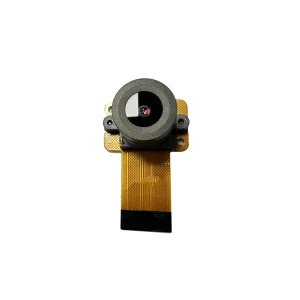
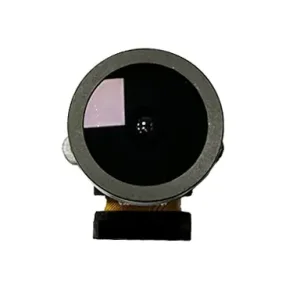
A definitive engineering white paper and OEM/ODM sourcing framework for integrating high-definition vision systems, low-distortion optical modules, and edge AI imaging into modern computer monitors, industrial HMIs, and interactive displays.
Production-validated CMOS imaging solutions engineered specifically for ultra-thin monitor bezels, interactive whiteboards, biometric authentication consoles, and teleconferencing systems.
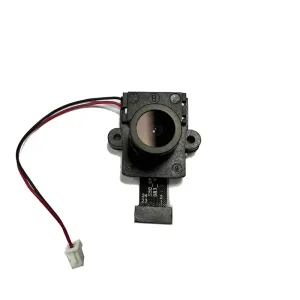
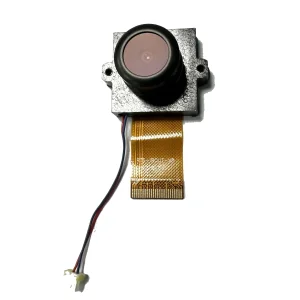
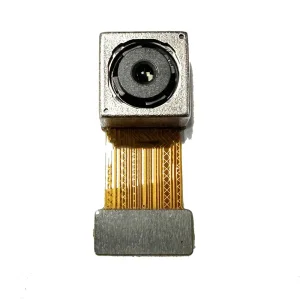
In modern B2B procurement, the desktop monitor is no longer a passive pixel output panel. Driven by enterprise hybrid collaboration, edge computing, AI-driven workplace analytics, and telehealth diagnostics, global display manufacturers increasingly integrate embedded optical vision modules directly into monitor bezels, All-in-One (AIO) computers, and commercial flat panels.
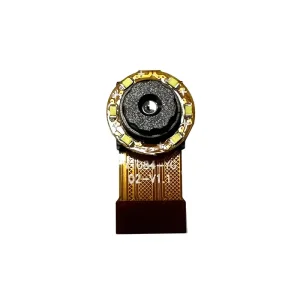
Modern monitor industrial design demands screen-to-body ratios exceeding 92%. Our miniature form-factor modules—down to 9mm total diameter and slim 3.2mm FPC widths—embed seamlessly into top display frames without compromising panel structural rigidity or visual aesthetics.
Standard wide-angle webcams exhibit barrel distortion exceeding 15%, causing unnatural facial warping during video calls and misaligned geometry in document OCR scanning. Our custom multielement glass lenses deliver genuine distortion-free rendering below 0.8% TV distortion.
Device makers demand zero-driver integration across enterprise operating systems. Our integrated ISP modules utilize compliant USB Video Class (UVC 1.1 / 1.5) and USB Audio Class (UAC) firmware, guaranteeing immediate interoperability across Windows, Linux, macOS, ChromeOS, and Android.
Shenzhen represents the world’s most concentrated precision electro-optical manufacturing cluster. Headquartered in Shenzhen since 2015, Shen Zhen You Xiang Da Technology Co., Ltd. (YXD) leverages this geographical density to deliver unmatched prototyping velocity, scale elasticity, and component cost efficiency.
Modern high-pixel CMOS sensors (4MP, 8MP 4K, and beyond) cannot achieve edge sharpness through traditional manual lens threading. Our factory deploys automated 6-axis Active Alignment (AA) production stations that align lens optics to the sensor die in real-time under powered video capture.
Every commercial display camera batch undergoes strict reliability screening in accordance with Fortune 500 supplier specifications. We eliminate early component mortality before shipment through continuous thermal cycling and accelerated aging.
High-speed surface mount technology and COB sensor bonding in Class 1,000 cleanrooms.
Automated optical centering, tilt compensation, and UV lock-in for uniform sharpness.
Custom tuning of AWB, gamma, CCM color correction, and dynamic range in light chambers.
High-temperature full load operation verifying MTBF stability and heat dissipation integrity.
Automated optical inspection (AOI) followed by vacuum antistatic hermetic sealing.
Choosing the correct interface architecture dictates the host compute requirements, bus latency, transmission distance within the monitor chassis, and total system bill-of-materials (BOM).
| Interface Standard | Host Bus Requirement | Max Resolution / FPS | Ideal Display Category | Key Engineering Advantage | Chassis Integration Consideration |
|---|---|---|---|---|---|
| USB 2.0 / 3.0 UVC | Universal USB Host / Hub IC | 1080P @ 60fps / 4K @ 30fps | Consumer Monitors, Telehealth AIOs | Zero external driver development; cross-OS instant video capture | Limited cable distance (<3m) unless active redrivers are incorporated |
| MIPI CSI-2 (2/4-Lane) | Embedded SoC / ARM / FPGA / RPi | 8MP 4K @ 60fps RAW | Smart Interactive Displays, Edge AI Panels | Direct sensor-to-ISP link; minimal latency; ultra-low power consumption | Requires custom FPC impedance control (100Ω diff) and short cable run |
| DVP (Parallel) | Low-Cost MCU / DSP / RISC-V | 1080P @ 15-30fps | Smart Metering Monitors, Access Panels | Extremely cost-effective BOM; straightforward clock synchronization | Higher pin count on connector; prone to electromagnetic interference (EMI) |
| Wi-Fi / Ethernet IP | Embedded Linux / RTOS Module | 2K / 4K Stream via RTSP | Remote Video Monitors, Security Consoles | Decoupled wireless transmission; multi-client RTSP/ONVIF direct streaming | Requires onboard video compression encoder and dedicated RF shielding |
From medical observation screens to industrial machine human-machine interfaces, camera-equipped displays solve mission-critical operational challenges across modern enterprise verticals.
Medical all-in-one workstations and diagnostic monitors require exact color reproduction (high CRI, faithful skin tone rendering), starlight-grade low-noise sensor performance, and precision autofocus for close-up dermatological and wound examinations.
Large-format education and boardroom interactive flat panel displays (IFPD) require ultra-wide panoramic optical angles (120° to 140°) with integrated ePTZ (electronic pan-tilt-zoom) capability and auto-framing powered by AI edge processors.
Harsh operating environments require wide-temperature camera modules (-20°C to +70°C) capable of barcode reading, facial credential verification, and gesture recognition beneath thick vandal-proof tempered glass front panels.
Overseas procurement directors and hardware engineering leads require complete transparency across regulatory approvals, intellectual property protection, supply chain longevity, and international product liability.
Every camera module built by YXD conforms to stringent global trade and environmental standards, simplifying final display product certification across North American, European, and Asian markets.
With mounting privacy regulations such as GDPR and California CCPA, corporate clients require hardware-level security guarantees within display-integrated optical cameras.
Industrial and commercial computer monitors have operational production lifecycles ranging from 5 to 7 years. We avoid consumer-grade component churn by committing to long-term sensor supply roadmaps.
The next generation of monitor-integrated camera solutions will fuse classic 2D optical capture with low-latency spatial depth estimation, embedded neural processing units (NPUs), and intelligent power conservation.
Integrating structured light or indirect Time-of-Flight (iToF) sensors alongside standard RGB color pipelines enables secure Windows Hello biometric facial recognition. Computer monitors automatically wake as users approach and securely lock display panels when users depart, drastically lowering office display energy consumption.
Offloading video computational workloads from the monitor’s host PC to dedicated ultra-low-power edge ISPs directly on the camera board. Advanced features such as AI background replacement, gaze correction, noise reduction, and automatic speaker framing execute autonomously with zero CPU overhead.
In-depth technical answers addressing the critical mechanical, electrical, and optical challenges encountered during monitor-embedded camera integration.
For standard customized PCB/FPC layouts and optical lens pairing, engineering verification samples (EVT) are typically dispatched within 12 to 18 business days. Upon customer design freeze and pilot run (PVT) sign-off, volume mass production ramps to 50,000+ units within 3 to 4 weeks, underpinned by our established component inventory in Shenzhen.
Modern monitors pack high-voltage backlight power supply boards, TCON scalar controllers, and wireless antennas close together. We implement conductive copper-nickel shielding tape around the sensor FPC, place bead filters across high-speed differential pairs, and tune slew rates on sensor clock lines to ensure effortless compliance with FCC Part 15 and CE standards.
Yes. We specialize in custom low-distortion optical lens sets featuring optical TV distortion below 0.5%. By carefully matching the Chief Ray Angle (CRA) of our multi-element glass lenses to the micro-lens array on the CMOS image sensor, we eliminate peripheral color shading and preserve high Modulation Transfer Function (MTF) sharpness up to the image corners.
Yes. Our MIPI CSI-2 camera modules can be directly adapted for Raspberry Pi 4 (15-pin FPC) and Raspberry Pi 5 / Zero (22-pin FPC), as well as NVIDIA Jetson, NXP i.MX, and Rockchip platforms. We provide pre-compiled Linux kernel drivers, Device Tree Overlays (DTO), and V4L2-compatible configuration scripts to accelerate your software integration timeline.
Explore our core volume-production modules, pre-certified and battle-tested across thousands of global client installations.
Collaborate directly with our Shenzhen optical engineering department to customize sensor tuning, lens FOV, board outlines, and UVC/MIPI firmware for your upcoming monitor or commercial display project.