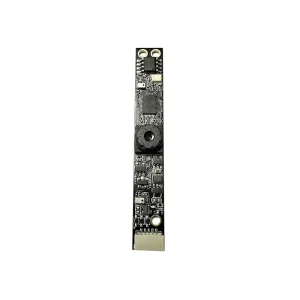
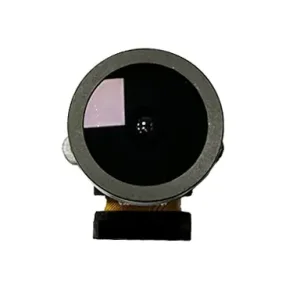
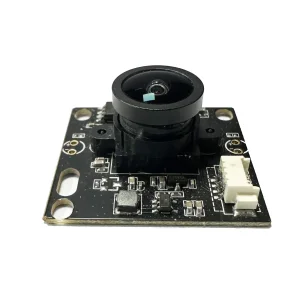
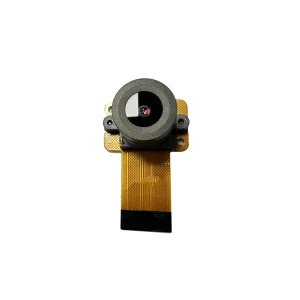
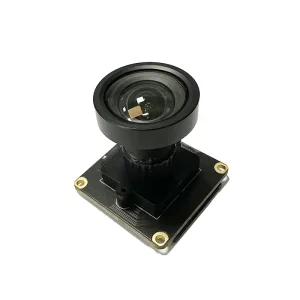
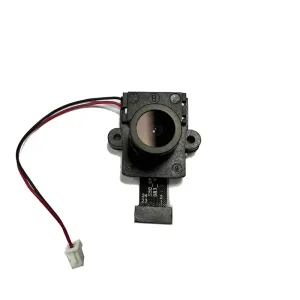
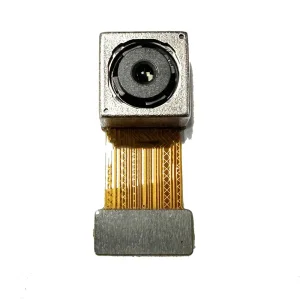
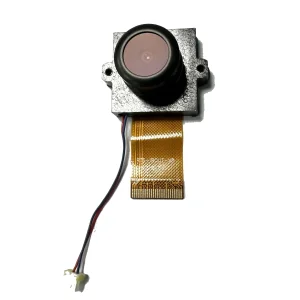
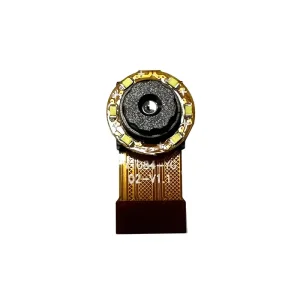
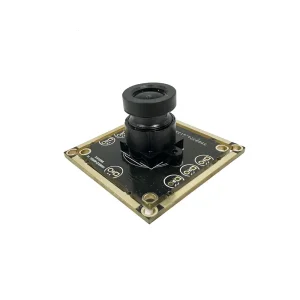
Direct from our Shenzhen ISO-certified manufacturing facility. High-resolution, low-distortion camera modules featuring integrated custom aspherical optics.
An in-depth technical examination of how Precision Glass Molding (PGM) and Single Point Diamond Turning (SPDT) eliminate monochromatic aberrations in modern optical assemblies.
Traditional spherical lenses suffer from inherent spherical aberration where peripheral light rays focus closer to the lens than axial rays. An optimized aspheric surface profile modifies the curvature ($Z(r)$) dynamically across the clear aperture, forcing all incoming parallel rays into a single diffraction-limited focal point.
A single aspheric lens element can replace multi-element spherical stacks (often 3 to 4 conventional elements). This dramatically reduces total optical path length (TTL), barrel weight, and mechanical complexity—vital for micro camera modules used in drone payloads, automotive ADAS, and smart devices.
By controlling wavefront aberration to $\le \lambda/20$ RMS, aspheric optics significantly enhance MTF values across spatial frequencies exceeding 150 lp/mm. This delivers ultra-sharp image resolution across the entire sensor frame from center to corner with minimal distortion.
Combining ultra-precision manufacturing infrastructure in Shenzhen with complete raw material integration and rapid prototyping capabilities.
Operating in the heart of China’s high-tech manufacturing sector, our facility integrates optical design, diamond tooling fabrication, Molded Glass Aspheric (MGA) pressing, optical plastic injection, thin-film anti-reflective (AR) coating, and automated camera module SMT lines under a single quality control system.
Chinese optical manufacturing offers significant capital efficiency without compromising optical quality. Utilizing high-speed multi-cavity glass molding equipment and automated pick-and-place assembly, tooling lead times are reduced from months to 2-3 weeks, allowing global OEMs to compress product design cycles.
Standard parameters and customizable manufacturing thresholds for global procurement teams and optical engineers.
| Optical Specification | Commercial Grade | Precision Grade (Standard) | High-Precision / Custom Grade |
|---|---|---|---|
| Glass Materials | N-BK7, B270, Crown Glass | H-K9L, Fused Silica, Ohara Glass | Chalcogenide, High-Index Lanthanum Glass |
| Plastic Optics | PMMA, Polycarbonate | COP (Zeonex), OKP, APEL | Hybrid Glass-Plastic (G+P) Stacks |
| Surface Figure Accuracy (PV) | ≤ 1.5 μm | ≤ 0.5 μm | ≤ 0.15 μm (λ/4 @ 632.8nm) |
| Surface Quality (Scratch-Dig) | 60-40 | 40-20 | 10-5 / 20-10 Precision Laser Grade |
| Center Thickness Tolerance | ± 0.05 mm | ± 0.02 mm | ± 0.005 mm |
| Centering / Wedge Angle | < 3 arcmin | < 1 arcmin | < 30 arcsec |
| Coating Options | Single-Layer AR (R < 1.5%) | Broadband AR (BBAR R < 0.5%) | DLC (Diamond-Like), Hydrophobic, IR-Cut Filter |
Custom aspheric lens designs engineered for mission-critical applications across commercial, automotive, industrial, and consumer electronics sectors.
Thermally stable glass aspheric lenses designed for high-temperature automotive environments (-40°C to +105°C). Critical for forward-facing ADAS, Surround View Systems (SVS), Driver Monitoring Systems (DMS), and LiDAR beam steering.
Zero-distortion and telecentric aspheric lens systems for fast optical character recognition (OCR), automated PCB optical inspection (AOI), high-speed logistics QR readers, and robotic vision pick-and-place automation.
Wide-angle aspheric lens camera modules optimized for visual doorbells, access control terminals, and smart home IP security cameras requiring high NIR (Near-Infrared) performance for 850nm/940nm night vision.
Micro-aspheric optical assemblies designed for ultra-small medical devices, disposable endoscopes, dental scanners, and micro-fluidic diagnostic analysis tools requiring biocompatible materials and extreme precision.
Ultra-lightweight plastic aspheric lenses and pancake optical stacks delivering wide Field of View (FOV) with minimal chromatic aberration and low distortion for next-generation smart glasses and mixed-reality devices.
Ultra-thin, low-profile fixed focus and autofocus UVC USB camera modules integrated into thin-bezel laptop displays, all-in-one PCs, and document scanners for high-clarity video conferencing.
How emerging fabrication processes, hybrid material architectures, and AI co-design are defining the future of photonics.
To strike the ideal balance between optical performance, thermal stability, and cost, leading manufacturers are adopting G+P configuration. Molded glass aspheric front elements protect against environmental degradation, while precision molded plastic aspheric inner elements correct chromatic aberrations.
Wafer-scale manufacturing of glass and polymer aspheric arrays allows simultaneous production of thousands of micro-lenses on a single substrate. Paired with flat metasurface optics, this trend enables microscopic Z-height profiles for compact camera modules.
Integrating computational optics with deep learning ISP (Image Signal Processor) algorithms. By optimizing aspheric surface profiles in Zemax parallel with neural network post-processing, optical systems achieve unprecedented image dynamic range and clarity under low light.
Providing international buyers with seamless logistics, certified quality frameworks, and dedicated engineering consultation.
Our Shenzhen manufacturing facility operates strictly under ISO 9001:2015 Quality Management and ISO 14001 Environmental Management Systems. Automotive-grade camera lens assemblies adhere to IATF 16949 standards. All optical products are fully compliant with EU RoHS, REACH directives, and carry CE/FCC certifications.
Every production batch undergoes rigorous quality validation using state-of-the-art optical metrology tools: Zygo GPI 3D Optical Laser Interferometers for surface figure verification, Trioptics ImageMaster MTF Bench units, Panasonic UA3P Ultra-Precision 3D Profilometers, and automated environment burn-in aging chambers.
Expert answers to common engineering, customization, and procurement questions regarding China optical manufacturing.
High-performance imaging solutions customized for your exact platform and enclosure specs.