Direct factory supply for industrial, commercial, and embedded IoT surveillance solutions
Engineering insights into industrial security, off-grid vision architecture, and market evolution
The global demand for high-performance outdoor wireless camera systems has experienced a monumental paradigm shift over the past five years. Driven by rapid advancements in IoT edge computing, ultra-low-power CMOS image sensors, long-range wireless protocols (Wi-Fi 6, 4G LTE-M, 5G NR), and solar power management, modern outdoor surveillance is no longer bound by grid power or wired ethernet cabling.
Across industrial complexes, critical municipal infrastructure, agricultural monitor zones, and high-density commercial assets, enterprise buyers now mandate camera systems capable of autonomous, continuous operation under extreme environmental conditions. When sourcing directly from an established factory and OEM manufacturer, procurement teams must evaluate optical tuning, thermal endurance, ingress protection (IP67/IP68), dynamic range capabilities, and signal integrity across wide temperature bands.
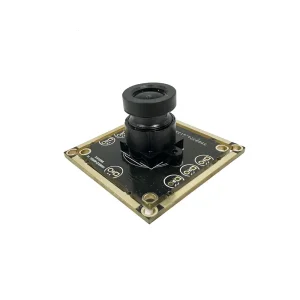
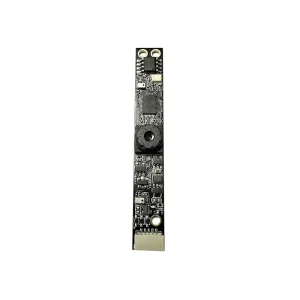
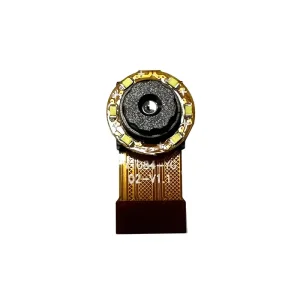
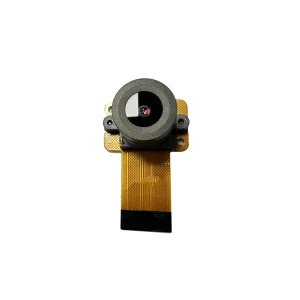
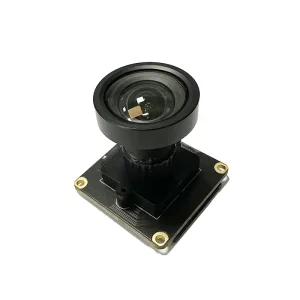
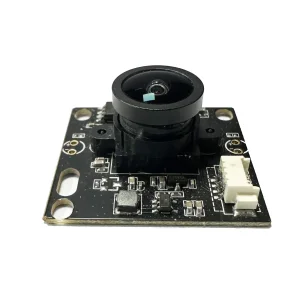
As a premier Shenzhen-based optics engineering factory, Shen Zhen You Xiang Da Technology Co., Ltd. (YXD) stands at the forefront of this industrial technological evolution. By integrating high-grade low-distortion lenses, specialized SMT cleanroom assembly, and multi-interface capability (MIPI CSI-2, USB UVC, DVP, and Wi-Fi SoC integration), YXD provides global enterprise buyers with turnkey and custom optical camera modules engineered to surpass rigorous international standards.
Why leading global brands partner with Shenzhen optical manufacturers for custom B2B sourcing
Situated in the heart of Shenzhen’s electronic design ecosystem, YXD leverages direct partnerships with top sensor foundries (Sony, OmniVision, SmartSens, Aptina) and raw glass optics mills, cutting lead times by up to 60% compared to Western counterparts.
Outdoor wireless vision demands zero focus shift across harsh temperature ranges. Our computerized 6-axis Active Alignment machinery adjusts the lens relative to the CMOS sensor center in real-time, delivering sub-micron tilt and center precision.
Every camera batch undergoes stringent 100% burn-in testing, thermal cycling (-40°C to +85°C), high-humidity degradation testing, and salt-spray corrosion validation to guarantee zero field failures in extreme outdoor applications.
Architectural innovations in low-power optics, starlight image processing, and edge AI
Off-grid outdoor security depends heavily on ultra-fast wakeup times. Modern wireless outdoor camera modules integrate dual-PIR and millimeter-wave radar triggers that signal the main ISP to boot up from microamp sleep states in under 200 milliseconds, allowing multi-year operation on compact solar panel systems.
Traditional IR illumination often results in overexposed monochrome visuals or high power consumption. Modern outdoor camera modules combine large-aperture optics (F1.0 to F1.2) with back-illuminated pixel technology, capturing vivid full-color high-definition video even under ambient moonlight conditions without draining battery power.
To reduce cellular bandwidth costs and cloud processing overhead, wireless camera systems perform real-time human detection, vehicle classification, and license plate recognition directly on the module's edge processor, streaming video only when actionable events occur.
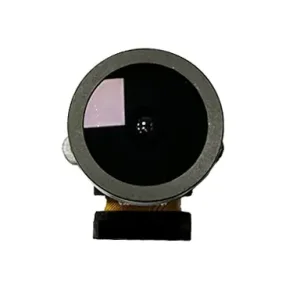
Wide-angle outdoor coverage frequently suffers from optical barrel distortion. Advanced optical lens design utilizes multi-element glass-plastic hybrid optics (G+P) to maintain ultra-wide field of view (up to 140° or panoramic dual-sensor stitch) with under 1% optical distortion.
Selecting the optimal hardware interface for your outdoor system architecture
| Interface Type | Bandwidth Limit | Ideal Power Profile | Target Host Platform | Key Outdoor Benefit |
|---|---|---|---|---|
| MIPI CSI-2 | Up to 2.5 Gbps per lane | Ultra-Low Power consumption | Embedded SoCs, RK3588, Raspberry Pi, Jetson | Direct raw sensor data output; zero latency processing for Edge AI analytics. |
| USB 2.0 / 3.0 UVC | 480 Mbps / 5 Gbps | Medium (5V USB bus powered) | Windows, Linux, Android Industrial PCs, Kiosks | Driverless plug-and-play architecture; universal platform compatibility. |
| DVP Parallel | Low - Medium Bandwidth | Economical Low Power | Microcontrollers (MCU), ESP32, Cost-sensitive IoT | Simple timing control; minimal firmware overhead for low-bitrate monitoring. |
| Wi-Fi 6 / IP Bridge | Wireless up to 150 Mbps | Dynamic Power Management | Standalone Outdoor NVR, Mobile Apps, Cloud Gateways | Eliminates data cable installation; seamless long-range wireless streaming. |
Optimized vision solutions engineered for diverse commercial and industrial deployment environments
Deployed across remote farms, forestry reserves, and water reservoirs where grid power and wired internet are unavailable. Integrated low-power Wi-Fi/4G camera modules operate effortlessly alongside solar panels and rechargeable lithium batteries, capturing critical crop growth and weather data without human intervention.
Heavy machinery hubs, solar farms, and freight terminals require continuous 24/7 security monitoring. Utilizing wide-angle low-distortion lenses paired with starlight high-resolution sensors, our camera modules prevent unauthorized intrusion while maintaining sharp facial and license plate detail across vast yards.
Smart city kiosks, automated parking barriers, and visual building intercoms demand compact, weather-resistant optical modules. With built-in wide dynamic range (HDR) and IR-cut filters, our modules maintain flawless clarity under extreme outdoor glare, direct sunlight, and pitch-black nighttime entryways.
A systematic 5-step engineering process tailored for global enterprise equipment manufacturers
Define sensor specs, optical field of view (FOV), target interface (MIPI/USB/Wireless), power budgets, and physical enclosure constraints.
Selection of matching low-distortion or ultra-wide lenses, lens barrel thread sizing, IR filter tuning, and PCB schematic design.
Engineering sample production within 7-10 business days using SMT lines and computerized Active Alignment tuning equipment.
Complete image quality evaluation (IQ tuning), white balance optimization, dynamic range checks, and environmental burn-in testing.
Explore our specialized optical camera modules for multi-application device engineering
In-depth engineering answers to common B2B procurement and integration inquiries