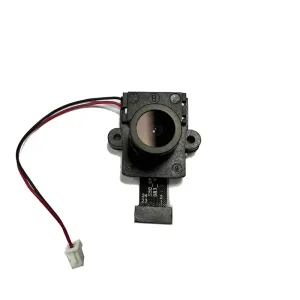
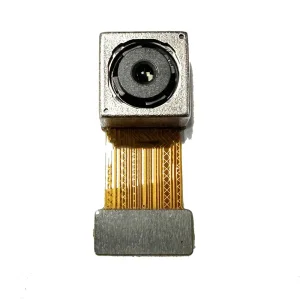
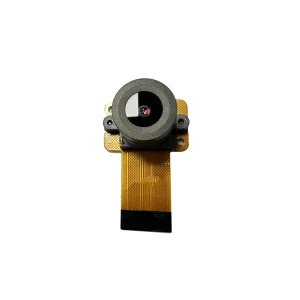
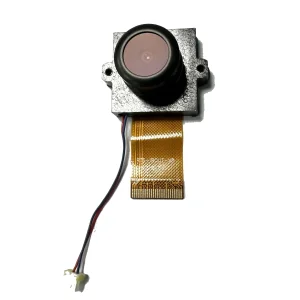
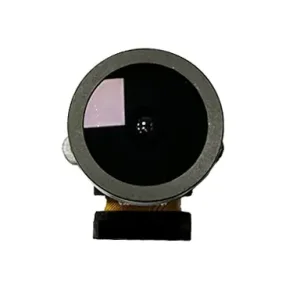
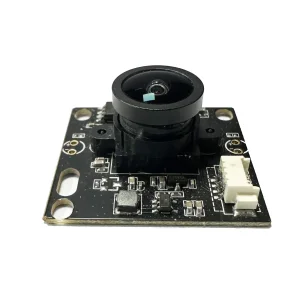
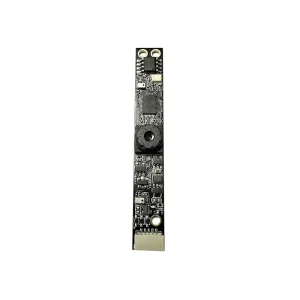
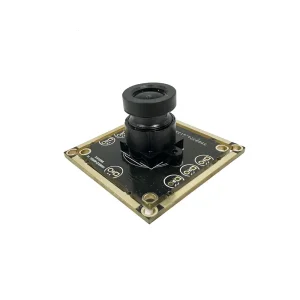
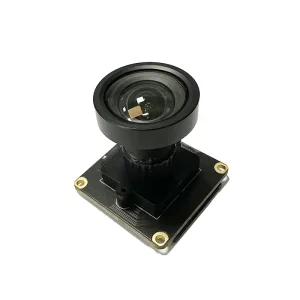
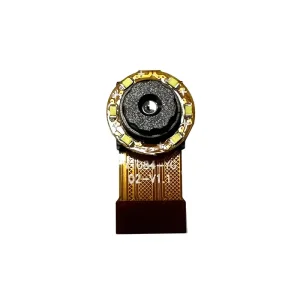
Explore top-tier optical camera modules customized for automotive dashcams, driver monitoring (DMS), industrial inspection, and intelligent edge vision devices.
An authoritative analysis of growth drivers, technological convergence, and macro supply dynamics defining next-generation automotive vision systems.
The global Vehicle Camera Market is undergoing a massive paradigm shift. Driven by mandatory legislative mandates for Advanced Driver Assistance Systems (ADAS), rapid commercial fleet digitization, and the integration of autonomous driving architectures (Level 2+ to Level 4), automotive camera modules have transitioned from auxiliary parking aids to primary safety sensors. Modern vehicles rely heavily on high-dynamic-range (HDR) cameras to feeds crucial computer vision data to onboard AI chips for real-time object detection, lane departure warnings (LDW), automatic emergency braking (AEB), and driver monitoring systems (DMS).
Key growth catalysts transforming the global vehicle camera market include:
Understanding the optical engineering, sensor protocols, and thermal management required for automotive-grade reliability.
Automotive camera lenses utilize multi-element glass designs (e.g., 6G or 2G4P) equipped with anti-reflective and hydrophobic coatings. Exporters must provide distortion-free wide-angle lenses (from 120° up to 190° fisheye) that resist thermal expansion across extreme operating environments.
Integrating tier-one image sensors from Sony (STARVIS series), OmniVision, and ON Semiconductor allows low-light sensitivity down to 0.001 Lux. High Dynamic Range (HDR > 120dB) and LED Flicker Mitigation (LFM) are vital for recognizing LED traffic lights and headlights.
Depending on placement, vehicle camera modules utilize MIPI CSI-2 for localized processing, USB UVC for plug-and-play telematics units, or high-speed serializer interfaces (FPD-Link III, GMSL2/GMSL3) for long-distance uncompressed video transmission across vehicle chassis.
| Interface Protocol | Max Transmission Distance | Data Bandwidth | Primary Automotive Application | Key Hardware Advantage |
|---|---|---|---|---|
| MIPI CSI-2 | < 30 cm (Internal) | Up to 10 Gbps | Integrated Dashcams, Smart Mirrors, ADAS Controllers | Ultra-low latency, direct SoC chip-to-chip connection |
| USB 2.0 / USB 3.0 UVC | < 5 Meters | 480 Mbps - 5 Gbps | Fleet Telematics Boxes, Commercial Vehicle DVRs | Driverless plug-and-play across Android, Linux, Windows |
| GMSL2 / FPD-Link III | Up to 15 Meters | 6 Gbps+ per lane | Surround View Systems (360° AVM), Exterior ADAS | Single coaxial cable delivers power (PoC), video, and control data |
| AHD / HD-TVI Analog | Up to 50 Meters | 720p / 1080p Video | Heavy Trucks, Agricultural Machinery, Rearview Trailers | Extreme immunity to EMI noise, cost-effective long cabling |
Why global B2B procurement officers and Tier-1 automotive exporters partner with specialized Chinese manufacturing hubs.
Shenzhen and the Pearl River Delta serve as the epicenter of global optical and camera module manufacturing. Chinese OEM/ODM factories offer unmatched vertical integration, combining precision SMT lines, automated AA (Active Alignment) optical assembly, AA-grade cleanroom facilities, and localized component sourcing under one centralized ecosystem.
Precision active alignment equipment adjusts the lens relative to the CMOS sensor across 6 degrees of freedom. This guarantees edge-to-edge optical sharpness and eliminates uneven focus across high-resolution vehicle camera modules.
By leveraging dense localized ecosystems for flexible printed circuits (FPC), optical glass mold fabrication, micro-housing CNC milling, and ISP software tuning, Chinese factories significantly reduce engineering lead times and bill-of-materials (BOM) costs.
Tier-1 Chinese camera exporters implement strict batch testing: 48-hour continuous thermal burn-in, vibration testing, saltwater spray corrosion testing, and thermal shock validation (-40°C to +85°C) to prevent field failures.
Navigating global certification frameworks to ensure seamless import, regional approval, and long-term operating compliance.
Exporting vehicle cameras across North America, Europe, Asia-Pacific, and South America requires strict adherence to international automotive safety standards and regional electronic regulations. Exporters must provide comprehensive documentation packages to simplify client homologation.
Custom engineering solutions designed to meet the rigorous demands of diverse commercial and industrial transportation sectors.
Dual-channel forward-facing and cabin-facing camera modules equipped with night-vision infrared (850nm/940nm IR LEDs) to log continuous high-definition video telematics for logistics and rideshare fleets.
Narrow Field-of-View (FOV) monochrome or RGB-IR camera modules targeted at the driver's face, communicating with AI processors to detect drowsiness, distraction, phone usage, and fatigue.
Four or six ultra-wide 190° fisheye cameras placed around passenger vehicles or buses, stitched together in real time by an ECU to eliminate blind spots during complex parking or maneuvering.
Ruggedized camera units mounted in heavy excavators, dump trucks, and cranes. Designed with shockproof aluminum housings, anti-vibration damping, and heated glass lenses for icy conditions.
Multi-camera interior passenger surveillance systems integrated with CAN-bus triggers, stop-arm monitoring cameras, and wide-angle backup safety cameras.
HDR camera modules mounted on tractors and autonomous harvesters to provide crop boundary detection, row tracking, and obstacle detection under dust and direct sunlight.
A practical technical checklist for procurement managers, hardware engineers, and supply chain directors evaluating OEM/ODM vendors.
Selecting the optimal camera exporter requires evaluating critical technical specifications alongside vendor factory capabilities. Use this checklist during your initial Engineering Change Order (ECO) or Request for Quotation (RFQ) review:
In-depth technical answers addressing common procurement, engineering, and OEM integration inquiries.
Select an ideal camera module platform below to request complete technical datasheets, CAD models, and volume factory quotes.