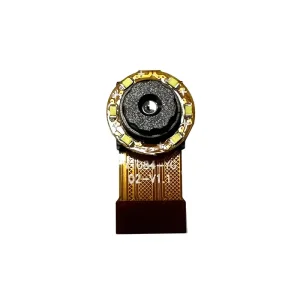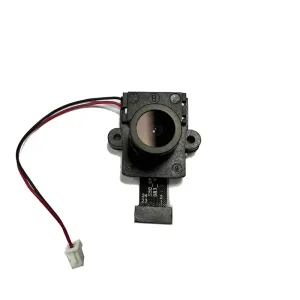
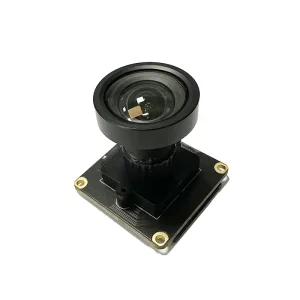
Direct OEM/ODM industrial optics calibrated for high dynamic range, AI neural analytics, and demanding surveillance environments across international regulatory boundaries.
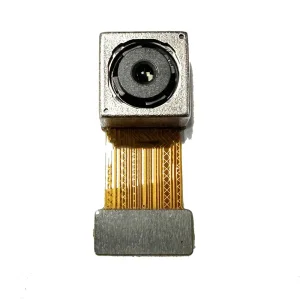
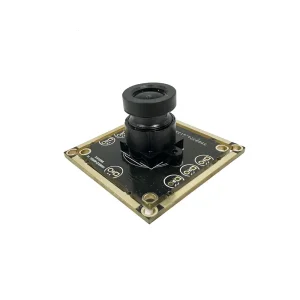
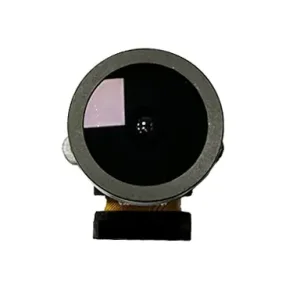
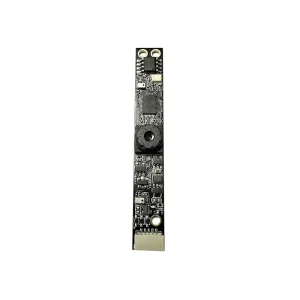
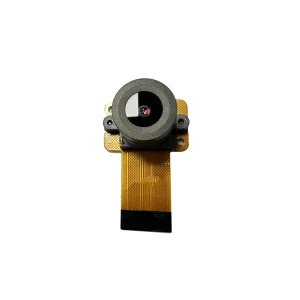
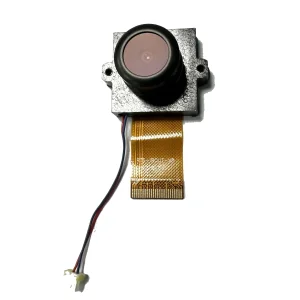
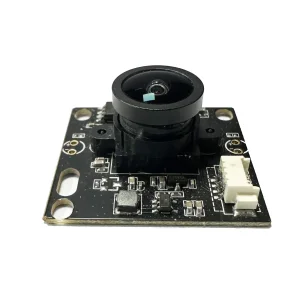
Procuring mission-critical visual security systems has transitioned from simple component transactions to evaluating end-to-end hardware-software orchestration, edge intelligence, and supply continuity.
B2B infrastructure demands MTBF exceeding 100,000 hours under extreme environmental fluctuations (-40°C to +85°C). Procurement leaders prioritize multi-layer anti-reflective coatings, thermal-stabilized lens barrels, and precision active alignment (AA) assemblies to prevent optical drift over decades of field deployment.
In an era of stringent international scrutiny, tier-1 integrators require clear cryptographic verification of sensor firmware, secure boot hardware modules (TPM/eSE), and clean bill-of-materials (BOM) auditing to prevent unauthorized data exfiltration and ensure compliance with regional critical infrastructure doctrines.
Raw pixel capture is insufficient for modern physical security platforms. Procurement frameworks demand versatile physical topologies—from ultra-low-latency MIPI CSI-2 and industrial USB 3.0 UVC to DVP parallel and RTSP/ONVIF Ethernet modules—optimized for on-chip deep learning neural networks (NPU acceleration).
The evolutionary trajectory of visual security instrumentation is anchored in multi-spectral optical capture, on-die neural processing, and dynamic photonic enhancement.
Utilizing ultra-large pixel apertures (up to 2.9µm) paired with back-illuminated (BSI) CMOS and stacked pixel architecture allows color reproduction down to 0.0005 Lux. Integrated multi-band cut filters (650nm + 850nm/940nm dual-pass) ensure seamless daylight fidelity without compromising night-vision infrared performance.
Transitioning from centralized cloud processing to 4-TOPS to 16-TOPS on-module inference empowers zero-latency human/vehicle classification, facial biometric mapping, and license plate recognition (ALPR) at the sensory node, slashing server bandwidth and preventing network choke points.
Standard wide-angle lenses introduce barrel distortion exceeding 15%, degrading peripheral algorithmic classification. Our precision molded glass (all-glass 6G/8G structures) reduces optical distortion below 0.5%, preserving linear coordinate accuracy for automated perimeter monitoring and geospatial analytics.
Tailoring optical parameters to withstand harsh operational stress profiles across civil infrastructure, commercial automation, and defense-grade boundaries.
Municipal installations require 4K to 12MP surveillance nodes capable of extreme temperature management and multi-exposure wide dynamic range (WDR) to handle high-contrast headlights, shadows, and torrential weather conditions without image blooming or packet degradation.
AEC-Q100 certified camera sub-assemblies built specifically for ADAS cabin monitoring, dash-cams, and autonomous heavy transport. Features high-vibration dampening, anti-fog heating elements, and real-time electronic shutter management to eliminate rolling shutter artifacting.
Integrating synchronized dual-camera structures (RGB + IR) within building entry barriers and smart intercoms. The synchronized dual-stream architecture ensures instantaneous 3D anti-spoofing verification and human liveness detection under intense direct solar backlight.
Operating at the convergence of advanced optical engineering and robotic automation in Shenzhen—delivering unbeatable scale, speed, and dimensional repeatability.
Fully automated SMT assembly operating in sealed, laminar-flow HEPA environments. Automated robotic active alignment (AA) pairs lens units with CMOS dies down to sub-micron tolerances, ensuring edge-to-edge focal sharpness across all operational axes.
Mitigate catastrophic supply chain stoppages through diversified multi-fab strategic stocking. Direct primary engineering partnerships with Sony, OmniVision, Onsemi, and SmartSens guarantee tier-one sensor allocations and stable BOM horizons.
Eliminating infant mortality across complex electronic assemblies. Every batch undergoes high-temperature thermal cycling (+70°C), deep soak vibration, and continuous power load profiling prior to packaging, ensuring complete batch consistency.
Accelerate your New Product Introduction (NPI) cycle. From schematic review and customized FPC routing to initial optical validation samples in as little as 10 to 14 days, backed by our veteran Shenzhen optical engineering team.
Guaranteed adherence to evolving international directives, consumer data privacy standards, and heavy industrial environmental certifications.
All export modules undergo rigorous laboratory electromagnetic compatibility (EMC) testing and toxic substance screening. Complete declaration dossiers and test reports are provided for instantaneous custom clearance across EU, North American, and APAC entry ports.
For government contractors and enterprise distributors requiring compliance with the US National Defense Authorization Act (NDAA Section 889), we engineer customized sensor platforms utilizing non-prohibited chipsets and trusted processor ecosystems.
Access direct FAE communication channels during your firmware design, V4L2/UVC driver integration, and ISP image tuning phases. We assist development teams worldwide in matching registers to target lighting profiles without delay.
Clear engineering answers addressing the core integration, customization, and export logistics inquiries posed by global procurement managers.
We utilize laser-guided Active Alignment (AA) technology that bonds the lens barrel to the sensor chassis while monitoring real-time Modulation Transfer Function (MTF) across 9 image regions. Using low-thermal-expansion aerospace adhesives and reinforced optical mounts, our modules maintain focal alignment from -30°C to +80°C without defocusing.
Yes. As an end-to-end OEM/ODM factory, our Shenzhen design facility tailors rigid PCB outlines, multilayer flexible circuits (FPC) with shielding, and specialized board-to-board connectors (Hirose, IPEX, Molex) to integrate seamlessly inside your proprietary housing.
Standard catalog samples dispatch within 48 to 72 hours. Custom lens mounts or custom FPC layouts typically require 10 to 14 days for initial prototypes. Scaled mass production runs (10,000 to 100,000+ units) are fulfilled within 3 to 4 weeks, with dedicated safety-stock buffers available.
Our USB camera modules comply fully with the USB Video Class (UVC) 1.0/1.5 standards, requiring zero third-party drivers on Windows, Linux, Android, and macOS platforms. For MIPI CSI-2 modules, we supply reference DTS files, kernel drivers, and complete V4L2 documentation for standard host SoCs (Rockchip, NXP, Qualcomm, Raspberry Pi).
Deploy miniature form-factors, high-framerate sensors, and specialized distortion-free lenses across tight mechanical envelopes and IoT edge endpoints.