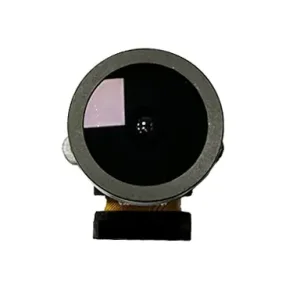
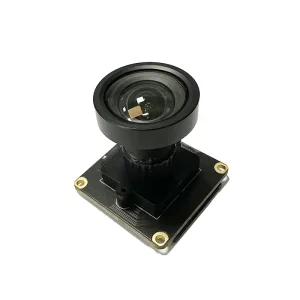
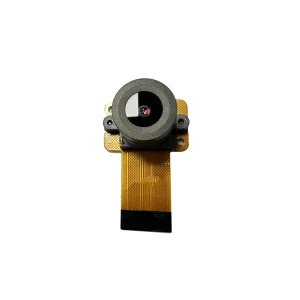
Explore field-proven imaging modules designed for 24/7 continuous recording, surveillance edge computing, and high-fidelity video capture across commercial and industrial deployments.
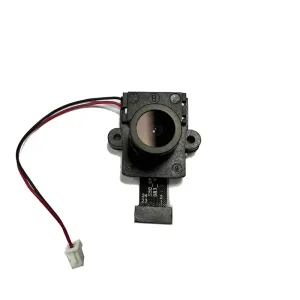
A technical guide for engineering teams, system integrators, and procurement leaders navigating next-generation commercial video capture.
When searching to buy recording security camera service & companies, decision-makers are not merely purchasing commoditized hardware; they require turnkey firmware tailoring, long-term silicon availability, and specialized ISP calibration to protect continuous surveillance investments.
Modern recording cameras incorporate on-module NPU edge computation. By preprocessing facial detection, line-crossing alarms, and object categorization locally on MIPI CSI-2 and USB pipelines, upstream NVR workloads and cloud transport fees are reduced by up to 70%.
Industrial imaging demands zero visual aberration. From license plate recognition (LPR) to access control, our custom multi-element all-glass lenses provide edge-to-edge optical resolution, eliminating barrel distortion while maintaining aperture speeds down to F1.6 in low-light environments.
Real-world integration analysis showing how bespoke optical lens assemblies and recording architectures address sector-specific security challenges.
Wide-angle, distortion-free camera modules deployed within smart doorbells, turnstiles, and architectural access portals. Features wide dynamic range (WDR) to counter harsh front-entrance sunlight and nighttime LED glare without losing biometric data.
1080P Starlight-grade CMOS modules engineered to withstand shock, vibration, and temperature swings (-40°C to +85°C). Captures dual-channel continuous cabin and outward-facing road telemetry for commercial fleet compliance and forensic verification.
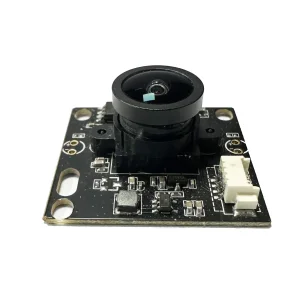
Compact, fixed-focus and autofocus USB UVC camera configurations seamlessly installed into banking ATMs, self-checkout kiosks, and medical verification pods, ensuring plug-and-play driverless integration across Windows, Linux, and Android OS.
4MP and 4K ultra-wide lens solutions customized with smart IR cut switching (ICR). Delivers continuous night-vision recording up to 30 meters, securing critical utility substations, automated factories, and smart agriculture monitoring grids.
A strategic comparison of camera module interfaces and upcoming optical innovations shaping the future of recording security equipment.
| Interface Standard | Bandwidth Throughput | Ideal Architectural Fit | Signal Integrity Limits | Edge Computing Potential |
|---|---|---|---|---|
| MIPI CSI-2 (4-Lane) | Up to 10 Gbps (Raw D-PHY) | Embedded AI, Jetson, Raspberry Pi 5 | Short FPC links (< 20cm) | Direct NPU DMA access, zero frame drop |
| USB 3.0 / USB 2.0 UVC | 480 Mbps to 5 Gbps | Industrial PCs, Terminals, Smart Displays | Cable runs up to 3–5 meters | Host-driven compute via driverless API |
| DVP Parallel | Up to 150 Mbps | Ultra-Low-Cost MCUs, Barcode Readers | Strict PCB trace matching required | Lightweight binary thresholding on-chip |
| Wi-Fi 6 / RTSP Stream | Over-the-Air Compressed | Remote Security, Wire-Free Battery Cameras | Dependent on RF interference & QoS | On-board H.264/H.265 hardware encoder |
Multi-exposure staggered HDR and real-time noise reduction pipelines integrated directly within sensor microcode, guaranteeing legible evidentiary recordings in unlit alleys or harsh backlights.
Transitioning from mechanical screw barrels to miniature voice coil motors (VCM) and electro-wetting liquid lenses, enabling millisecond macro-to-infinity focus for dynamic recording environments.
Prototyping asynchronous event-based vision sensors that log pixel-level brightness changes rather than full frames, slashing recording power draws to milliwatts for long-term off-grid security systems.
How our centralized supply chain clustering delivers unmatched production speed, rigorous quality control, and cost advantages to overseas buyers.
Operating from Shenzhen, our manufacturing facilities sit at the core of the global electronics capital. Sensor silicon, precision glass lens grinding, surface-mount technology (SMT), and flexible printed circuits (FPC) are sourced within a 50km radius, cutting prototyping cycles from months to days.
High-yield optical manufacturing demands hospital-grade cleanliness. Our Class 100/1,000 cleanrooms employ robotic die bonding, automated active optical alignment (AA), and high-precision laser lens centration, eliminating optical axis tilt and dust artifacts entirely.
Before batch release, every module is subjected to rigorous environmental stresses: thermal chamber cycling (-40°C to +85°C), high-humidity aging, drop testing, and continuous 72-hour full-stream burn-in. This delivers industry-leading mean-time-between-failures (MTBF) exceeding 50,000 hours.
Safeguarding global shipments through rigorous international standards compliance, data privacy safeguards, and regional engineering alignment.
Global security procurement mandates strict supply chain provenance. We provide full component traceability, component bill-of-materials (BOM) transparency, and RoHS/REACH, CE, and FCC electromagnetic compliance certifications, ensuring friction-free customs clearance in North America and Europe.
Aligning with GDPR and international biometric governance policies, our engineering services assist clients in compiling on-sensor masking firmware, secure hardware root-of-trust authentication, and encrypted UVC video streaming pipelines that mitigate cyber interception vulnerabilities.
To ease integration hurdles, our Field Application Engineers (FAE) provide end-to-end support: driver bring-up on Linux V4L2 kernel frameworks, custom device tree overlays for Raspberry Pi and Jetson platforms, and optical tuning to balance low-light exposure with fast shutter speeds.
In-depth technical answers addressing procurement specifications, hardware compatibility, and engineering validation.
Broaden your device evaluation with specialized modules engineered for extreme environments, miniature apertures, and multi-spectral video capture.