
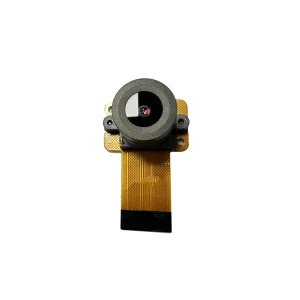
Engineered for mission-critical surveillance, automotive telemetry, embedded machine vision, and extreme distance monitoring.
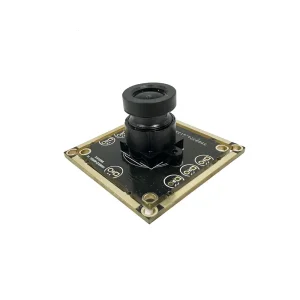
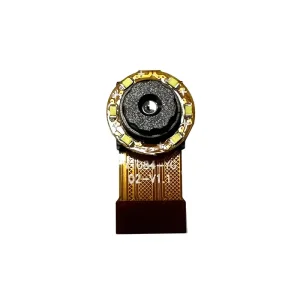
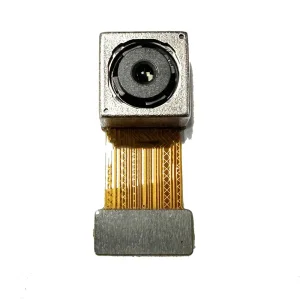
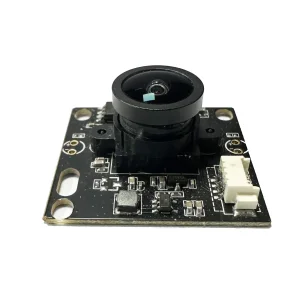
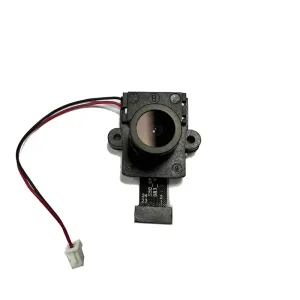
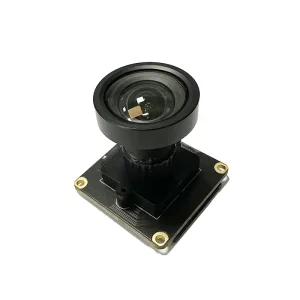
The engineering validation of long-distance electro-optical and infrared (EO/IR) surveillance setups adheres strictly to international benchmarks established by the European Standard EN 62676-4, codified colloquially as the DORI metrics: Detection (25 pixels/meter), Observation (62.5 px/m), Recognition (125 px/m), and Identification (250 px/m). In conventional wide-angle security, achieving 250 px/m requires the target to be within 5 to 15 meters. However, in border defense, critical infrastructure, maritime coastlines, and open-pit mining operations, Identification must occur at stand-off distances ranging from 1,000 meters to over 10,000 meters.
Overcoming such extreme optical paths necessitates continuous optical zoom blocks with focal lengths scaling from 200mm up to 1200mm, coupled with large-format Sony STARVIS 2 backside-illuminated (BSI) CMOS sensors. When high magnification is applied, optical issues such as chromatic aberration, atmospheric thermal turbulence (heat mirage), and air scattering become primary points of signal degradation. YXD's engineering framework integrates specialized Extra-low Dispersion (ED) fluorite glass groups and hardware-accelerated ISP edge filtering to neutralize these distortions before raw data feeds enter transmission pipelines.
Pioneering the convergence of computational photography, multi-band sensor fusion, and neural image signal processors.
Visible light sensors inevitably suffer severe photon degradation under marine fog, battlefield haze, and sandstorms. The YXD engineering roadmap integrates Short-Wave Infrared (SWIR, 0.9–1.7 µm) and uncooled Long-Wave Infrared (LWIR) pixel-level fusion via advanced FPGA beam splitters, revealing clear ship hull contours and human targets hidden behind atmospheric scatter.
Dual-Payload SWIR/LWIRLong-range optical links undergo spatial distortion caused by varying refractive indices across atmospheric temperature gradients. Our next-generation onboard 16-TOPS Neural Processing Units (NPUs) run localized physical turbulence restoration algorithms, realigning degraded sub-pixel wavefronts at 60 FPS in 4K resolution.
Zero-Latency DSPMoving beyond single mechanical telephoto lenses, YXD's forward-looking architecture clusters synchronized wide-angle situational sensors with dynamic slave telephoto PTZ trackers. The master sensor detects perimeter breaches over panoramic multi-kilometer terrain, instantly cueing the high-magnification narrow-FOV sensor for automated target lock.
Radar-Optical Slew-to-CueTo endure harsh desert winds and corrosive saline environments, all specialized optical front elements manufactured at YXD employ plasma-enhanced chemical vapor deposition (PECVD) to coat Germanium and glass windows with diamond-like carbon. This ensures surface hardness exceeding 9 Mohs while maintaining over 96.5% optical transmittance across visible and near-infrared bands.
Custom-engineered electro-optical systems purpose-built for the planet’s most demanding security operations.
Naval approaches and exclusive economic zones require uninterrupted surface reconnaissance. YXD's continuous optical zoom blocks, housed in IP68 C5-M marine-grade anti-corrosion enclosures, pair high-power laser NIR illuminators with starlight VIS sensors to detect rogue skiffs up to 12 nautical miles out, unaffected by heavy salt-spray corrosion.
Border defense lines spanning mountainous or arid terrain demand autonomous operation. Our low-power embedded MIPI and GMSL2 long-distance telephoto assemblies interface directly with off-grid solar and radar stations. Upon micro-Doppler radar triggers, the camera automatically pans and executes deep-learning classification on personnel and vehicles at ranges exceeding 5 kilometers.
High-voltage transmission towers, oil pipeline rights-of-way, and nuclear containment perimeters present severe EMI interference and explosive atmosphere risks. YXD equips long-range sensor heads with ATEX/IECEx certified explosion-proof housings, optical fiber SFP+ direct outputs, and non-sparking brushless direct-drive motors to eliminate electrical hazard risks.
High-speed train routes and toll freeways require ultra-fast global shutter sensors coupled with long telephoto lenses to read license plates and rail track deformities at 300 km/h. Our specialized high-frame-rate modules eliminate motion blur and rolling shutter jelly effects across continuous long-focus operations.
Combining the Shenzhen optics ecosystem with advanced semiconductor manufacturing, robotic assembly, and stringent qualification testing.
Manual lens mounting fails at extreme focal lengths where even sub-micron sensor tilt induces catastrophic edge defocus. YXD utilizes 6-axis automated Active Alignment (AA) cleanroom robots. By dynamically assessing live MTF charts across center and corners simultaneously, optical axis alignment is locked down with sub-micron precision.
A single 2-micron dust particle positioned across an ultra-telephoto sensor plane produces huge dark blotches when zoomed into distant objects. All sensor mounting, IR cut filter bonding, and optical barrel hermetic sealing take place inside Class 100 and Class 1000 positive-pressure laminar-flow cleanrooms, safeguarding batch cleanliness.
Every long-distance export module passes Environmental Stress Screening (ESS). This entails 72 hours of thermal cycling from -40°C to +85°C under high humidity, followed by 3-axis sinusoidal vibration testing (MIL-STD-810H compliant) to verify zero mechanical shifting of motor gear trains during rough transit or violent operational conditions.
The table below provides system integrators with critical parametric differences between standard mass-market CCTV cameras and YXD’s industrial-grade long-distance surveillance solutions:
| Evaluation Parameter | Commercial Grade CCTV | YXD Long Distance Industrial System | System Engineering Advantage |
|---|---|---|---|
| Optical Focal Range | 2.8mm – 12mm (Fixed / 4x Zoom) | 6.0mm – 300mm+ (Up to 50x/90x Optical) | Resolves facial DORI at >1,500m; vehicles at >5,000m. |
| Glass Substrate & Coating | Standard Float Glass, Mono AR | Extra-Low Dispersion (ED) Fluorite + DLC | Virtually eliminates purple fringing and spherical distortion. |
| Optical Alignment | Static Thread Screw Assembly | 6-Axis Automated Active Alignment (AA) | Guarantees edge-to-edge MTF uniformity across all zoom tiers. |
| Atmospheric Mitigation | Basic Digital Contrast Boost | Hardware Optical Defog (NIR Filter Switch + NPU) | Penetrates deep maritime mist, forest smoke, and desert haze. |
| Data Interfaces | Standard RJ45 (100Mbps Ethernet) | MIPI CSI-2, GMSL2, HD-SDI, SFP+ Fiber, USB3 | Enables uncompressed low-latency edge AI computation. |
| Operating Range | -10°C to +50°C | -40°C to +85°C (Built-in Heaters & Nitrogen Purged) | Reliable cold start and thermal stabilization under direct desert sun. |
A systematic technical decision-tree tailored for international buyers, security architects, and tier-1 system integrators.
Avoid optical vignetting by accurately matching the image circle diameter of the lens system to the sensor format (e.g., 1/1.8" vs. 1/2.8" vs. 1/1.2"). YXD engineers calculate chief ray angle (CRA) tolerances to ensure zero light falloff at the image periphery.
Decide whether raw Bayer output (MIPI CSI-2/GMSL2) is required for custom GPU/SoC inferencing (Nvidia Jetson, Qualcomm, Rockchip) or if hardware-encoded H.265/AV1 streams over RTSP/ONVIF are preferred for standard network storage (NVR/VMS).
High-speed tracking targets (such as drones or speeding patrol craft) demand voice coil motor (VCM) or piezo-driven lens stages capable of completing full optical transitions from minimum object distance (MOD) to infinity in under 1.2 seconds.
Factory-direct sourcing from Shenzhen cuts out multiple broker margins. By ordering fully characterized camera sub-assemblies tested for shock, vibration, and thermal drift, customers trim their own engineering and field-replacement budgets significantly.
Ensuring end-to-end regulatory adherence, cryptographic firmware security, and responsive field engineering.
YXD guarantees comprehensive cybersecurity hardening across all networked camera models. Our firmware includes secure boot via cryptographic hardware root-of-trust, TLS 1.3 end-to-end stream encryption, IEEE 802.1X port authentication, and regular automated vulnerability patching. Dynamic privacy masking shields sensitive regional coordinates in full compliance with GDPR and international data standards.
Our engineering architecture natively supports ONVIF Profile S (basic video), Profile G (edge storage), Profile T (advanced streaming and analytics metadata), and Profile M (AI metadata payload). This open framework ensures seamless integration into enterprise Video Management Systems (VMS) including Milestone XProtect, Genetec Security Center, and open-source RTSP architectures.
All camera modules and complete systems exported by YXD possess standard international certifications: CE, FCC Class A & B, RoHS, and REACH. Dedicated English-speaking FAEs (Field Application Engineers) provide 24/7 technical consultation, including lens parameter ray-tracing simulations, customized FPC pinout routing, and embedded Linux driver patches.
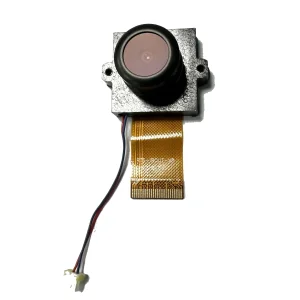
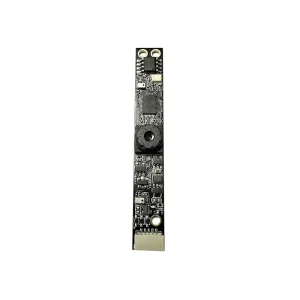
Select your specialized optical module below to initiate sample evaluation or configure bespoke engineering specifications.
In-depth responses to core architectural, optical, procurement, and integration queries from our global engineering clients.
Focal Length (mm) = (Distance to Target × Sensor Pixel Pitch × Target Pixels) / Real Target Dimension. At 1,500 meters, this results in a focal length requirement exceeding 300mm. YXD supplies continuous motorized optical zoom blocks ranging from 6mm to 300mm, 500mm, and up to 1000mm to guarantee clean identification at extended stand-off distances.
Accelerate your long-distance surveillance deployment with direct engineering consultation, custom optical simulations, and reliable factory pricing.