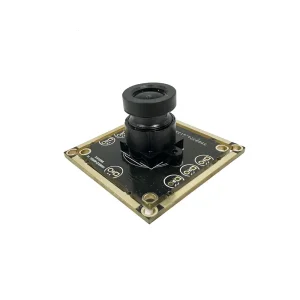
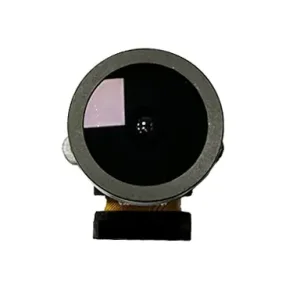
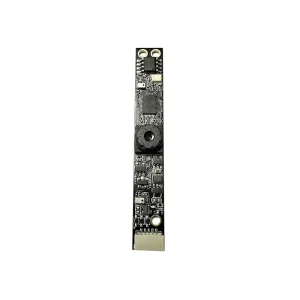
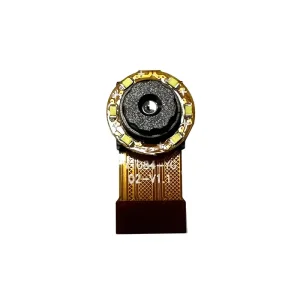
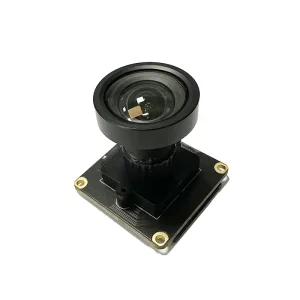
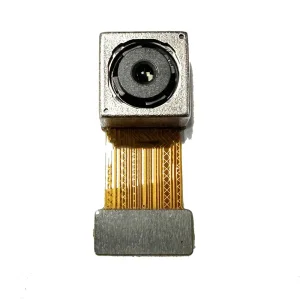
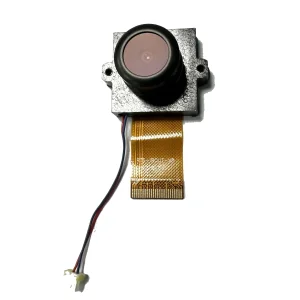
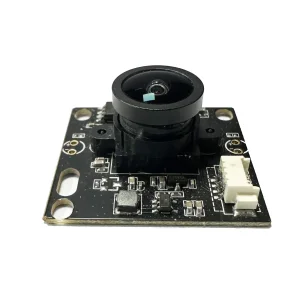
Explore our top OEM/ODM engineered camera modules, high-definition USB standard boards, ultra-wide optical solutions, and low-distortion imaging hardware.
Strategic B2B insight into how the commercial security camera ecosystem is evolving from passive video capture into intelligent edge-computed vision architecture.
The global procurement landscape for Groothandel Camerabeveiliging (wholesale camera security systems) has undergone a fundamental transformation. Enterprise B2B buyers no longer evaluate camera hardware solely on price-per-unit metrics. Instead, total cost of ownership (TCO), multi-year component lifecycle predictability, firmware adaptability, and zero-defect optical assembly dictate purchasing decisions across European, North American, and Asian commercial sectors.
Strict regulatory frameworks, including Europe’s GDPR, the NIS2 Directive, and North America’s NDAA compliance guidelines, have forced system integrators to seek trusted manufacturing partners. Wholesale sourcing now demands complete transparency in sensor provenance, SoC (System-on-Chip) architecture, and uncompromised firmware integrity to protect against cybersecurity vulnerabilities.
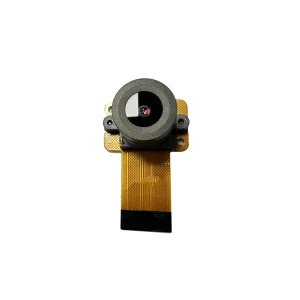
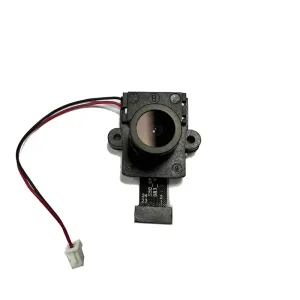
By leveraging high-density manufacturing hubs in Shenzhen alongside precision optics engineering, modern OEM/ODM security camera factories deliver specialized modules featuring MIPI CSI-2, USB UVC, and DVP interfaces. This direct-from-factory ecosystem allows global distributors to request tailor-made board outlines, specific lens focal lengths, and optimized IR-cut filtration.
Traditional surveillance sourcing focused on standalone IP cameras. Contemporary B2B buyers now source modular vision sub-assemblies that integrate directly into edge AI gateways, automated license plate recognition (ALPR) access barriers, autonomous mobile robots (AMRs), and smart building intercom panels.
Detailed technical trajectory outlining sensor evolution, lens dynamics, embedded neural engines, and interface protocol advancements.
| Technology Vector | Legacy Benchmark | Current Enterprise Standard | Next-Gen (2025–2030 Roadmap) |
|---|---|---|---|
| CMOS Image Sensors | 1080P / Standard Dynamic Range (60dB) | 4MP–4K / Starlight HDR (120dB+) | Global Shutter + Neuromorphic Event-Based Sensing |
| Optical Lens Design | Standard Spherical (3%–5% Distortion) | Distortion-Free (<0.5%) Aspherical Glass | Athermalized Metal-Barrel Multi-Spectral Lenses |
| On-Board Computing | Cloud-Only H.264 Video Streaming | On-Chip Motion & Basic Face Detection | Integrated NPU Edge Processing (8–32 TOPS) |
| Data Interfaces | Analog CVBS / USB 2.0 MJPEG | USB 3.2 Gen 1 UVC / MIPI CSI-2 4-Lane | High-Bandwidth MIPI v3.0 / PCIe Vision Links |
| Low-Light Vision | IR LED Illumination (Monochrome) | Full-Color Starlight (0.0001 Lux) | RGB-NIR Dual-Spectrum Sensor Fusion |
High-definition video security demands optical clarity that eliminates spatial distortion. Distortion-free optical lens modules ensure that document scanners, facial recognition access portals, and industrial inspection vision systems capture geometric proportions accurately without needing resource-heavy software dewarping algorithms.
By embedding Neural Processing Units (NPUs) directly adjacent to the image signal processor (ISP) on flexible printed circuit (FPC) modules, vision systems execute deep learning models for human detection, vehicle classification, and anomalous behavior analysis locally, slashing network bandwidth overhead by up to 80%.
Commercial cameras exposed to harsh outdoor climates experience focal shift caused by thermal expansion in plastics. Modern industrial camera modules utilize all-glass optics mounted inside precision-machined alloy barrels to guarantee focal stability across temperature sweeps ranging from -30°C to +75°C.
Real-world deployment architecture for specialized hardware across critical enterprise sectors.
Commercial logistics fleets and public transportation systems rely on ultra-wide 1080P driving recorder camera modules. Featuring starlight wide dynamic range (WDR) sensors, these modules record crisp video under nocturnal highway conditions, while specialized cabin-facing lenses enable real-time driver fatigue monitoring and collision avoidance alerts.
Residential complexes and commercial towers require ODM visual doorbells and building access intercom panels. Integrated broad-angle low-distortion cameras combine anti-spoofing IR illumination with crisp face recognition, permitting accurate tenant verification even in harsh daylight backlighting situations.
High-speed autofocus multi-application camera modules empower banking kiosks, educational document scanners, and medical registration terminals. Rapid liquid lens or voice-coil motor (VCM) autofocus guarantees crystal-clear imaging of fine textual detail, passport machine-readable zones (MRZ), and high-density barcodes.
Extremely compact micro-camera modules (such as sub-9mm diameter designs) open up advanced diagnostic and quality inspection applications. From internal pipeline robotic crawlers to non-invasive medical diagnostics, miniature high-definition imaging delivers high resolution where physical space is critically restricted.
Enterprise facility monitoring depends on 2K wide-angle intelligent monitoring modules with night vision. Intelligent IR switching, low-noise amplifiers, and optical multi-layer coatings eliminate flare and ghosting, producing actionable video streams during absolute dark field surveillance.
As remote enterprise collaboration becomes permanent standard operational policy, integrated 720P/1080P laptop USB camera modules deliver true-to-life color fidelity, high frame-rate streaming without dropped packets, and physical privacy shutter capability integrated directly onto compact PCB form factors.
How end-to-end engineering, rigorous reliability testing, and customized module optimization ensure client success.
Every B2B enterprise client operates under unique mechanical and electronic constraints. The customization roadmap begins by evaluating sensor options (Sony, Omnivision, SmartSens) matched against target interface standards—whether MIPI CSI-2 for low-power embedded processors like Raspberry Pi and Jetson, driverless USB UVC for x86 platforms, or DVP parallel for legacy MCUs.
To fulfill industrial MTBF expectations (>100,000 hours continuous runtime), camera modules undergo rigorous stress testing protocols. These include high-temperature/high-humidity storage aging (85°C/85% RH), thermal shock testing (-40°C to +85°C), optical axis tilt alignment via automated active alignment (AA) machines, and electrostatic discharge (ESD) testing.
By maintaining standardized ISO-compliant cleanroom production environments and automated optical inspection (AOI) lines, every batch of camera modules exhibits uniform signal-to-noise ratio (SNR), exact color rendering indices (CRI), and repeatable optical alignment, eliminating batch-to-batch inconsistency.
Browse our full range of customizable camera hardware, miniature imaging systems, and wide-angle vision modules.
Expert responses addressing B2B procurement queries, optical engineering specs, customization workflows, and compliance questions.