Explore our top-tier camera modules engineered for wireless security systems, AIoT terminals, and industrial surveillance applications.
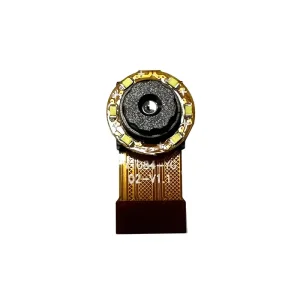
Ultra-compact form factor for concealed wireless sensors and space-constrained IoT endpoints.
Explore Specifications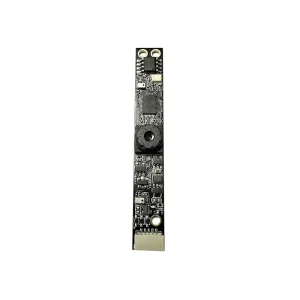
Optimized UVC plug-and-play architecture for integrated teleconferencing and smart terminals.
Explore Specifications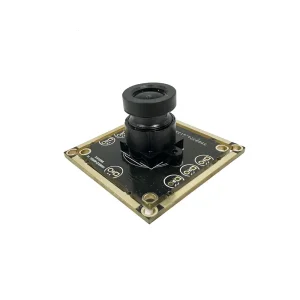
Zero-distortion optical lens assembly designed for precise visual scanning and AI face recognition.
Explore Specifications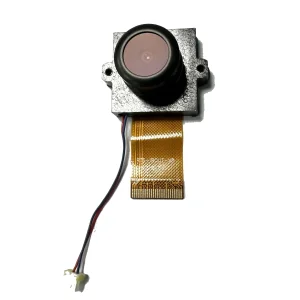
Starlight-grade low-light sensitivity for mobile fleet security and dynamic automotive recording.
Explore Specifications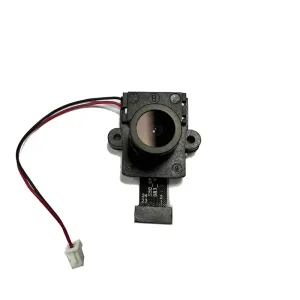
Features dual IR-Cut filter switching and dynamic night vision for comprehensive outdoor surveillance.
Explore Specifications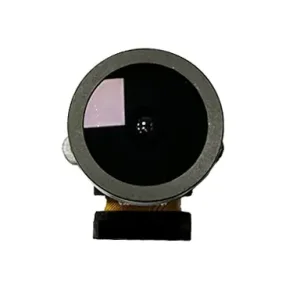
Panoramic FOV optical engineering ideal for action monitoring, robotic vision, and security domes.
Explore Specifications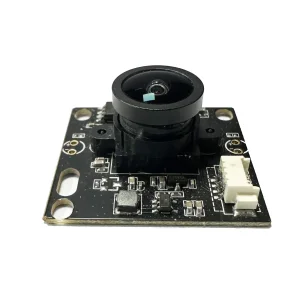
Integrated acoustic and optical sub-system for modern access control panels and smart home entry.
Explore Specifications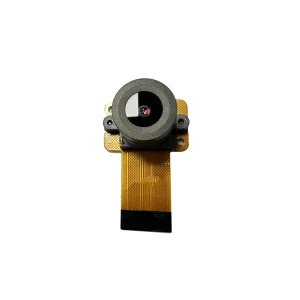
High frame rate CMOS image processor delivering crystal-clear evidentiary video capture.
Explore SpecificationsAn engineering-first analysis of hardware design, sensor integration, network topologies, and contract manufacturing strategies for enterprise physical security.
From Sony STARVIS 2 CMOS sensors to custom multi-layer FPC boards, enterprise camera systems require deep component-level integration to balance thermal dissipation, RF noise immunity, and image fidelity.
Deployment success hinges on choosing the optimal wireless transport layer—balancing Wi-Fi 6E/7 throughput against 5G RedCap and Sub-GHz battery longevity for continuous multi-stream video.
Global enterprise buyers require strict compliance with NDAA, GDPR, and ISO 27001, necessitating secure bootloader hardware encryption and transparent supply chain sourcing.
How Edge AI processing, advanced optics, low-power RF chipsets, and IoT standards are redefining enterprise video security.
Modern camera modules no longer act as dumb optical pipes. High-performance Neural Processing Units (NPUs) operating at 1.2 to 8 TOPS are now embedded directly alongside Image Signal Processors (ISPs). This allows real-time execution of Deep Learning algorithms such as YOLOv8 and MobileNet for instant vehicle classification, facial recognition, perimeter intrusion detection, and optical flow tracking right at the sensor node, dramatically reducing bandwidth consumption and cloud compute latency.
The shift toward Wi-Fi 6E, Wi-Fi 7, and 5G NR RedCap (Reduced Capability) has fundamentally transformed wireless reliability. Utilizing Multi-Link Operation (MLO) and 4096-QAM modulation, modern wireless cameras maintain robust, ultra-low latency (<5ms) multi-stream 4K HDR feeds even in heavy RF-congested industrial environments. For long-range off-grid deployment, Sub-GHz protocols (like Wi-Fi HaLow) enable signal transmission over 1.5 kilometers through heavy structural obstacles.
Energy efficiency has reached unprecedented heights. Advanced power management ICs (PMICs), combined with ultra-low micro-ampere sleep states and PIR motion wake-up triggers, enable 100% wire-free cameras. Coupled with micro-solar panels and lithium iron phosphate (LiFePO4) energy storage, these self-sustaining units operate continuously in remote construction sites, oil pipelines, and agricultural facilities without external electrical infrastructure.
High-resolution sensors demand superior optical lens design. The trend towards large aperture optical elements (F1.0 starlight lenses) paired with multi-layer anti-reflective coatings ensures vibrant color rendition in sub-lux (0.0001 Lux) environments without artificial IR spotlight washouts. Furthermore, optical engineering focused on low TV distortion (<0.5%) is crucial for machine vision and document scanning applications where geometric accuracy is non-negotiable.
A comprehensive framework for B2B procurement managers, system integrators, and OEM device manufacturers evaluating surveillance camera hardware.
When global enterprise buyers evaluate a Wireless Surveillance Camera System Service & Factory, procurement decisions go far beyond unit price. Technical buyers evaluate thermal endurance, firmware customizability, ISP tuning capability, optical distortion, and multi-year component availability. Below is an engineering specification checklist utilized by top-tier system integrators.
| Evaluation Parameter | Standard Commercial Grade | Enterprise / Industrial Grade (YXD Standard) | Business Impact / ROI |
|---|---|---|---|
| CMOS Image Sensor | 1/3" Standard CMOS (2MP/1080P) | Sony STARVIS 2 / SmartSens High-Dynamic Range (4MP - 4K) | Superior low-light capture, reduced motion blur in nighttime vehicle identification. |
| Optical Distortion | 5% to 15% TV Distortion (Standard Wide Lens) | <0.5% Distortion-Free Lenses & Aspherical Glass Elements | Prevents image warping, critical for automated license plate & facial scanning. |
| Wireless Protocol | 2.4GHz Wi-Fi 4 (802.11n) | Dual-Band Wi-Fi 6 / Wi-Fi HaLow / 5G Cellular Failover | Eliminates video freeze and packet loss in congested enterprise wireless environments. |
| Operating Temperature | -10°C to +50°C | -40°C to +85°C (Industrial Grade Wide Temp Components) | Guarantees 24/7 uptime in extreme desert or sub-zero arctic industrial deployments. |
| Systemic Compliance | Basic CE / FCC | NDAA Compliant, RoHS, REACH, ONVIF Profile S/G/T, ISO9001 | Fulfills government, defense, and multinational enterprise procurement mandates. |
| Hardware Customization | Fixed Off-the-Shelf PCB & Lens | Tailored FPC Layout, Custom FOV, IR Filter Tuning, SDK/API | Seamless integration into proprietary housing enclosures and IoT platforms. |
How localized optical clusters, automated COB packaging, and rigorous quality assurance create an unshakeable competitive edge for global buyers.
Situated in Shenzhen, China’s silicon engine, YXD leverages a hyper-dense supply ecosystem. Raw optical glass grinding, SMT surface-mount lines, CMOS wafer packaging, and CNC aluminum machining are located within a 30-minute supply radius—reducing prototype turnaround cycles from months to days.
High-resolution imaging demands microscopic precision. Modern Industry 4.0 cleanrooms utilize 6-axis automated Active Alignment equipment to calibrate image sensors with optical lens barrels in real-time. This guarantees uniform corner-to-corner focus sharpness and eliminates focal plane tilt across 100% of production runs.
To ensure non-stop industrial reliability, every camera batch undergoes strict thermal cycling (-40°C to +85°C), high-humidity stress tests, anti-vibration simulation, and a mandatory 72-hour continuous electrical burn-in aging process before shipping.
How wireless surveillance camera modules deliver operational intelligence across diverse global industries.
Use Case: Autonomous Guided Vehicles (AGVs) and Automated Mobile Robots (AMRs) operating inside automated fulfillment centers.
Technical Requirement: Low-latency MIPI / USB modules equipped with global shutter sensors and wide-angle distortion-free optics. Enables instant QR barcode scanning, SLAM navigation, and real-time obstacle detection under variable facility lighting.
Use Case: Commercial trucking fleets, taxi networks, and public transport systems.
Technical Requirement: Dual-channel starlight 1080P/2K driving recorder camera modules with wide dynamic range (WDR >120dB). Captures dual-facing footage (road view + cabin interior driver monitoring) with robust performance against extreme vehicle cabin temperatures.
Use Case: High-density residential complexes, commercial office buildings, and smart gated communities.
Technical Requirement: Wide-angle camera modules integrated into visual doorbells and access control keypads. Features physical IR-Cut filter switches for true-to-life daytime color accuracy and glare-free illumination during nighttime face identification.
Use Case: Remote farm boundaries, solar power stations, oil pipelines, and construction sites.
Technical Requirement: Ultra-low power Wi-Fi / 4G cellular camera modules paired with PIR heat sensors and mini solar panels. Operates autonomously for months, sending instant push-alerts and high-res video clips upon perimeter breaches.
Direct technical insights for engineering managers and OEM procurement specialists.
Find the exact camera hardware module tailored to your device specifications and commercial application.
Zero-distortion optical lens assembly designed for precise visual scanning and AI face recognition.
Explore Specifications
Starlight-grade low-light sensitivity for mobile fleet security and dynamic automotive recording.
Explore Specifications
Features dual IR-Cut filter switching and dynamic night vision for comprehensive outdoor surveillance.
Explore Specifications
Panoramic FOV optical engineering ideal for action monitoring, robotic vision, and security domes.
Explore Specifications
Integrated acoustic and optical sub-system for modern access control panels and smart home entry.
Explore Specifications
High frame rate CMOS image processor delivering crystal-clear evidentiary video capture.
Explore Specifications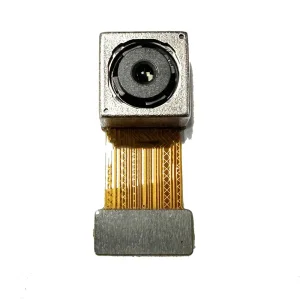
Voice-coil motor (VCM) autofocus mechanism ensuring macro text clarity for smart document scanners.
Explore Specifications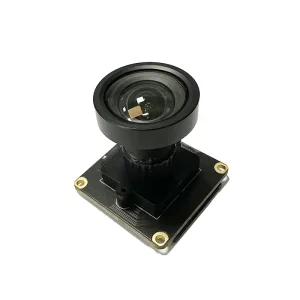
Industrial-grade 4MP resolution unit designed for automated inline inspection and quality assurance.
Explore SpecificationsContact our senior optical and hardware engineering team today to request custom sample evaluation kits, detailed datasheets, or a formal OEM/ODM production quotation.