Explore our flagship high-definition, low-distortion camera modules engineered for wireless security cameras, smart home terminals, and industrial IoT devices.








Understanding how Shenzhen's integrated microelectronics and optical cluster provides unparalleled cost efficiency, rapid engineering iteration, and robust scalability for global B2B buyers.
China's Pearl River Delta region holds over 70% of the world's commercial image sensor packaging, SMT surface-mount technology line density, and optical lens grinding facilities. By sourcing wireless security camera modules directly from specialized Shenzhen factories like Shen Zhen You Xiang Da Technology Co., Ltd. (YXD), enterprise buyers bypass multiple intermediary markups and gain direct access to raw wafer-level packaging and precision lens alignment.
The turn-around time for custom PCB layouts, sensor bridge board modifications (MIPI CSI-2 to USB UVC or Wi-Fi SoC), and optical distortion-free lens matching is compressed from months to weeks. Chinese OEM/ODM factories utilize modular tooling and standardized SMT lines, allowing seamless transition from small-batch engineering samples (100–500 units) to high-volume manufacturing runs exceeding 500,000 units monthly.
Through direct long-term partnerships with leading CMOS image sensor foundries (Sony Starvis, SmartSens, OmniVision) and Wi-Fi/PIR chipset vendors (Inchoic, Novatek, Rockchip, HiSilicon), established China factories achieve unmatched Bill of Materials (BOM) cost structures. This cost efficiency allows brands to integrate premium features like dual-band Wi-Fi 6, solar battery management, and Edge NPU hardware at competitive wholesale thresholds.
A detailed breakdown of hardware options available when customizing wireless security camera modules for commercial, residential, and industrial applications.
Standard off-the-shelf IP cameras often fail in specialized deployment scenarios due to lens distortion, aggressive battery drain during standby, or poor IR-cut filter transition under variable light. Customized OEM modules allow systems integrators to specify exact optical FOV (Field of View), tune the ISP (Image Signal Processor) for specific LUX thresholds, and implement custom sleep/wake microcontrollers optimized for 4G LTE or Wi-Fi sub-GHz long-range telemetry.
| Architecture Component | Standard Specification Options | OEM Customization Capability | Target Application Impact |
|---|---|---|---|
| CMOS Image Sensors | 1/2.7", 1/1.8" Sony Starvis 2, OmniVision, SmartSens (2MP to 4K Ultra HD) | Custom sensor board layout, dual-sensor alignment, monochrome + RGB night-vision pairing | Delivers clear license plate recognition (ANPR) and starlight low-light performance down to 0.001 Lux. |
| Optical Lenses | Distortion-Free Lenses, Wide Angle (90° to 140° FOV), Pin-hole 9mm Miniature | Custom focal lengths (2.8mm, 3.6mm, 6mm, 12mm), IR-cut filter switcher (850nm / 940nm stealth IR) | Eliminates barrel distortion in document scanning and structural access control video intercoms. |
| Processor & Wi-Fi SoC | Dual-core ARM Cortex, Integrated NPU (1.0 to 4.0 TOPS), Wi-Fi 6 (802.11ax) / 4G cellular | Firmware bootloader customization, custom SDK integration (Tuya, AWS IoT, Azure IoT, P2P APIs) | Enables local human/vehicle motion detection on edge without cloud latency or subscription fees. |
| Power & Sleep Modes | Continuous 12V/5V DC, Lithium Battery + Solar Management, PIR Motion Wakeup | Ultra-low power standby (<200uA), sub-second fast boot and video streaming start (<800ms) | Crucial for off-grid battery/solar security cameras in remote construction or agricultural sites. |
| Enclosure & Form Factor | Compact PCB outline, Flexible Printed Circuit (FPC) extension, IP66/IP67 weatherproofing | Custom FPC pinouts, mini dome/bullet housing designs, ruggedized vibration damping | Fits restricted physical enclosures like visual doorbells, automotive dash cams, and wearable body cams. |
How top-tier China security camera manufacturers assist international buyers in navigating stringent regional certifications, data privacy regulations, and cyber security protocols.
For European and North American markets, privacy compliance is paramount. Leading Chinese manufacturers work closely with clients to embed TLS 1.3 encryption, AES-256 cloud video storage protocols, and secure bootloader firmware preventing unauthorized third-party tampering. Modern camera modules support localized data processing, allowing video frames to be analyzed entirely on-device via local NPU before firing metadata to the cloud, ensuring full GDPR and CCPA alignment.
Deploying wireless electronics globally requires strict adherence to RF emissions, safe substance handling, and electromagnetic compatibility (EMC). Qualified China suppliers maintain certified lab testing pipelines to provide FCC Part 15 (US), CE RED (Europe), RoHS 2.0, and REACH certifications. Furthermore, non-NDAA restricted chipset pathways (utilizing Novatek, Rockchip, or Western-compliant silicon) are readily available for governmental and enterprise project tenders.
A major challenge for global buyers is avoiding vendor lock-in with proprietary Chinese cloud platforms. Established factories support flexible P2P layer integrations (such as WebRTC, RTSP, ONVIF Profile S/G/T) and allow direct binding to local cloud platforms like AWS Kinesis Video Streams, Microsoft Azure IoT Hub, or white-label solutions powered by Tuya / Smart Life operating in regional data centers (Frankfurt, Oregon, Singapore).
To ensure smooth software development for mobile applications (iOS / Android) and desktop VMS (Video Management Software), top manufacturers supply comprehensive developer kits (SDKs), APIs, and sample code documented in English. Engineer-led technical support teams conduct live debugging, remote SSH calibration, and firmware patch delivery tailored to local timezones.
Strategic overview of emerging technological breakthroughs shaping the future of global video surveillance and smart vision terminals.
The market is rapidly shifting away from legacy cloud-based analytics to ultra-low-power Edge AI NPUs integrated directly onto the camera ISP board. These micro NPUs execute lightweight convolutional neural networks (CNNs) and Vision Transformer models to perform real-time human shape identification, pet filtering, vehicle classification, and facial recognition without consuming bandwidth or incurring monthly cloud processing overheads.
Modern wireless cameras increasingly adopt dual-lens configurations—combining a wide-angle pan-tilt overview lens with a telephoto optical zoom lens, or pairing an RGB color sensor with a high-sensitivity monochrome sensor. Enhanced by large aperture optics (F1.0 Super Aperture) and 3D Noise Reduction (3DNR), 4K cameras can now produce vibrant color video under near-pitch-black conditions without relying on harsh white light illuminators.
With the maturation of ultra-low standby power management ICs (PMICs), zero-wire solar security cameras can operate continuously on a compact 3.5W solar panel and rechargeable lithium battery pack. Concurrently, the transition to Wi-Fi 6/7 and 5G RedCap (Reduced Capability) enables ultra-low latency, extended RF signal range through thick concrete walls, and resilient multi-device connectivity in dense urban or industrial deployments.
How specialized camera modules adapt to challenging environment factors across consumer, commercial, and industrial domains.
Integrated into wireless video doorbells, indoor baby monitors, and floodlight cameras. Requires low-distortion optics (under 1% distortion) to prevent fisheye facial warping, fast PIR radar wake-up under 500ms, and crisp two-way noise-canceling audio hardware integration.
Deployed across retail chains, warehouses, and office complexes. Demands high dynamic range (HDR > 120dB) to capture clear video against strong indoor lighting/glass reflections, paired with edge AI heat-mapping and customer flow statistics.
Engineered for locations lacking grid power or wired internet. Employs solar lithium battery systems, rugged IP67 weatherproof enclosures, wide operational temperature tolerance (-20°C to 70°C), and 4G LTE wireless data fallback.
Answers to common technical, manufacturing, and procurement inquiries when sourcing wireless camera modules from China factories.
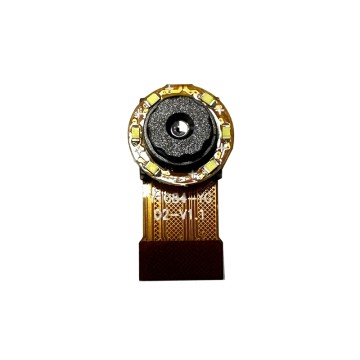
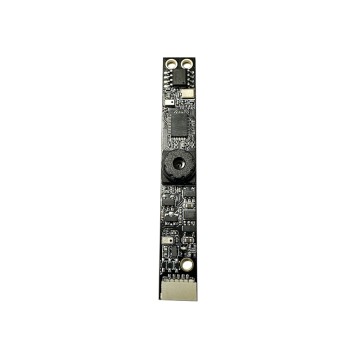
Explore our full line of specialized USB, MIPI, and automotive recorder camera modules designed for global OEM/ODM deployment.


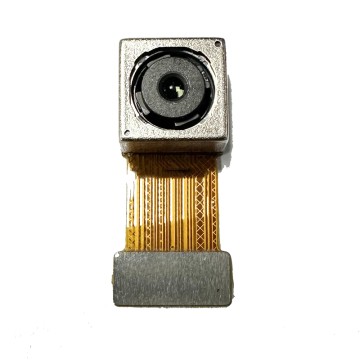
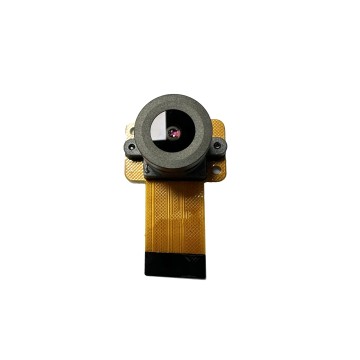
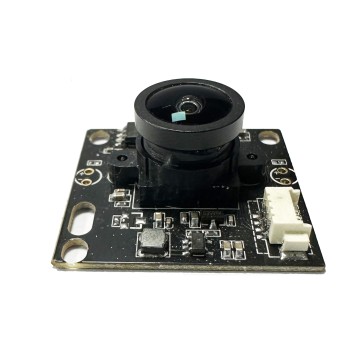
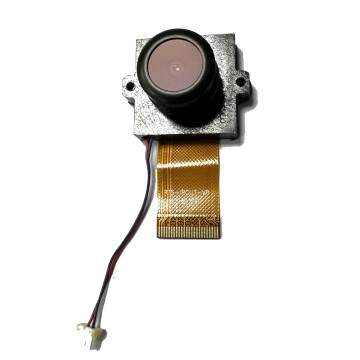
Collaborate directly with Shenzhen's leading imaging engineers. Request customized engineering samples, full technical datasheets, or a formal factory quotation today.
