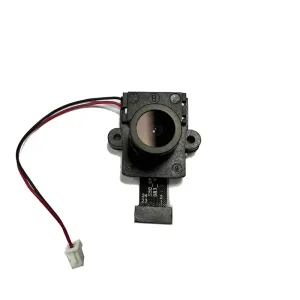
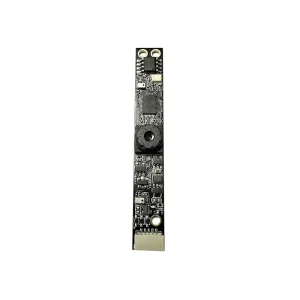
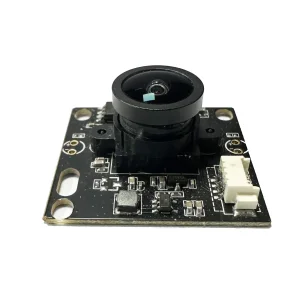
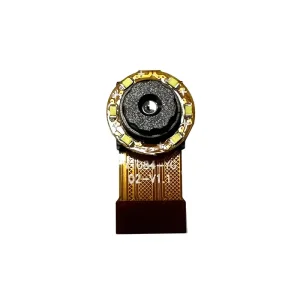
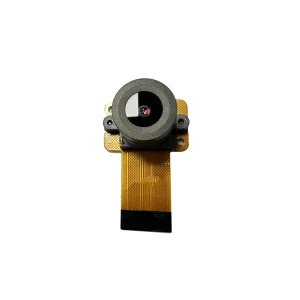
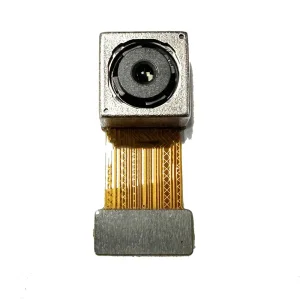
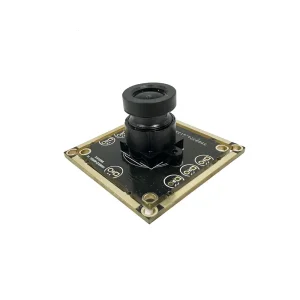
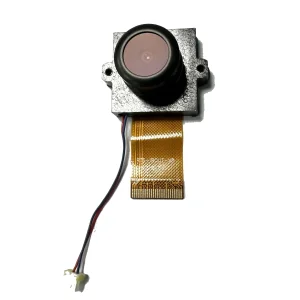
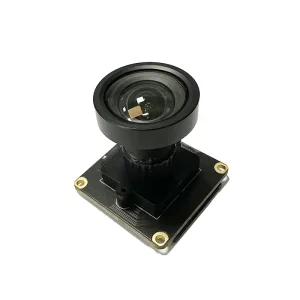
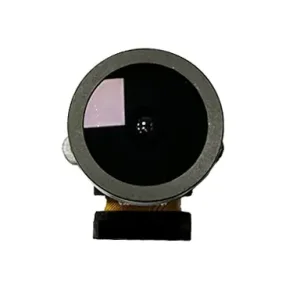
Explore our foundational imaging modules engineered for UAV platforms, aerial surveillance, machine inspection, and autonomous navigation payloads.
In modern industrial avionics, the camera module is no longer a standalone video capture accessory; it is the fundamental sensory node for Edge AI inference, SLAM navigation, and high-precision spatial mapping.
Global aerospace OEMs face strict payload limitations. Size, Weight, Power, and Cost (SWaP-C) dictate flight endurance. YXD integrates lightweight ultra-thin high-density multilayer PCBs and custom CNC aluminum housing, ensuring sub-15g payloads for uncompromised drone range.
High-speed flight creates disruptive “jello” artifacts and micro-vibrations across CMOS image sensors. Our factory optimizes pixel synchronous exposure architectures (Global Shutter) to capture crisp frames at high angular velocities without optical distortion.
For industrial grid inspection and public safety, enterprise clients demand dual-payload fusion: combining high-resolution visual sensors with Long-Wave Infrared (LWIR) cores. YXD engineers custom ISP algorithms to overlay thermal gradients directly onto optical surfaces.
Operating Class 100 and Class 1,000 dust-free cleanrooms, Shen Zhen You Xiang Da Technology delivers micrometric active alignment (AA) to prevent focal plane shift under rigorous g-force conditions.
Drone vibrations and temperature cycling degrade traditional fixed lenses. Our fully automated 6-axis AA technology aligns the sensor and lens barrel within 0.1-micron tolerances, ensuring edge-to-edge Modulation Transfer Function (MTF) sharpness.
Drones operate near high-output RF transmission modules, telemetry links, and powerful brushless motors. YXD designs dedicated ground shields and embedded ferrite filtration to protect video feeds from radio interference.
High-altitude operations subject cameras to steep thermal shock (-40°C to +85°C) and high humidity. Our factory runs thermal cycling aging chambers and mechanical vibration stress rigs for every batch before dispatch.
Translating sensor architectures into turnkey enterprise deployments across global agriculture, civil infrastructure, and security sectors.
Integrating narrowband NDVI optical filters (Red, Green, RedEdge, Near-Infrared) into miniature sensor footprints. Empowers agronomy drones to quantify crop health, nitrogen levels, and moisture deficits across vast acreage.
Equipped with optical distortion-free high-resolution sensors and continuous autofocus. Allows autonomous utility drones to navigate high-voltage corridors, detecting hairline fractures and insulator degradation safely from distance.
Wide-angle, ultra-low latency MIPI CSI-2 stereo modules deliver millisecond-level stereoscopic depth mapping. Crucial for urban logistics drones landing in complex, unmapped drop-off areas without human intervention.
Starlight low-light sensors paired with high-dynamic-range (HDR) tuning illuminate low-visibility emergency zones, enabling search teams to identify human signatures during night-time search and rescue operations.
A technical guide for system architects selecting transmission protocols between camera modules and host compute boards (NVIDIA Jetson, Raspberry Pi CM4/5, Rockchip, or Qualcomm Snapdragon Flight).
| Interface Type | Bandwidth & Frame Rate | Host Computational Platform | Latency Metric | Primary Drone Integration Role |
|---|---|---|---|---|
| MIPI CSI-2 (2/4-Lane) | Up to 2.5 Gbps/lane; supports 4K @ 60fps RAW | NVIDIA Jetson Orin, Raspberry Pi 5, NXP i.MX8 | < 5ms (Direct Hardware DMA) | Edge AI SLAM, Obstacle Avoidance, Visual Odometry |
| USB 3.0 / USB 2.0 UVC | Up to 5 Gbps (USB 3.1 Gen 1) uncompressed | Industrial x86 Mission Computers, SBCs | 25ms – 60ms (Driver Stack Dependent) | Survey Payloads, Quick Prototyping, Secondary Payloads |
| DVP Parallel | Up to 150 Mbps; QCIF to 1080P @ low FPS | Low-Power Microcontrollers (STM32, ESP32) | < 10ms (Low Overhead) | Tethered Micro-Drones, Ultra-Budget Proximity Detectors |
| GigE Vision / IP Stream | 1 Gbps – 10 Gbps over Cat6e Ethernet | High-End Avionic Mission Network Hubs | 80ms – 150ms (Encoding/H.265) | Long-Range BVLOS Tactical Systems, Fixed-Wing Mapping |
Shenzhen You Xiang Da Technology drives hardware evolution across three key vectors to match next-generation autonomous flight systems.
Moving beyond conventional frame rates, event cameras transmit pixel-level luminance changes asynchronously at microsecond speeds. This eliminates motion blur entirely during rapid aerobatic maneuvers, slashing algorithmic compute power by up to 80%.
YXD's R&D pipeline integrates low-power micro-NPUs directly on sensor PCB substrates. Pre-processing raw video streams for real-time target identification, centroid tracking, and semantic segmentation before data hits the primary avionic bus.
Replacing fragile mechanical Voice Coil Motors (VCM) that suffer under prolonged flight vibration. Liquid lenses leverage electro-wetting technology to achieve autofocus in under 5 milliseconds with zero mechanical wear and zero focal shift during steep dives.
Protecting global drone OEMs from cross-border operational risks, export bottlenecks, and supply disruptions.
Every camera module fabricated in our Shenzhen facility adheres to strict environmental directives. Full substance declarations and conflict-free mineral traceability ensure seamless transit through North American and European Union customs.
Aerospace and defense systems require predictable multi-year lifespans. We establish locked Bill of Materials (BOM) guarantees for 5 to 7 years, minimizing recurring recertification costs and unplanned circuit redesigns.
Our Shenzhen engineering core provides direct Linux kernel V4L2 driver development, device tree modifications, and customized Image Signal Processor (ISP) tuning for varied lighting, fog penetration, and high-glare flight operations.
Detailed technical, commercial, and engineering clarifications for procurement executives and aerospace vision engineers.
We mitigate optical distortion through two distinct approaches: integrating true Global Shutter CMOS sensors (such as Sony Pregius or OmniVision OG series) that expose every pixel at once, and implementing stiff FPC ribbon cables with silicone shock-dampening brackets on the lens barrel. This dampens the micro-vibrations created by drone propeller harmonics.
Standard MIPI CSI-2 is limited to 15-20cm before signal degradation occurs. For large airframes or long gimbal routes, YXD designs custom serializer/deserializer (SerDes) boards utilizing FPD-Link III or GMSL2 protocols. This allows clean, uncompressed video signals to travel across co-axial or STP cables up to 15 meters directly to the flight core.
Yes. As an end-to-end OEM/ODM factory, we design optical lens barrels to match client requirements. Options range from 140° ultra-wide field of view with under 1.5% optical distortion to telephoto narrow-angle configurations. We provide switchable IR-CUT dual filters (650nm / 850nm / 940nm) for day-and-night multispectral drone missions.
Yes. We engineer MIPI CSI-2 pinouts tailored for Raspberry Pi platforms (15-pin FPC for Pi 3/4, 22-pin FPC for Pi 5 and Zero 2W) as well as standardized 15-pin / 22-pin interfaces for NVIDIA Jetson Nano, Xavier NX, and Orin series. Our firmware team supplies device tree overlays and driver source code to ensure quick board bring-up.
Explore our full collection of camera modules engineered for industrial robotics, driving logs, secure access panels, and high-performance UAV payloads.