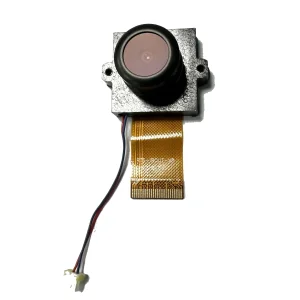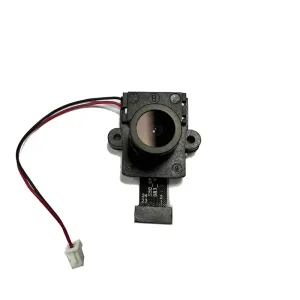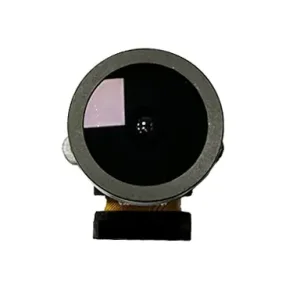
Precision engineered optical sub-assemblies and complete camera modules calibrated for extreme ambient environments, wide dynamic range exposure, and uninterrupted outdoor telematics.
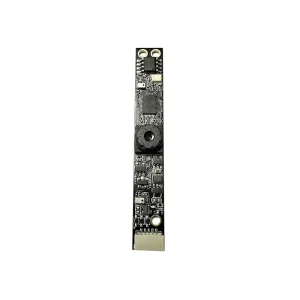
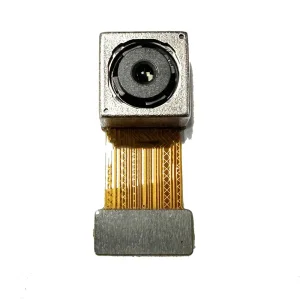
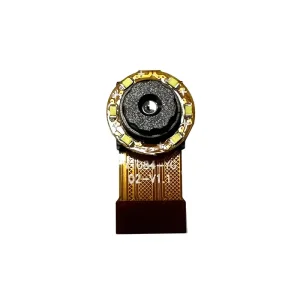
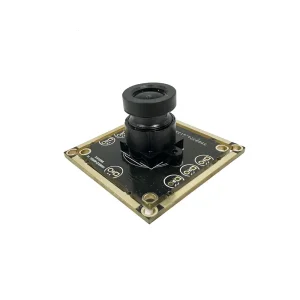
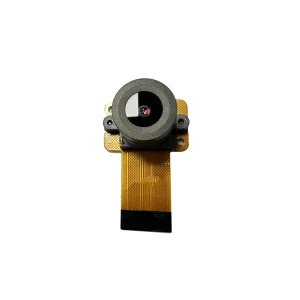
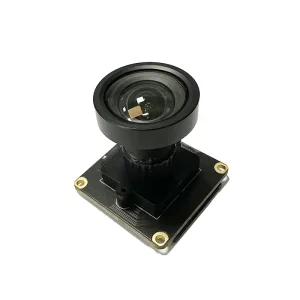
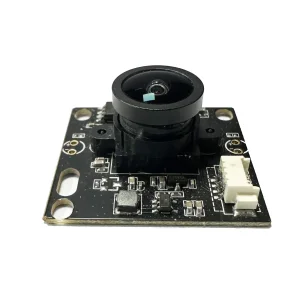
The migration from passive analog perimeter monitoring to autonomous, neural-network-driven video edge infrastructure has fundamentally redefined procurement benchmarks for enterprise system integrators.
Modern outdoor installations must continuously function across extreme thermal ranges (-40°C to +85°C), high humidity, salt spray, and intense ultraviolet exposure. Optoelectronic designs require multi-layer anti-reflective coatings and thermal dissipation backplanes to prevent focal drift.
Rather than offloading raw video streams to high-latency centralized servers, state-of-the-art camera modules integrate on-board neural processing units (NPUs) directly into the image signal processor (ISP), enabling real-time human/vehicle categorization, ANPR, and zero-latency anomaly trigger logic.
Enterprise deployments demand unified protocol flexibility across MIPI CSI-2 for embedded computing boards, USB UVC for zero-driver edge appliances, and RTSP/ONVIF over industrial Ethernet or Wi-Fi 6 for broad topological coverage across industrial perimeters.
Shenzhen's integrated industrial cluster reduces the development cycle from schematic design to high-volume Surface Mount Technology (SMT) and Class 100 dust-free cleanroom optical bonding by up to 70%.
Headquartered in Shenzhen since 2015, YXD leverages instant access to tier-one CMOS wafer suppliers (Sony, OmniVision, Onsemi), precision glass-mold tooling factories, and high-frequency substrate providers, eliminating raw material bottlenecks during global disruptions.
To eliminate optical distortion and focal asymmetry in wide-angle multi-megapixel outdoor systems, our facilities employ 6-axis automated Active Alignment machines, securing sub-micron tolerances between sensor centers and custom lens barrels.
Every industrial-grade surveillance assembly undergoes high-temperature burn-in chambers (72 hours continuous operation under 65°C), vibrational shock stress profiling, and multi-cycle humidity tests to guarantee field-level MTBF surpassing 50,000 hours.
Outdoor vision modules cannot rely on a one-size-fits-all approach. Optical and thermal properties must correspond directly to specialized operational contexts.
Commercial dash cameras and municipal transit monitoring require starlight sensors capable of suppressing oncoming high-beam glare while resolving license plates across multi-lane highways in low-lux conditions, supported by high dynamic range (WDR > 120dB).
Integrated door stations require ultra-wide FoV (up to 140° or 160°) low-distortion lenses. Integrated 850nm/940nm dual-band IR filters switch seamlessly between vibrant day color and uncompromised night-time biometric facial recognition.
Deployments in mining, oil fields, and electrical substations rely on low-power sensor architecture matched with Raspberry Pi or embedded SOM carriers, transmitting edge alerts via LPWAN or satellite networks during catastrophic power interruptions.
How our research and development lab is tackling next-generation challenges in optoelectronics, neural processing, and multi-spectral surveillance.
Rolling out back-illuminated (BSI) pixel architectures reaching 0.0005 Lux sensitivity. Incorporating AI-ISP algorithms executed in real-time to eliminate motion ghosting in dynamic nighttime captures without auxiliary illuminators.
Integrating miniature long-wave infrared (thermal) cores alongside traditional 4K visible spectrum sensors within single ultra-compact form factors for complete situational awareness through smoke, dense fog, and foliage.
Replacing bulky multi-element glass lenses with flat metasurface nanostructures, shrinking module depths by 60% while embedding cryptographic root-of-trust hardware chips to safeguard video integrity directly from the sensor bus.
Eliminating international regulatory friction through certified manufacturing controls and responsive regional technical assistance.
For government, infrastructure, and enterprise clients requiring strict component provenance, we provide non-blacklisted component alternatives, secure boot firmware verification, and full bill-of-materials traceability.
All factory assemblies satisfy international electromagnetic interference thresholds and toxic substance prohibitions. Stringent ESD prevention guidelines protect sensor integrity during transport and enclosure integration.
Bypassing tiered support desk delays, our overseas OEM partners work directly with firmware programmers and optical design specialists to tune V4L2 drivers, kernel patches, and custom lens shading corrections within 24 hours.
Direct, technical insights addressing common hurdles faced by hardware procurement specialists, system architects, and field engineers.
Thermal defocus is prevented by utilizing all-glass optics (excluding cheap plastics) combined with thermal-compensating metal lens barrels (such as aluminum-brass alloys). Our engineering team performs automated modulation transfer function (MTF) benchmarking in climate-controlled test chambers to verify focus consistency from -40°C to +85°C.
For low-latency AI inference running directly on edge NPUs (such as NVIDIA Jetson, Rockchip, or Raspberry Pi), MIPI CSI-2 is optimal as it routes raw pixel data directly to host memory with minimal CPU overhead. USB UVC is preferred for modular desktop/enclosure equipment requiring plug-and-play driverless integration, while IP/Wi-Fi is best for distributed infrastructure.
Leveraging our Shenzhen supply ecosystem, standard optical/FPC adaptations can be sampled within 7 to 14 days. Completely new circuit board designs (custom PCB shapes, interface bridges, custom lens tooling) require approximately 3 to 4 weeks for tooling, sample assembly, and complete reliability testing.
We configure large optical format sensors (such as 1/2.8" or 1/1.8" CMOS arrays) featuring high quantum efficiency back-illuminated pixels, paired with large-aperture lenses (F1.6 to F1.0). When matched with dynamic noise reduction (3D-DNR) ISP tuning, clear, usable color imagery is maintained even in sub-0.001 Lux environments.
Discover factory-direct imaging assemblies ready for immediate system sampling and OEM mass-production integration.