Explore our precision-engineered camera modules designed for modern laptops, industrial automation terminals, smart surveillance, and compact embedded hardware applications.
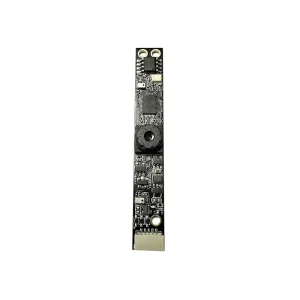
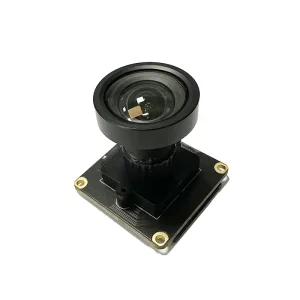
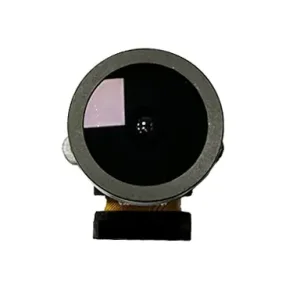
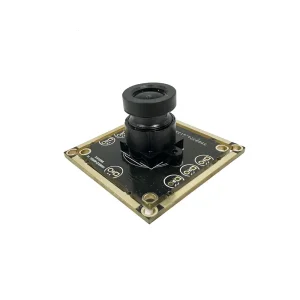
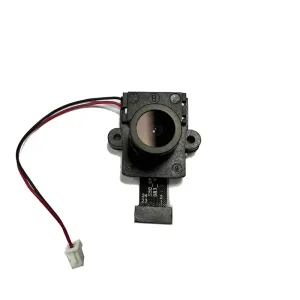
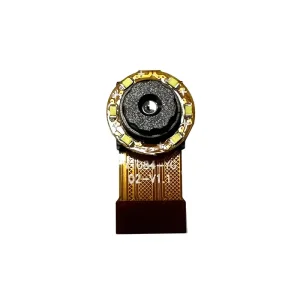
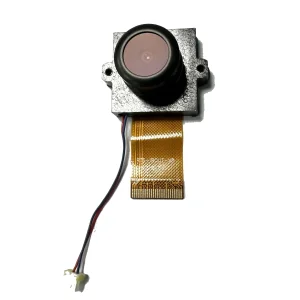
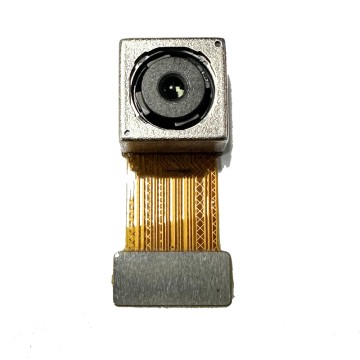
The global demand for High Definition Laptop Camera Modules has undergone a monumental shift from a basic commoditized peripheral to a mission-critical component in enterprise computing, remote collaboration, edge-AI computer vision, and industrial diagnostic equipment. Historically, consumer notebook displays integrated minimal 720P (1MP) sensors constrained by ultra-thin bezel profiles (Z-height under 3.0mm). However, the convergence of hybrid work models, AI-driven digital signal processing (DSP), and advanced optical engineering has redefined industry benchmarks.
Today's top-tier laptop manufacturers—ranging from global Tier-1 original equipment manufacturers (OEMs) to specialized industrial ruggedized computer vendors—demand camera solutions featuring 1080P Full HD, 2K wide-angle clarity, and 4MP/4K machine vision capabilities. These systems are no longer isolated sub-assemblies; they interface dynamically with neural processing units (NPUs) built into host silicon architectures to execute real-time background blur, gaze tracking, facial biometric authentication (Windows Hello compatible), and dynamic noise suppression.
Designing optical sub-assemblies for modern ultra-portable laptops presents a severe mechanical boundary condition: maximizing effective optical aperture and sensor surface area while restricting vertical module thickness (Z-height) to less than 3.0mm. Leading manufacturers like Shen Zhen You Xiang Da Technology Co., Ltd. (YXD Optics) utilize multi-element Glass-Plastic hybrid lens architectures (such as 1G3P or 2G2P) coupled with high-density surface mount technology (SMT) to deliver sub-3mm profiles without optical chromatic aberration or peripheral light falloff.
As B2B procurement professionals evaluate supply chain partners, understanding the multi-year optical technology roadmap is vital for ensuring component longevity, firmware compatibility, and product differentiation. Five pivotal technical vectors are currently reshaping the embedded laptop camera market:
Transitioning from legacy USB 2.0 bridge architectures to high-speed MIPI CSI-2 (Camera Serial Interface) allows direct multi-lane data transmission to the host SoC ISP. This enables raw sensor data processing with ultra-low latency, supporting higher frame rates (60fps at 1080P) and reduced system power consumption.
Standard wide-angle lenses introduce optical fisheye barrel distortion ranging from 10% to 25%. Advanced laptop manufacturers are mandating distortion-free standard lens modules (<1% TV distortion) to ensure precise document scanning, accurate facial geometry representation during teleconferences, and seamless OCR processing.
Next-gen remote work environments vary drastically in illumination. Implementing back-illuminated (BSI) CMOS sensors with larger pixel pitch (e.g., 2.0µm x 2.0µm) alongside high-aperture optics (F/1.8 to F/2.0) guarantees clean signal-to-noise ratios (SNR) even under sub-5 lux ambient lighting conditions.
Data privacy compliance (GDPR, HIPAA) has accelerated the adoption of physical mechanical privacy shutters directly co-designed into the camera module housing, as well as electronic interrupt signals linked to firmware security registers.
High-definition camera modules engineered by Shenzhen leaders like YXD are deployed across a vast array of specialized commercial verticals. The table below details how distinct engineering specs map directly to real-world deployment challenges:
Founded in 2015 in Shenzhen, China, Shen Zhen You Xiang Da Technology Co., Ltd. (YXD Technology) has established itself as an authoritative global manufacturer of high-definition camera modules, MIPI CSI-2 interfaces, USB UVC solutions, and custom optical lenses. Operating in full compliance with international standards, YXD's engineering capabilities serve Fortune 500 enterprises, system integrators, and industrial technology developers across North America, Europe, and Asia-Pacific.
Decade-long mastery of CMOS image sensor tuning, optical distortion compensation, active alignment (AA) lens mounting, and custom PCB trace layout optimization.
Dust-free ISO Class 5/6 cleanrooms ensure zero particle contamination during sensor glass sealing, protecting optical paths from pixel-level defects.
Every batch undergoes 100% full-burn aging tests, vibration resistance testing, thermal shock cycles (-40°C to +85°C storage), and continuous MTBF validation.
USB UVC (USB Video Class) modules feature integrated Image Signal Processors (ISP) that output compressed (MJPEG/H.264) or uncompressed (YUV) streams directly over standard USB pipelines, making them universally plug-and-play across Windows, Linux, macOS, and Android without custom drivers. MIPI CSI-2 modules connect directly to the host CPU's native camera interface via flexible printed circuits (FPC), offering raw RGB data transfer with extremely high bandwidth, lower latency, and reduced power consumption, though they require system-level host driver integration.
Yes. As a direct OEM/ODM factory manufacturer, YXD provides end-to-end customization services. Procurement teams can specify field-of-view (FOV from 60° narrow to 140° ultra-wide), distortion profiles (distortion-free vs fisheye), focus mechanics (Fixed Focus or VCM Autofocus), IR filter passbands (650nm / dual-band 850nm/940nm), PCB outline shape, and flexible cable (FPC) pinouts to fit exact mechanical enclosure constraints.
Standard wide-angle lenses suffer from severe edge warping where straight lines bend outward. A distortion-free lens optical assembly utilizes specialized non-spherical glass elements to correct optical pathways before light reaches the CMOS sensor pixel array. This guarantees true visual proportions during virtual conferences, facilitates high-accuracy optical character recognition (OCR) scanning, and avoids software-bound CPU de-warping overhead.
Yes. YXD produces dedicated MIPI CSI-2 camera modules that are pin-compatible with standard 15-pin FPC connectors on classic Raspberry Pi hardware, as well as 22-pin pitch connectors designed for Raspberry Pi 5 and Zero series boards. USB UVC standard modules also provide driverless plug-and-play operation across all Linux embedded boards.
Select a model below to request engineering samples, optical datasheets, or custom housing design modifications from our technical sales team.
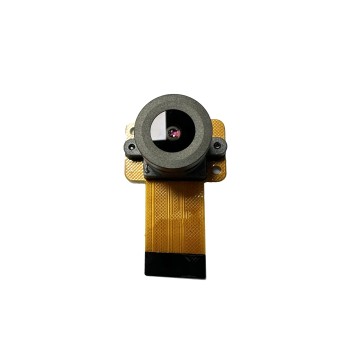
Partner directly with Shenzhen You Xiang Da Technology Co., Ltd. (YXD Optics) for custom lens prototyping, sample requests, and competitive B2B volume quotes.