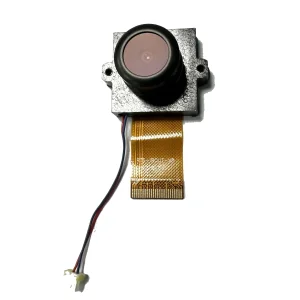
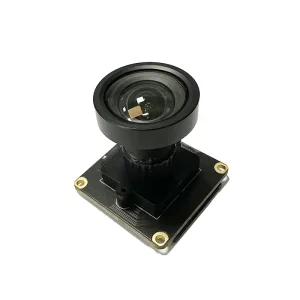
Enterprise OEM/ODM camera modules engineered specifically for sub-millisecond edge capture, low-light face matching, and zero-distortion security endpoints.
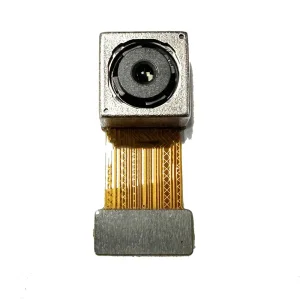
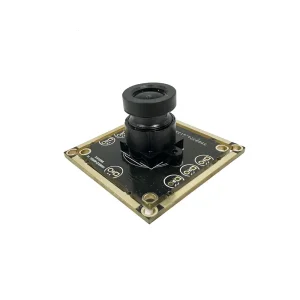
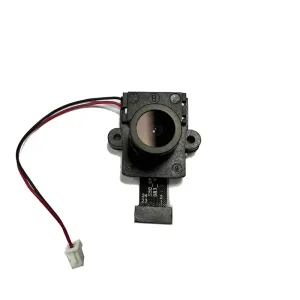
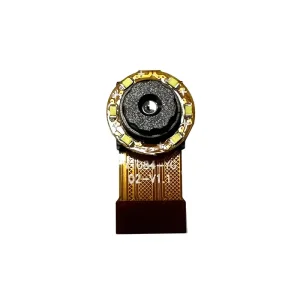
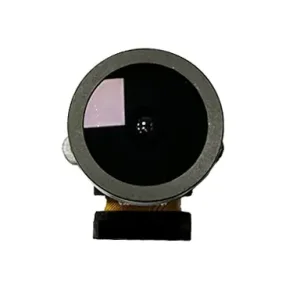
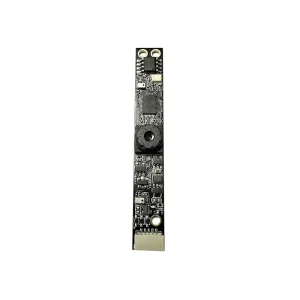
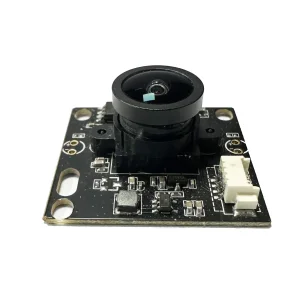
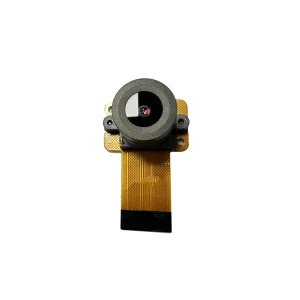
Analyzing high-throughput edge nodes, multi-spectral liveliness validation, and distributed facial recognition site service engineering.
Modern enterprise security requires strict defense against spoofing attacks (print, 2D screen, 3D mask). Our optical pipelines incorporate Dual-Sensor RGB + NIR Architecture that leverages physical optical filtering and synchronized infrared strobing to capture biometric volumetric signatures instantaneously at the hardware level.
Harsh backlighting at physical site checkpoints typically degrades recognition neural network accuracy. By utilizing up to 120dB Wide Dynamic Range (WDR) sensors matched with custom low-distortion optical elements, our hardware ensures that high-contrast face contours remain mathematically intact for feature extraction engines.
Offloading host processors reduces thermal runaway and edge latency. Our solutions bundle embedded Image Signal Processors with dedicated auto-exposure, hardware lens shading correction, and auto-focus algorithms specifically weighted towards facial biometric feature regions, executing inference cycles sub-50ms.
How Tier-1 exporters handle international supply chain resilience, sensor life cycles, and cross-border mass deployment.
The global physical security sector has moved past general-purpose webcams. Enterprise access systems and critical infrastructure hubs now require localized, industrial-grade vision sensors running 24/7/365 under extreme ambient conditions (-30°C to +75°C). As reliable exporters, we bridge the gap between pure semiconductor manufacturing and finished OEM terminal integration.
With the rapid lifecycle turnover in consumer imaging electronics, enterprise clients face significant integration risks. Our supply chain protocols guarantee guaranteed silicon availability for a minimum of 5 to 7 years. Our modular PCB engineering decouples the optical sensor module from the host interface, allowing direct generational hardware upgrades without extensive industrial redesigns.
Deploying 10,000 turnstiles across varied international transit hubs demands absolute optical consistency. Our cleanroom facilities employ six-axis active alignment (AA) systems to align the CMOS sensor focal plane with optical glass axes, ensuring that MTF (Modulation Transfer Function) charts remain mathematically uniform across all exported production runs.
Strategic hardware interface selection matrix for AI embedded system designers, software architects, and firmware teams.
| Protocol Architecture | Bandwidth Throughput | Processing Latency | Host Ecosystem | Target Site Application |
|---|---|---|---|---|
| MIPI CSI-2 (4-Lane) | Up to 6 Gbps (Low Overhead) | Ultra-Low (< 2ms frame pipeline) | ARM Cortex, NPU Platforms, Jetson, Raspberry Pi 5 | Edge AI smart gates, high-speed biometrics, intelligent robotics |
| USB 2.0 / 3.0 UVC | 480 Mbps to 5 Gbps | Low (Standard OS driver stack) | Windows, Linux x86, Android Kiosks, macOS | Self-service checkout terminals, ATM verification, document scanners |
| DVP Parallel | Sub-Gigabit | Direct register timing | Economical MCU boards, legacy DSP controllers | Cost-sensitive barcode/QR access points, simple IoT peripherals |
| Wi-Fi / Network IP | Dynamic Network Bandwidth | Network Dependent (Encoding delay) | Centralized VMS platforms, Cloud NVR, Mobile APIs | Distributed residential intercoms, building visual entry doorbells |
Ensuring ethical facial identification site operation through hardware-enforced privacy, global encryption, and regulatory adherence.
Modern regulatory frameworks prohibit the unencrypted transmission of raw biometric face vectors. We integrate hardware-level cryptographic key engines directly alongside the image sensor flex cables, giving edge developers the option to hash or extract vectorized points before pixel data reaches the network transmission bus.
Navigating worldwide trade standards requires strict electronic compliance. All modules provided by our service pipeline maintain complete certifications for CE, FCC, RoHS, and REACH, ensuring industrial builders encounter zero customs delays or compliance penalties across European, North American, and Asian markets.
Skin tone variations, local solar incidence angles, and varying indoor architectural illumination need bespoke optical calibration. Our field application engineers assist localized teams with dynamic ISP tuning files (CCM, 3D Denoise, Gamma Curves) tailored directly to specific demographic and site lighting realities.
Examining four mission-critical application sectors where sub-millimeter optical clarity dictations system success.
High passenger throughput hubs demand immediate optical acquisition. Modules with specialized focal planes and anti-glare coatings identify travelers rapidly across varying physical heights without manual motorized camera adjustments.
Outdoor visual entry points demand severe environmental survivability. Combining IP67 physical housing seals with NIR night vision LED arrays guarantees that after-hours visitors are captured with high contrast irrespective of rain or total darkness.
Financial ATMs and self-checkouts demand anti-spoofing certification. Dual-camera systems (RGB color matching + Near Infrared 3D depth) prevent sophisticated photographic mimicry attacks while guaranteeing user safety.
Automated guided vehicles and factory assistance bots require localized operator verification before granting operational controls, utilizing compact vibration-proof MIPI cameras embedded inside robotic chassis.
Pioneering advancements across Time-of-Flight (ToF), Event-Based Neuromorphic Sensors, and Integrated Optical Neural Engines.
The next generation of biometric site terminals moves toward consolidated 3D Depth Sensing via Indirect Time-of-Flight (iToF). Combining sub-millimeter surface topography mapping with high-resolution RGB color streams provides an impermeable defense against synthetic visual fraud without requiring cumbersome dual-lens baselines.
Traditional frame-based cameras waste computational overhead recording static backgrounds. Future vision architectures leverage event-based vision sensors (EVS) that activate purely when pixel changes occur. This slashes edge power consumption to milliwatts and eliminates high-speed motion blur during dynamic verification.
Migrating from separate camera and compute units, the emerging horizon blends small neural accelerators directly onto the backplane of the image sensor substrate. This enables instantaneous facial landmark detection inside the module shield before releasing raw visual data, establishing zero-trust visual pipelines.
Comprehensive engineering and procurement clarifications for industrial device makers and system integrators.
A dual-lens module utilizes one standard RGB sensor for human verification and UI feedback, while the second sensor features an 850nm or 940nm bandpass filter. Paired with IR illumination, this Near-Infrared channel penetrates ambient shadows, ignores printed photographs, and reveals authentic skin subsurface scattering characteristics for undeniable liveness verification.
Standard wide-angle lenses introduce barrel distortion (fisheye effects) that bends peripheral geometric features. In facial recognition, algorithm neural nets measure strict physical ratios between facial landmarks (pupillary distance, jawline curve, nose bridge). Distortion-free lenses preserve these authentic spatial coordinates across the whole field of view.
USB UVC is ideal for rapid integration with operating systems like Windows, Linux, and Android, operating driverless across cable distances up to 3-5 meters. MIPI CSI-2 is an embedded chip-to-chip protocol with direct memory access (DMA), ideal for low-power edge SoCs (Rockchip, Jetson, NXP), eliminating packet processing overhead and achieving microsecond latencies.
Our cleanrooms operate under ISO standards utilizing automated Active Alignment (AA) technology. Rather than mechanically fixing lenses into holders, robotic 6-axis stages adjust the lens element while the sensor reads live MTF resolution targets in real time. UV adhesive is cured only when every quadrant hits optimal resolution balance.
Direct factory manufacturing with fully customizable PCB dimensions, field-of-view lenses, interface connectors, and firmware ISP pipelines.